
Mitra
Indo-Iranian divinity, later worshipped as the Zoroastrian Mithra and the Roman mystery god Mithras
Press Enter · cited answer in seconds
0 sources
Mitra
Summary
Mitra is a god[1]. He has Wikipedia articles in 24 language editions, a strong signal of global cultural recognition.[2]
Key Facts
- Mitra was influenced by Mithra[3].
- Mitra is recorded as male[4].
- Mitra's instance of is recorded as god[5].
- Mitra's Commons category is recorded as Mithras[6].
- Mitra's said to be the same as is recorded as Mithras[7].
- Mitra's said to be the same as is recorded as Mithra[8].
- Mitra's worshipped by is recorded as Mithraic mysteries[9].
- Mitra's worshipped by is recorded as ancient Roman religion[10].
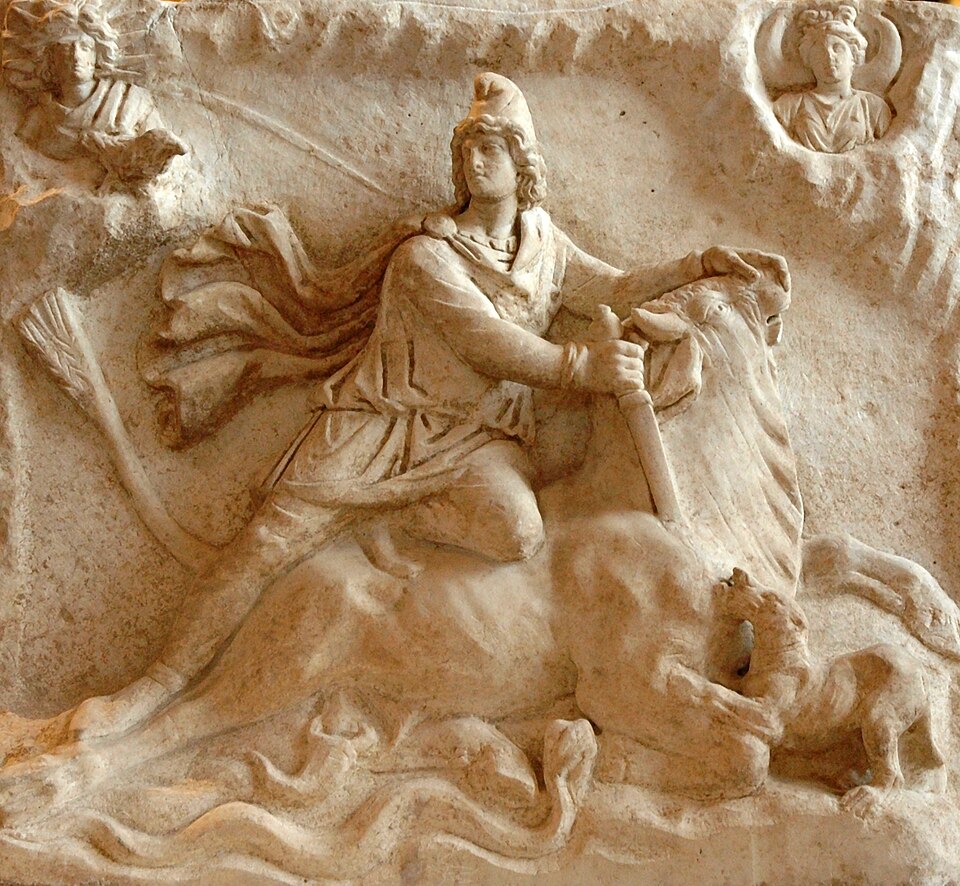
- Mitra's depicted by is recorded as Mithras Petrogenes[11].
- Mitra's depicted by is recorded as Mithras Tauroctonos from piazza Dante[12].
- Mitra's depicted by is recorded as Mithras group[13].
- Mitra's depicted by is recorded as Statue of Mithras[14].
- Mitra's described by source is recorded as New Encyclopedic Dictionary[15].
- Mitra's described by source is recorded as Russian translation of Lübker's Antiquity Lexicon[16].
- Mitra's described by source is recorded as Brockhaus and Efron Encyclopedic Dictionary[17].
- Mitra's described by source is recorded as The Nuttall Encyclopædia[18].
- Mitra's described by source is recorded as Small Brockhaus and Efron Encyclopedic Dictionary[19].
- Mitra's described by source is recorded as Great Soviet Encyclopedia (1926–1947)[20].
- Mitra's described by source is recorded as Pauly–Wissowa[21].
- Mitra's native label is recorded as {'lang': 'fa', 'text': 'میترا'}[22].
- Mitra's different from is recorded as Mitra[23].
- Mitra's different from is recorded as mitre[24].
Body
Works and Contributions
Things named for Mitra include Mithraic mysteries[25], a Greco-Roman mysteries[26], in Ancient Rome[27] and 4486 Mithra[28], a potentially hazardous asteroid[29].
Why It Matters
Mitra has Wikipedia articles in 24 language editions, a strong signal of global cultural recognition.[2] He is known by 8 alternative names across languages and contexts.[30]
Entities named for him include Mithraic mysteries[25], a Greco-Roman mysteries[26], in Ancient Rome[27] and 4486 Mithra[28], a potentially hazardous asteroid[29].