
Matsuo Bashō
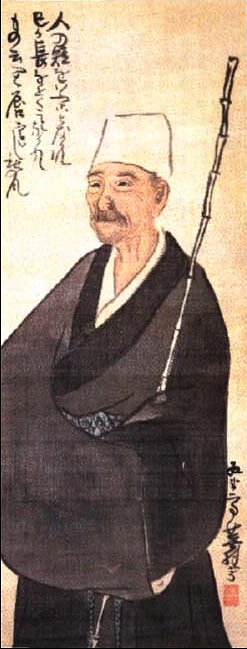
0 sources
Matsuo Bashō
Summary
Matsuo Bashō is a human[1]. His place of birth was Bashō's birth house[2]. He was born on January 1, 1644[3]. He died in Midōsuji[4]. He died on November 28, 1694[5]. He worked as a poet[6]. He has Wikipedia articles in 30 language editions, a strong signal of global cultural recognition.[7]
Key Facts
- Born in Bashō's birth house[2], Matsuo Bashō…
- Matsuo Bashō died in Midōsuji[4].
- Matsuo Bashō was born on January 1, 1644[3].
- Matsuo Bashō died on November 28, 1694[5].
- Matsuo Bashō is buried at Gichū-ji Temple[8].
- Matsuo Bashō held citizenship in Japan[9].
- Japanese was Matsuo Bashō's native language[10].
- Matsuo Bashō's professions included poet[6].
- Matsuo Bashō was employed by Sengin[11].
- A notable student of Matsuo Bashō was Takarai Kikaku[12].
- A notable student of Matsuo Bashō was Hattori Ransetsu[13].
- A notable student of Matsuo Bashō was Morikawa Kyoriku[14].
- A notable student of Matsuo Bashō was Mukai Kyorai[15].
- A notable student of Matsuo Bashō was Kagami Shikō[16].
- A notable student of Matsuo Bashō was Naitō Jōsō[17].
- A notable work attributed to Matsuo Bashō is Oku no Hosomichi[18].
- A notable work attributed to Matsuo Bashō is The Seashell Game[19].
- A notable work attributed to Matsuo Bashō is Nozarashi Kikō[20].
- A notable work attributed to Matsuo Bashō is Frog Poem[21].
- Matsuo Bashō is recorded as male[22].
- Matsuo Bashō's instance of is recorded as human[23].
- Matsuo Bashō's ancestral home is recorded as Tsuge[24].
- Matsuo Bashō is associated with the Shōfū haikai movement[25].
- Matsuo Bashō's genre is haikai[26].
- Musa basjoo is named after Matsuo Bashō[27].
Body
Origins and Family
Matsuo Bashō's place of birth was Bashō's birth house[2]. He was born on January 1, 1644[3]. Japanese was his native language[10].
Career and Affiliations
Matsuo Bashō worked as a poet[6]. He was employed by Sengin[11]. Notable students include Takarai Kikaku[12], a haiku poet[28], 1661–1707[29], of Japan[30]; Hattori Ransetsu[13], a haiku poet[31], 1654–1707[32], of Japan[33]; Morikawa Kyoriku[14], a haiku poet[34], 1656–1715[35], of Tokugawa shogunate[36]; Mukai Kyorai[15], a poet[37], 1651–1704[38], of Japan[39]; Kagami Shikō[16], a haiku poet[40], 1665–1731[41], of Japan[42]; and Naitō Jōsō[17], a haiku poet[43], 1662–1704[44], of Japan[45].
Works and Contributions
Notable works include Oku no Hosomichi[18], a literary work[46], in Japan[47]; The Seashell Game[19], a literary work[48]; Nozarashi Kikō[20], a literary work[49], founded in 1680[50]; and Frog Poem[21], a literary work[51]. Things named for Matsuo Bashō include 10829 Matsuobasho[52] and Bashō[53].
Death and Burial
Matsuo Bashō died on November 28, 1694[5]. He passed away in Midōsuji[4]. Burial took place at Gichū-ji Temple[8].
Why It Matters
Matsuo Bashō has Wikipedia articles in 30 language editions, a strong signal of global cultural recognition.[7] He is known by 31 alternative names across languages and contexts.[54]
Works attributed to him include Frog Poem[55], a literary work[56] and Oku no Hosomichi[57], a literary work[58], in Japan[59]. Entities named for him include 10829 Matsuobasho[52] and Bashō[53].
FAQs
Where was Matsuo Bashō born?
Matsuo Bashō's place of birth was Bashō's birth house[2].
Where did Matsuo Bashō die?
Matsuo Bashō passed away in Midōsuji[4].
What did Matsuo Bashō do for work?
Matsuo Bashō worked as poet[6].