
Martin Wilhelm Kutta
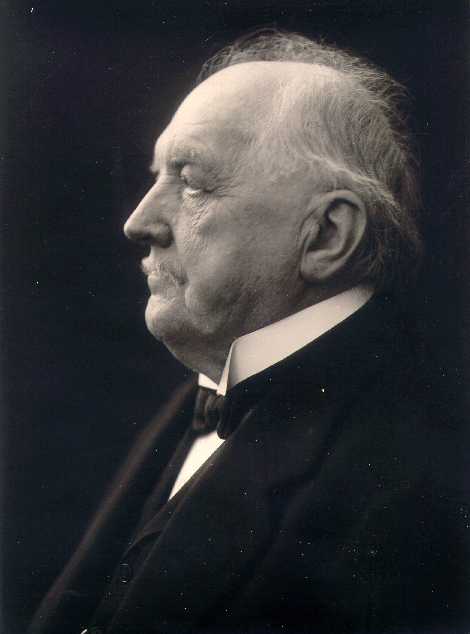
0 sources
Martin Wilhelm Kutta
Summary
Martin Wilhelm Kutta is a human[1]. Born in Byczyna[2], he… he was born on November 3, 1867[3]. He passed away in Fürstenfeldbruck[4]. He died on December 25, 1944[5]. He worked as a mathematician[6], engineer[7], and university teacher[8]. He ranks in the top 0.73% of human entities by monthly Wikipedia readership (117 views/month, #7,263 of 1,000,298).[9]
Key Facts
- Martin Wilhelm Kutta's place of birth was Byczyna[2].
- Martin Wilhelm Kutta passed away in Fürstenfeldbruck[4].
- Martin Wilhelm Kutta was born on November 3, 1867[3].
- Martin Wilhelm Kutta died on December 25, 1944[5].
- Martin Wilhelm Kutta held citizenship in German Reich[10].
- Martin Wilhelm Kutta's professions included mathematician[6].
- Martin Wilhelm Kutta's professions included engineer[7].
- Martin Wilhelm Kutta's professions included university teacher[8].
- Martin Wilhelm Kutta's field of work was mathematics[11].
- Martin Wilhelm Kutta's field of work was aerodynamics[12].
- Martin Wilhelm Kutta's field of work was algebra[13].
- Martin Wilhelm Kutta's field of work was physics[14].
- Martin Wilhelm Kutta's field of work was astronomy[15].
- Martin Wilhelm Kutta was employed by Technical University of Stuttgart[16].
- Martin Wilhelm Kutta was employed by Friedrich Schiller University Jena[17].
- Among Martin Wilhelm Kutta's employers was RWTH Aachen University[18].
- Among Martin Wilhelm Kutta's employers was Technical University of Munich[19].
- Martin Wilhelm Kutta was educated at University of Wrocław[20].
- Martin Wilhelm Kutta was educated at Technical University of Munich[21].
- Martin Wilhelm Kutta was educated at Ludwig-Maximilians-Universität München[22].
- Martin Wilhelm Kutta's doctoral advisor was Ferdinand von Lindemann[23].
- Martin Wilhelm Kutta's doctoral advisor was Gustav Bauer[24].
- A notable work attributed to Martin Wilhelm Kutta is Runge–Kutta method[25].
- A notable work attributed to Martin Wilhelm Kutta is Kutta–Joukowski theorem[26].
- A notable work attributed to Martin Wilhelm Kutta is Kutta condition[27].
Body
Origins and Family
Born in Byczyna[2], Martin Wilhelm Kutta… he was born on November 3, 1867[3].
Education
Educated at University of Wrocław[20], a university[28], in Poland[29], founded in 1702[30]; Technical University of Munich[21], an institute of technology[31], in Germany[32], founded in 1868[33], headquartered in Munich[34]; and Ludwig-Maximilians-Universität München[22], a public research university[35], in Germany[36], founded in 1472[37], headquartered in Hauptgebäude der Ludwig-Maximilians-Universität München[38]. Doctoral advisors include Ferdinand von Lindemann[23], a mathematician[39], 1852–1939[40], of Kingdom of Hanover[41], awarded the Bavarian Maximilian Order for Science and Art[42], specialised in number theory[43] and Gustav Bauer[24], a mathematician[44], 1820–1906[45], of Kingdom of Bavaria[46]. Martin Wilhelm Kutta studied under Walther von Dyck[47].
Career and Affiliations
Recorded occupations include mathematician[6], engineer[7], and university teacher[8]. Fields of work include mathematics[11], an academic discipline[48]; aerodynamics[12], an academic discipline[49]; algebra[13], a branch of mathematics[50]; physics[14], a branch of science[51]; and astronomy[15], a branch of science[52]. Employers include Technical University of Stuttgart[16], a Hochschule[53], founded in 1876[54]; Friedrich Schiller University Jena[17], a public university[55], in Germany[56], founded in 1558[57], headquartered in Jena[58]; RWTH Aachen University[18], a public university[59], in Germany[60], founded in 1870[61], headquartered in Aachen[62]; and Technical University of Munich[19], an institute of technology[63], in Germany[64], founded in 1868[65], headquartered in Munich[66].
Works and Contributions
Notable works include Runge–Kutta method[25], a theorem[67]; Kutta–Joukowski theorem[26], a theorem[68]; Kutta condition[27], a postulate[69]; and Runge–Kutta–Fehlberg method[70], an embedded Runge-Kutta method[71]. Things named for Martin Wilhelm Kutta include Runge–Kutta method[72], a theorem[73]; Kutta–Joukowski theorem[74], a theorem[75]; Runge–Kutta–Fehlberg method[76], an embedded Runge-Kutta method[77]; and Kutta condition[78], a postulate[79].
Death and Burial
Martin Wilhelm Kutta died on December 25, 1944[5]. He passed away in Fürstenfeldbruck[4].
Why It Matters
Martin Wilhelm Kutta ranks in the top 0.73% of human entities by monthly Wikipedia readership (117 views/month, #7,263 of 1,000,298).[9] He has Wikipedia articles in 18 language editions, a strong signal of global cultural recognition.[80] He is known by 27 alternative names across languages and contexts.[81]
Entities named for him include Runge–Kutta method[72], a theorem[73]; Kutta–Joukowski theorem[74], a theorem[75]; Runge–Kutta–Fehlberg method[76], an embedded Runge-Kutta method[77]; and Kutta condition[78], a postulate[79].
FAQs
Where was Martin Wilhelm Kutta born?
Martin Wilhelm Kutta's place of birth was Byczyna[2].
Where did Martin Wilhelm Kutta die?
Martin Wilhelm Kutta passed away in Fürstenfeldbruck[4].
What did Martin Wilhelm Kutta do for work?
Martin Wilhelm Kutta worked as mathematician[6], engineer[7], and university teacher[8].
Where did Martin Wilhelm Kutta go to school?
Martin Wilhelm Kutta was educated at University of Wrocław[20], Technical University of Munich[21], and Ludwig-Maximilians-Universität München[22].