
Lyco of Troas
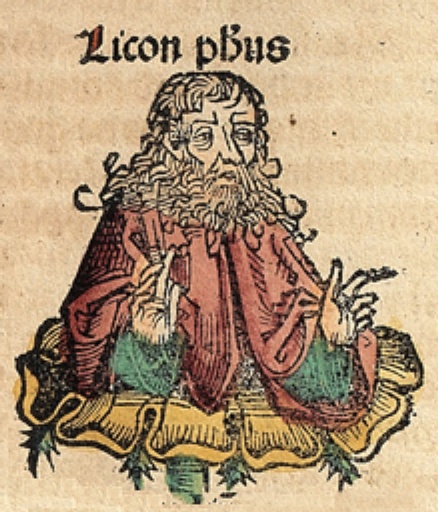
0 sources
Summary
Lyco of Troas is a human[1]. He was born on January 1, 299 BC[2]. He died on January 1, 225 BC[3]. He worked as a philosopher[4]. He ranks in the top 0.73% of human entities by monthly Wikipedia readership (16 views/month, #7,288 of 1,000,298).[5]
Key Facts
- Lyco of Troas was born on January 1, 299 BC[2].
- Lyco of Troas died on January 1, 225 BC[3].
- Lyco of Troas worked as a philosopher[4].
- Lyco of Troas's field of work was philosophy[6].
- Lyco of Troas held the position of scholarch of the Peripatetic school[7].
- A notable student of Lyco of Troas was Aristo of Ceos[8].
- Lyco of Troas is recorded as male[9].
- Lyco of Troas's instance of is recorded as human[10].
- Lyco of Troas's Commons category is recorded as Lyco of Troas[11].
- Lyco of Troas's described by source is recorded as 1870 Dictionary of Greek and Roman Biography and Mythology[12].
- Lyco of Troas's described by source is recorded as Brockhaus and Efron Encyclopedic Dictionary[13].
- Lyco of Troas's described by source is recorded as Pauly–Wissowa[14].
- Lyco of Troas's languages spoken, written or signed is recorded as Ancient Greek[15].
- Lyco of Troas dates from the Hellenistic period[16].
- Lyco of Troas's writing language is recorded as Ancient Greek[17].
Body
Origins and Family
Lyco of Troas was born on January 1, 299 BC[2].
Career and Affiliations
Lyco of Troas worked as a philosopher[4]. His field of work was philosophy[6]. He held the position of scholarch of the Peripatetic school[7]. A notable student of him was Aristo of Ceos[8].
Death and Burial
Lyco of Troas died on January 1, 225 BC[3].
Why It Matters
Lyco of Troas ranks in the top 0.73% of human entities by monthly Wikipedia readership (16 views/month, #7,288 of 1,000,298).[5] He has Wikipedia articles in 13 language editions, a strong signal of global cultural recognition.[18] He is known by 3 alternative names across languages and contexts.[19]
FAQs
What did Lyco of Troas do for work?
Lyco of Troas worked as philosopher[4].