
Long Pants
0 sources
Long Pants
Summary
Long Pants is a film[1]. It ranks in the top 4% of film entities by monthly Wikipedia readership (69 views/month).[2]
Key Facts
- Long Pants's instance of is recorded as film[3].
- Long Pants was directed by Frank Capra[4].
- Tay Garnett wrote the screenplay for Long Pants[5].
- Arthur Ripley wrote the screenplay for Long Pants[6].
- Long Pants's genre is coming-of-age film[7].
- Long Pants's genre is silent film[8].
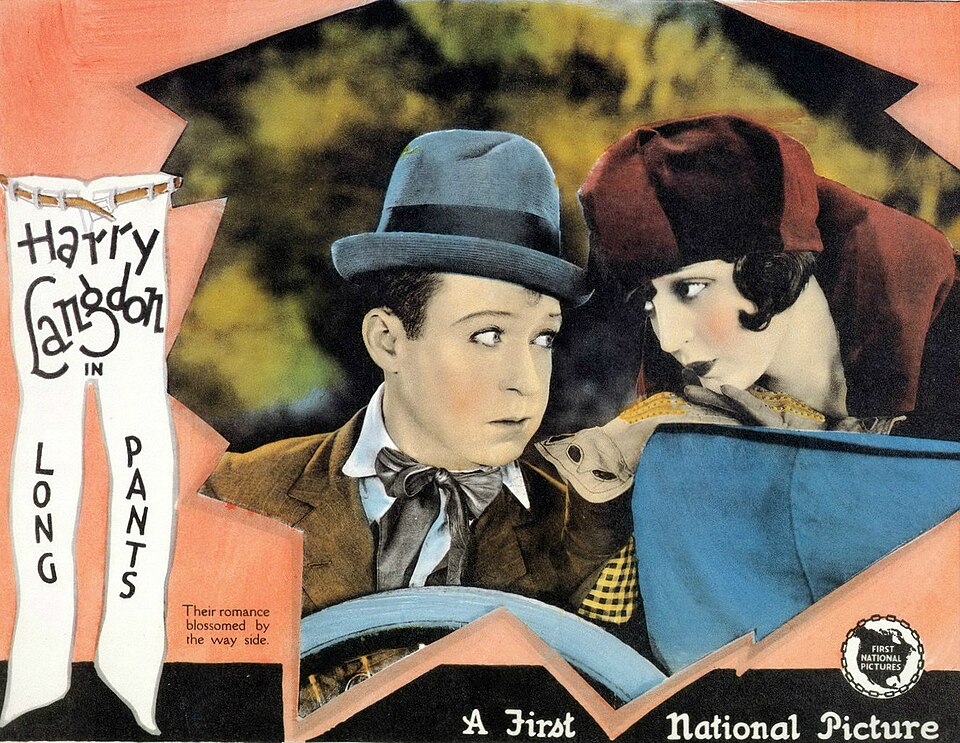
- A cast member of Long Pants was Harry Langdon[9].
- A cast member of Long Pants was Alma Bennett[10].
- A cast member of Long Pants was Alan Roscoe[11].
- A cast member of Long Pants was Gladys Brockwell[12].
- A cast member of Long Pants was Priscilla Bonner[13].
- A cast member of Long Pants was Frankie Darro[14].
- A cast member of Long Pants was Bud Jamison[15].
- A cast member of Long Pants was Glenn Tryon[16].
- A cast member of Long Pants was John Darrow[17].
- A cast member of Long Pants was Peaches Jackson[18].
- A cast member of Long Pants was Muriel Kingston[19].
- A cast member of Long Pants was Duane Thompson[20].
- A cast member of Long Pants was Betty Francisco[21].
- A cast member of Long Pants was Babe London[22].
- Long Pants was produced by Harry Langdon[23].
- Long Pants's director of photography is recorded as Elgin Lessley[24].
- Long Pants's Commons category is recorded as Long Pants[25].
- Long Pants's color is recorded as black-and-white[26].
- Long Pants's country of origin is recorded as United States[27].
Body
Authorship and Creation
Long Pants was produced by Harry Langdon[23]. It was directed by Frank Capra[4]. Screenwriters include Tay Garnett[5] and Arthur Ripley[6]. Cast members include Harry Langdon[9], Alma Bennett[10], Alan Roscoe[11], Gladys Brockwell[12], Priscilla Bonner[13], and Frankie Darro[14].
Publication
Long Pants was released on March 26, 1927[28]. Genres include coming-of-age film[7] and silent film[8].
Why It Matters
Long Pants ranks in the top 4% of film entities by monthly Wikipedia readership (69 views/month).[2] It has Wikipedia articles in 10 language editions, a strong signal of global cultural recognition.[29] It is known by 13 alternative names across languages and contexts.[30]