
Long Island Sound
estuary on the east coast of the United States
Press Enter · cited answer in seconds
0 sources
Long Island Sound
Summary
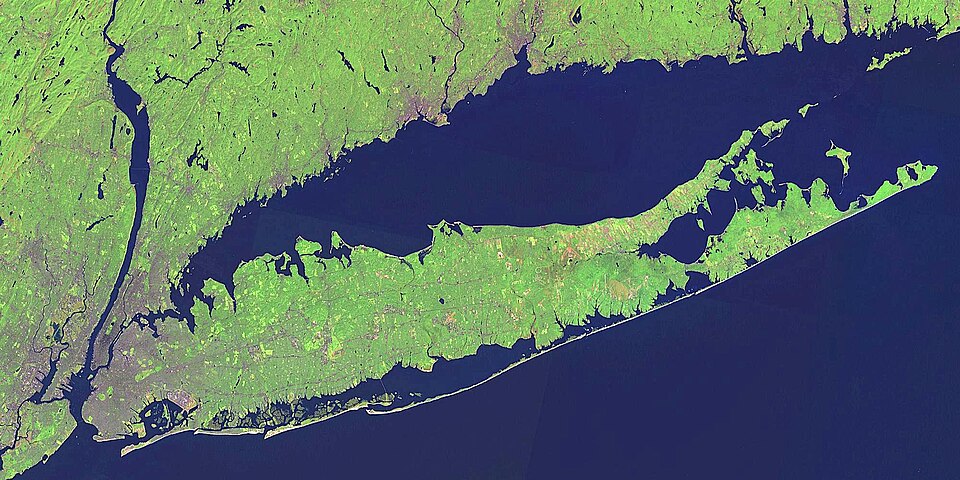
Long Island Sound is an estuary[1]. It ranks in the top 6% of estuary entities by monthly Wikipedia readership (5,650 views/month).[2]
Key Facts
- Long Island Sound is in the country of United States[3].
- Long Island Sound's instance of is recorded as estuary[4].
- Long Island Sound's instance of is recorded as sound[5].
- Long Island is named after Long Island Sound[6].
- Long Island Sound's Commons category is recorded as Long Island Sound[7].
- Long Island Sound's mouth of the watercourse is recorded as Atlantic Ocean[8].
- Long Island Sound's coordinate location is recorded as {'latitude': 41.096666666667, 'longitude': -72.881111111111}[9].
- Long Island Sound's topic's main category is recorded as Category:Long Island Sound[10].
- Long Island Sound's tributary is recorded as Connecticut River[11].
- Long Island Sound's tributary is recorded as Housatonic River[12].
- Long Island Sound's tributary is recorded as Mystic River[13].
- Long Island Sound's tributary is recorded as Thames River[14].
- Long Island Sound's tributary is recorded as Mamaroneck River[15].
- Long Island Sound's tributary is recorded as Nissequogue River[16].
- Long Island Sound's tributary is recorded as Norwalk River[17].
- Long Island Sound's tributary is recorded as Niantic River[18].
- Long Island Sound's described by source is recorded as The American Cyclopædia[19].
- Long Island Sound's described by source is recorded as The New Student's Reference Work[20].
- Long Island Sound's native label is recorded as Long Island Sound[21].
- Long Island Sound's category for the view of the item is recorded as Category:Views of the Long Island Sound[22].
Body
Geography
Long Island Sound is in the country of United States[3].
Designation and Status
Recorded instance of include estuary[4] and sound[5].
History and Context
Long Island is named after Long Island Sound[6].
Why It Matters
Long Island Sound ranks in the top 6% of estuary entities by monthly Wikipedia readership (5,650 views/month).[2] It has Wikipedia articles in 20 language editions, a strong signal of global cultural recognition.[23] It is known by 28 alternative names across languages and contexts.[24]