
Lockheed Martin X-33
0 sources
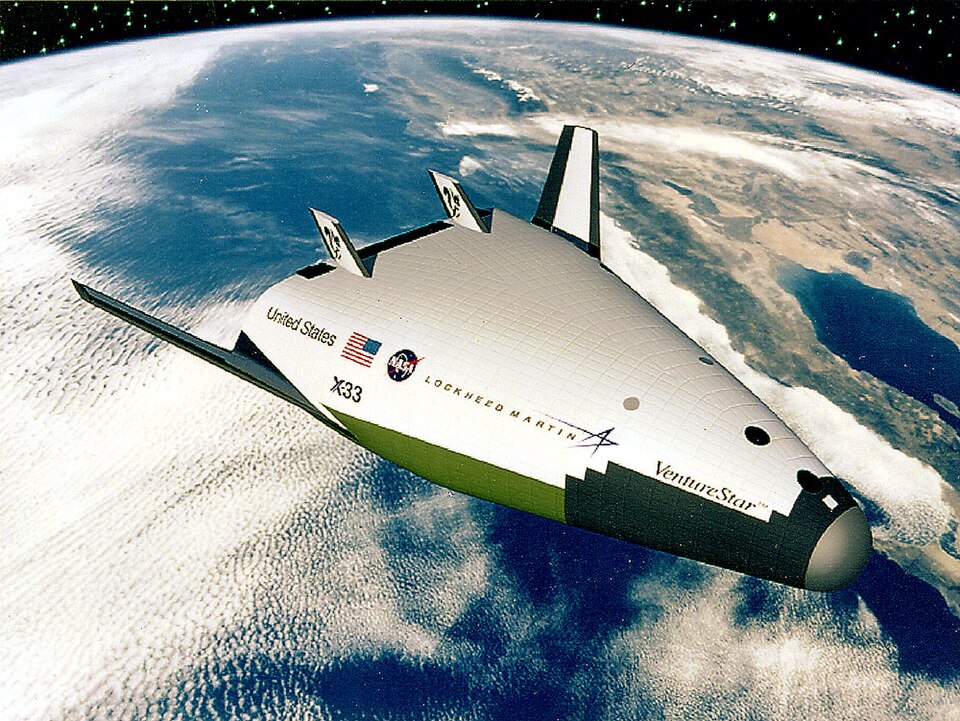
The Lockheed Martin X-33 was a reusable launch vehicle demonstrator developed in the United States. It was designed as part of NASA's Space Launch Initiative to test technologies for a next-generation spaceplane. The program aimed to reduce the cost and complexity of space access through single-stage-to-orbit capabilities.
The X-33 project was a collaboration between Lockheed Martin and NASA, focusing on advancing aerospace technologies. It incorporated innovative features such as lightweight composite materials and linear aerospike engines. Development began in the 1990s but was ultimately canceled in 2001 due to technical and budgetary challenges.
Key Facts
- Lockheed Martin X-33 is in the country of United States[3].
- Lockheed Martin X-33's instance of is recorded as sub-orbital spaceplane[4].
- Lockheed Martin X-33's instance of is recorded as abandoned project[5].
- Lockheed Martin X-33's based on is recorded as VentureStar[6].
- Lockheed Martin X-33's manufacturer is recorded as Lockheed Martin[7].
- Lockheed Martin X-33's developer is recorded as Lockheed Martin[8].
- Lockheed Martin X-33's Commons category is recorded as Lockheed Martin X-33[9].
- Lockheed Martin X-33's country of origin is recorded as United States[10].
Why It Matters
Lockheed Martin X-33 draws 1,025 Wikipedia views per month (sub_orbital_spaceplane category, ranking #2 of 2).[2] It has Wikipedia articles in 18 language editions, a strong signal of global cultural recognition.[11] It is known by 5 alternative names across languages and contexts.[12]