
Lin Huiyin
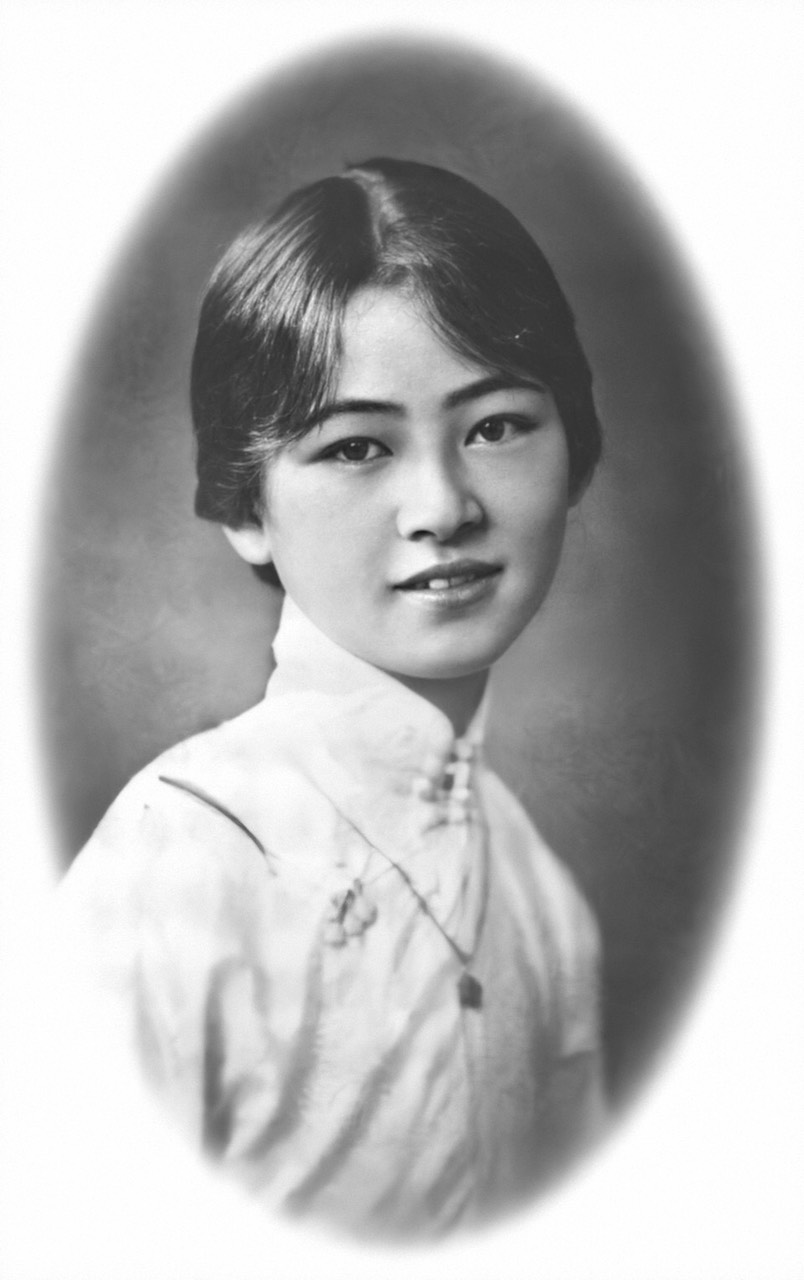
0 sources
Lin Huiyin was born on June 10, 1904, in Hangzhou. She was the daughter of Lin Changmin and married Liang Sicheng in 1928, remaining with him until her death. Together they had two children, Liang Congjie and Liang Zaibing. She pursued her education at the University of Pennsylvania School of Design and the Yale School of Drama.
Professionally, she worked as an architect, poet, translator, writer, university teacher, and historian[1]. She was employed by Tsinghua University, National Southwestern Associated University, and Northeastern University[2]. Her notable works include the Monument to the People's Heroes, A Pictorial History of Chinese Architecture, and the literary pieces Smile, Ninety-nine Degrees, and Don't Let Our Land be Lost Again!.
Lin died of tuberculosis on April 1, 1955, at Beijing Tongren Hospital. She was subsequently buried at Babaoshan Revolutionary Cemetery.
Lin Huiyin
Summary
Lin Huiyin is a human[1]. Her place of birth was Hangzhou[2]. She was born on June 10, 1904[3]. She passed away in Beijing Tongren Hospital[4]. She died on April 1, 1955[5]. She worked as an architect[6], poet[7], translator[8], writer[9], and university teacher[10]. She has Wikipedia articles in 17 language editions, a strong signal of global cultural recognition.[11]
Key Facts
- Lin Huiyin was born in Hangzhou[2].
- Lin Huiyin died in Beijing Tongren Hospital[4].
- Lin Huiyin was born on June 10, 1904[3].
- Lin Huiyin died on April 1, 1955[5].
- Lin Huiyin is buried at Babaoshan Revolutionary Cemetery[12].
- Lin Huiyin's father was Lin Changmin[13].
- Lin Huiyin's mother was He Xueyuan[14].
- Among Lin Huiyin's spouses was Liang Sicheng[15].
- A child of Lin Huiyin was Liang Congjie[16].
- A child of Lin Huiyin was Liang Zaibing[17].
- Lin Huiyin held citizenship in People's Republic of China[18].
- Lin Huiyin held citizenship in Republic of China[19].
- Lin Huiyin held citizenship in Qing dynasty[20].
- Lin Huiyin is identified as part of the Han Chinese people ethnic group[21].
- Lin Huiyin worked as an architect[6].
- Lin Huiyin worked as a poet[7].
- Lin Huiyin worked as a translator[8].
- Lin Huiyin worked as a writer[9].
- Lin Huiyin worked as a university teacher[10].
- Lin Huiyin's professions included historian[22].
- Lin Huiyin's field of work was poetry[23].
- Lin Huiyin's field of work was architecture[24].
- Lin Huiyin's field of work was history[25].
- Among Lin Huiyin's employers was Tsinghua University[26].
- Among Lin Huiyin's employers was National Southwestern Associated University[27].
Body
Origins and Family
Born in Hangzhou[2], Lin Huiyin… she was born on June 10, 1904[3]. Her father was Lin Changmin[13]. Her mother was He Xueyuan[14]. She is identified as part of the Han Chinese people ethnic group[21].
Education
Educated at University of Pennsylvania School of Design[28], a design school[29], in United States[30], founded in 1868[31] and Yale School of Drama[32], a drama school[33], in United States[34], founded in 1924[35].
Career and Affiliations
Recorded occupations include architect[6], poet[7], translator[8], writer[9], university teacher[10], and historian[22]. Fields of work include poetry[23], a literary form[36]; architecture[24], an academic discipline[37]; and history[25]. Employers include Tsinghua University[26], a public university[38], in People's Republic of China[39], founded in 1911[40], headquartered in Beijing[41]; National Southwestern Associated University[27], a university[42], in People's Republic of China[43], founded in 1938[44]; and Northeastern University[45], a university[46], in People's Republic of China[47], founded in 1923[48].
Works and Contributions
Notable works include Monument to the People's Heroes[49], a monument[50], in People's Republic of China[51], founded in 1952[52]; A Pictorial History of Chinese Architecture[53]; and Smile, Ninety-nine Degrees, Don't Let Our Land be Lost Again![54].
Personal Life
Lin Huiyin was married to Liang Sicheng[15]. Children include Liang Congjie[16], a historian[55], 1932–2010[56], of People's Republic of China[57], awarded the Ramon Magsaysay Award[58] and Liang Zaibing[17], a journalist[59], b. 1929[60], of People's Republic of China[61].
Death and Burial
Lin Huiyin died on April 1, 1955[5]. She passed away in Beijing Tongren Hospital[4]. The cause of death was tuberculosis[62]. She is buried at Babaoshan Revolutionary Cemetery[12].
Why It Matters
Lin Huiyin has Wikipedia articles in 17 language editions, a strong signal of global cultural recognition.[11] She is known by 10 alternative names across languages and contexts.[63]
FAQs
Where was Lin Huiyin born?
Lin Huiyin was born in Hangzhou[2].
Where did Lin Huiyin die?
Lin Huiyin passed away in Beijing Tongren Hospital[4].
Who were Lin Huiyin's parents?
Lin Huiyin's father was Lin Changmin[13]. Lin Huiyin's mother was He Xueyuan[14].
Who was Lin Huiyin married to?
Lin Huiyin's spouses include Liang Sicheng[15].
What did Lin Huiyin do for work?
Lin Huiyin worked as architect[6], poet[7], translator[8], writer[9], and university teacher[10].
Where did Lin Huiyin go to school?
Lin Huiyin was educated at University of Pennsylvania School of Design[28] and Yale School of Drama[32].