
Lev Berg
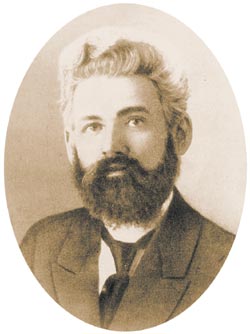
0 sources
Lev Berg
Summary
Lev Berg is a human[1]. Born in Bender[2], he… he was born on March 2, 1876[3]. He passed away in Komarovo[4]. He died on December 24, 1950[5]. He worked as an explorer[6], geographer[7], zoologist[8], and ichthyologist[9]. He ranks in the top 0.73% of human entities by monthly Wikipedia readership (246 views/month, #7,280 of 1,000,298).[10]
Key Facts
- Born in Bender[2], Lev Berg…
- Lev Berg passed away in Komarovo[4].
- Lev Berg passed away in Saint Petersburg[11].
- Lev Berg was born on March 2, 1876[3].
- Lev Berg died on December 24, 1950[5].
- Burial took place at Volkovo Cemetery Writer's Walkways[12].
- A child of Lev Berg was Raisa Berg[13].
- Lev Berg held citizenship in Russian Empire[14].
- Lev Berg held citizenship in Russian Republic[15].
- Lev Berg held citizenship in Russian Socialist Federative Soviet Republic[16].
- Lev Berg held citizenship in Soviet Union[17].
- Lev Berg's professions included explorer[6].
- Lev Berg's professions included geographer[7].
- Lev Berg worked as a zoologist[8].
- Lev Berg's professions included ichthyologist[9].
- Lev Berg's field of work was ichthyology[18].
- Lev Berg's field of work was evolutionism[19].
- Lev Berg's field of work was geography[20].
- Lev Berg's field of work was evolution of fish[21].
- Lev Berg's field of work was systematics[22].
- Among Lev Berg's employers was Imperial St. Petersburg University[23].
- Lev Berg was employed by Russian Geographical Society[24].
- Lev Berg was employed by Zoological Institute RAS[25].
- Lev Berg was employed by Zoological Institute RAS[26].
- Lev Berg's education included a stint at Imperial Moscow University[27].
Body
Origins and Family
Born in Bender[2], Lev Berg… he was born on March 2, 1876[3].
Education
Educated at Imperial Moscow University[27], an imperial universities of the Russian Empire[28], in Russian Empire[29], founded in 1755[30] and Lomonosov Moscow State University[31], a public university[32], in Russia[33], founded in 1755[34], headquartered in Moscow[35]. Lev Berg's doctoral advisor was Vasili Dokuchayev[36]. He earned the academic degree of Doktor of Biology Sciences[37]. He studied under Dmitry Anuchin[38].
Career and Affiliations
Recorded occupations include explorer[6], geographer[7], zoologist[8], and ichthyologist[9]. Fields of work include ichthyology[18], a branch of zoology[39]; evolutionism[19], a philosophical schools and traditions[40]; geography[20], an academic discipline[41]; evolution of fish[21]; and systematics[22], a branch of biology[42]. Employers include Imperial St. Petersburg University[23], a university[43], in Russian Empire[44], founded in 1819[45]; Russian Geographical Society[24], a geographical society[46], in Russian Empire[47], founded in 1845[48], headquartered in Saint Petersburg[49]; and Zoological Institute RAS[25], an Institute of the Russian Academy of Science[50], in Russia[51], founded in 1832[52]. A notable student of Lev Berg was Anatoly Isachenko[53]. Doctoral students include Anatoly Isachenko[54], Ivan Fedorovich Pravdin[55], and Petro Pavlov[56].
Works and Contributions
Notable works include Classification of fishes, both recent and fossil[57] and Nomogenesis[58]. Things named for Lev Berg include Caspian stellate tadpole-goby[59], a taxon[60].
Recognition
Awards received include Order of the Red Banner of Labour[61], a socialist order of merit[62], in Soviet Union[63], founded in 1928[64]; Medal "For the Defence of Leningrad"[65], a campaign medal[66], in Soviet Union[67], founded in 1942[68]; Constantin Medal[69], a medallion[70], in Russian Empire[71], founded in 1846[72]; Medal "For Valiant Labour in the Great Patriotic War 1941–1945"[73], a medallion[74], in Soviet Union[75], founded in 1945[76]; Honored Scientist of the RSFSR[77], an official honorary title of RSFSR[78], in Soviet Union[79], founded in 1931[80]; and State Stalin Prize, 1st degree[81], a class of award[82], in Soviet Union[83].
Personal Life
A child of Lev Berg was Raisa Berg[13].
Death and Burial
Lev Berg died on December 24, 1950[5]. Recorded place of death include Komarovo[4], a posyolok[84], in Russia[85] and Saint Petersburg[11], a federal city of Russia[86], in Russia[87], founded in 1703[88]. He is buried at Volkovo Cemetery Writer's Walkways[12].
Why It Matters
Lev Berg ranks in the top 0.73% of human entities by monthly Wikipedia readership (246 views/month, #7,280 of 1,000,298).[10] He has Wikipedia articles in 19 language editions, a strong signal of global cultural recognition.[89] He is known by 80 alternative names across languages and contexts.[90]
He has been cited as an influence by Li Sizhong[91], an ichthyologist[92], 1921–2009[93], of People's Republic of China[94], awarded the Special government allowances of the State Council[95], specialised in ichthyology[96].
Works attributed to him include Nomogenesis[97], an evolution[98], in Soviet Union[99]. Entities named for him include Caspian stellate tadpole-goby[59], a taxon[60].
His notable doctoral advisees include Anatoly Isachenko[100], a geographer[101], 1922–2018[102], of Russian Soviet Federative Socialist Republic[103], awarded the Honoured Science Worker of the Russian Federation[104], specialised in geography[105].
FAQs
Where was Lev Berg born?
Lev Berg's place of birth was Bender[2].
Where did Lev Berg die?
Lev Berg passed away in Komarovo[4].
What did Lev Berg do for work?
Lev Berg worked as explorer[6], geographer[7], zoologist[8], and ichthyologist[9].
Where did Lev Berg go to school?
Lev Berg was educated at Imperial Moscow University[27] and Lomonosov Moscow State University[31].
What awards did Lev Berg receive?
Honors received include Order of the Red Banner of Labour[61], Medal "For the Defence of Leningrad"[65], Constantin Medal[69], and Medal "For Valiant Labour in the Great Patriotic War 1941–1945"[73].
Who did Lev Berg influence?
Lev Berg has been cited as an influence by Li Sizhong[91].