
Leopold I, Holy Roman Emperor
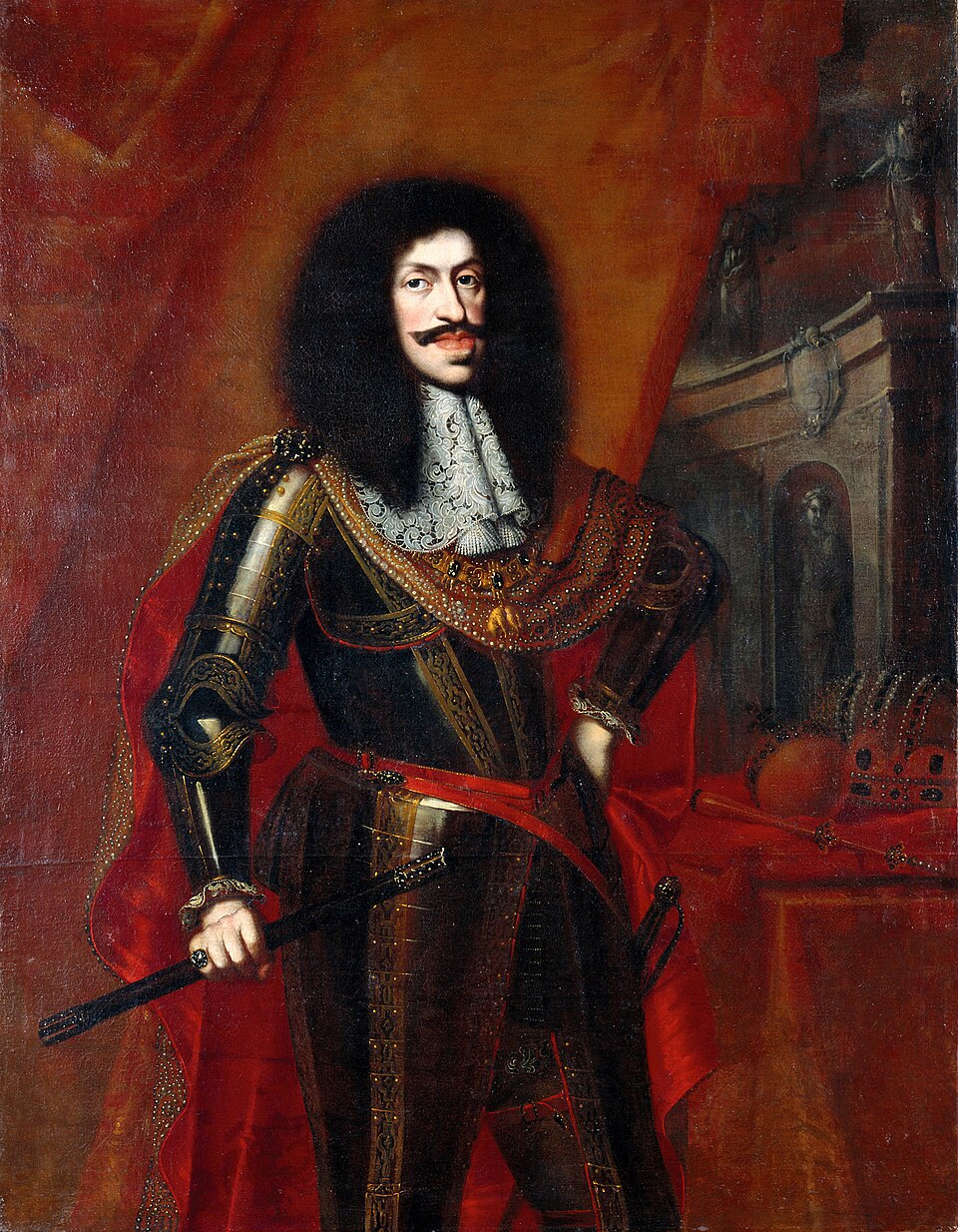
0 sources
Summary
Leopold I, Holy Roman Emperor was born on June 9, 1640[1], in Vienna[2]. He died on May 5, 1705[3], in Vienna[4]. He worked as a monarch[5] and composer[6]. He ranks in the top 0.52% of human entities by monthly Wikipedia readership (21,553 views/month, #5,247 of 1,000,298).[7]
Key Facts
- Place of burial: Imperial Crypt[8]
- Father: Ferdinand III, Holy Roman Emperor[9]
- Mother: Maria Anna of Spain[10]
- Spouse: Claudia Felicitas of Austria[11], Eleonor Magdalene of Neuburg[12], Margaret Theresa of Spain[13]
- Child: Maria Antonia of Austria[14], Joseph I, Holy Roman Emperor[15], Archduchess Maria Elisabeth of Austria[16], Archduke Leopold Joseph of Austria[17], Maria Anna of Austria[18], Archduchess Maria Theresa of Austria[19], Charles VI, Holy Roman Emperor[20], Archduchess Maria Magdalena of Austria[21], Ferdinand Wenzel von Habsburg[22], Johann Leopold von Habsburg[23], Maria Anna von Habsburg[24], Anna Marie von Habsburg[25], Maria Josefa von Habsburg[26], Christine von Habsburg[27]
- Country of citizenship: Austria[28], Germany[29], Holy Roman Empire[30]
- Position held: Holy Roman Emperor[31], Prince-Elector[32], King of Bohemia[33], Apostolic King of Hungary[34]
- Award received: Knight of the Order of the Golden Fleece[35]
- Religion or worldview: Catholic Church[36]
- Sex or gender: male[37]
- Family: House of Habsburg[38]
- Noble title: count[39]
- Movement: Baroque music[40]
- Commons category: Leopold I, Holy Roman Emperor[41]
- Archives at: ETH Zurich University Archives[42]
- Given name: Leopold[43]
- Topic's main category: Category:Leopold I, Holy Roman Emperor[44]
- Work location: Vienna[45]
Body
Works and Contributions
Things named for Leopold I, Holy Roman Emperor include German Academy of Sciences Leopoldina[46], an academy of sciences[47], in Germany[48], founded in 1652[49], headquartered in Halle (Saale)[50]; University of Wrocław[51], a university[52], in Poland[53], founded in 1702[54]; Aula Leopoldina[55], an auditorium[56], in Poland[57]; and Leopoldov[58], a town[59], in Slovakia[60], founded in 1664[61].
Why It Matters
Leopold I, Holy Roman Emperor has Wikipedia articles in 28 language editions, a strong signal of global cultural recognition.[62] He is known by 81 alternative names across languages and contexts.[63]
Entities named for him include German Academy of Sciences Leopoldina[46], an academy of sciences[47], in Germany[48], founded in 1652[49], headquartered in Halle (Saale)[50]; University of Wrocław[51], a university[52], in Poland[53], founded in 1702[54]; Aula Leopoldina[55], an auditorium[56], in Poland[57]; and Leopoldov[58], a town[59], in Slovakia[60], founded in 1664[61].
FAQs
Where was Leopold I, Holy Roman Emperor born?
Leopold I, Holy Roman Emperor's place of birth was Vienna[2].
Where did Leopold I, Holy Roman Emperor die?
Leopold I, Holy Roman Emperor passed away in Vienna[4].
Who were Leopold I, Holy Roman Emperor's parents?
Leopold I, Holy Roman Emperor's father was Ferdinand III, Holy Roman Emperor[9]. Leopold I, Holy Roman Emperor's mother was Maria Anna of Spain[10].
Who was Leopold I, Holy Roman Emperor married to?
Leopold I, Holy Roman Emperor's spouses include Claudia Felicitas of Austria[11], Eleonor Magdalene of Neuburg[12], and Margaret Theresa of Spain[13].
What did Leopold I, Holy Roman Emperor do for work?
Leopold I, Holy Roman Emperor worked as a monarch[5] and composer[6].
What awards did Leopold I, Holy Roman Emperor receive?
Honors received include Knight of the Order of the Golden Fleece[35].