
Konrad Emil Bloch
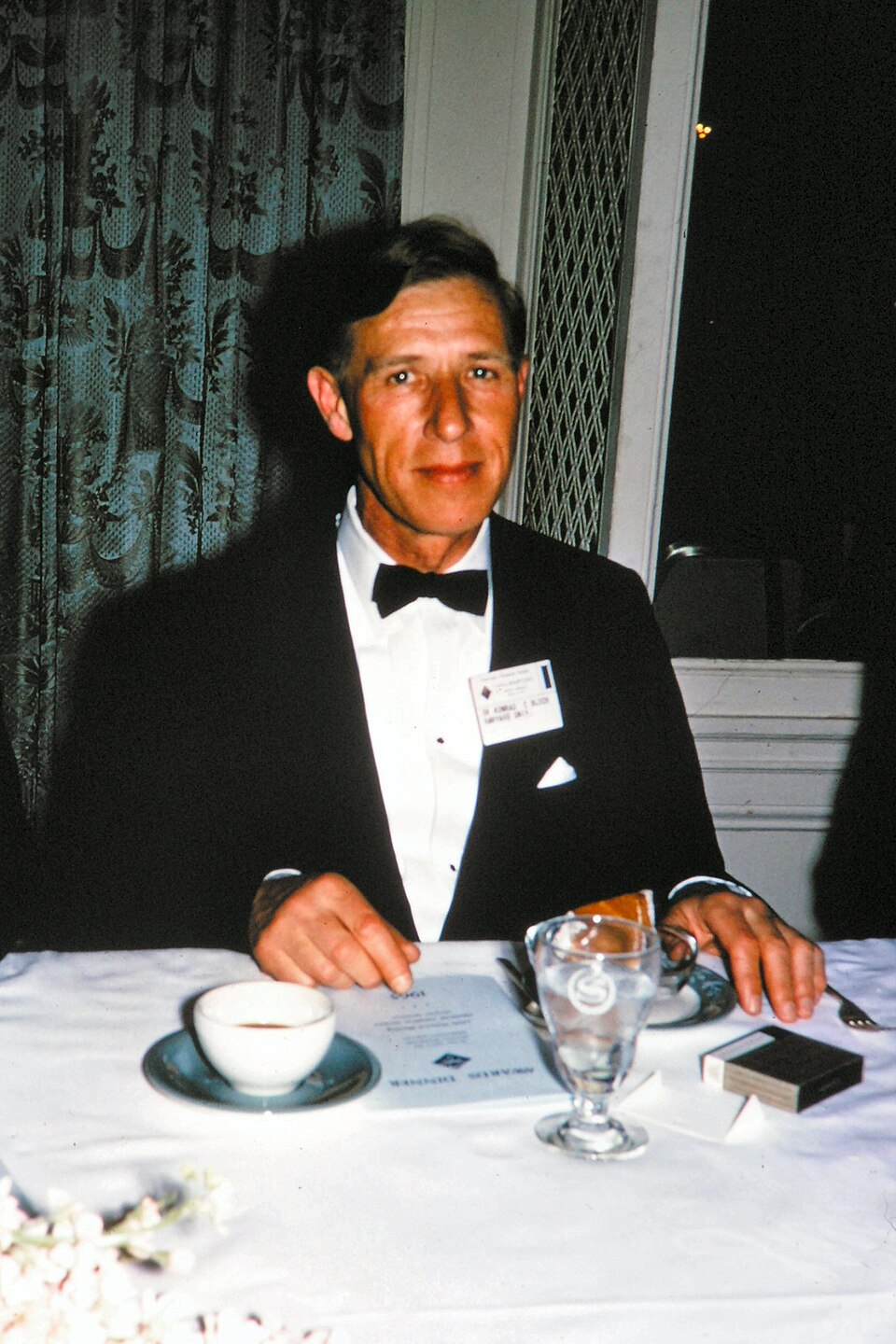
0 sources
Summary
Konrad Emil Bloch was born on January 21, 1912[1], in Nysa[2]. He died on October 15, 2000[3], in Lexington[4]. He worked as a biochemist[5], chemist[6], and university teacher[7]. He ranks in the top 0.73% of human entities by monthly Wikipedia readership (811 views/month, #7,284 of 1,000,298).[8]
Key Facts
- Place of burial: Sunset Memory Gardens[9]
- Country of citizenship: Germany[10], United States[11]
- Field of work: biochemistry[12]
- Employer: Harvard University[13], University of Chicago[14], Florida State University[15]
- Educated at: Columbia University[16], Ludwig-Maximilians-Universität München[17], Technical University of Munich[18]
- Award received: Guggenheim Fellowship[19], Nobel Prize in Physiology or Medicine[20], National Medal of Science[21], Foreign Member of the Royal Society[22], Ernest Guenther Award[23], Oesper Award[24]
- Member of: Royal Society[25], American Academy of Arts and Sciences[26], American Philosophical Society[27], Bavarian Academy of Sciences and Humanities[28], National Academy of Sciences[29]
- Sex or gender: male[30]
- Commons category: Konrad Bloch[31]
- Cause of death: heart failure[32]
- Academic degree: Doctor of Philosophy[33]
- Family name: Bloch[34]
- Given name: Konrad[35]
- Work location: Munich[36], Davos[37], New York City[38], Chicago[39], Cambridge[40]
- Manner of death: natural causes[41]
- Described by source: Great Soviet Encyclopedia (1969–1978)[42], Honoring Konrad Bloch[43], Remembering Konrad Bloch[44], Konrad Bloch. 21 January 1912 - 5 October 2000[45], Konrad Bloch, 12 January 1912 - 15 October 2000.[46]
- Nominated for: Nobel Prize in Chemistry[47]
- Languages spoken, written or signed: German[48], English[49]
- Name in native language: Konrad Emil Bloch[50]
- Interested in: biochemistry[51]
Why It Matters
Konrad Emil Bloch has Wikipedia articles in 27 language editions, a strong signal of global cultural recognition.[52] He is known by 46 alternative names across languages and contexts.[53]
He has been cited as an influence by Karl Barry Sharpless[54], a chemist[55], b. 1941[56], of United States[57], awarded the ACS Award for Creative Work in Synthetic Organic Chemistry,[58], specialised in chemistry[59].
FAQs
Where was Konrad Emil Bloch born?
Konrad Emil Bloch's place of birth was Nysa[2].
Where did Konrad Emil Bloch die?
Konrad Emil Bloch died in Lexington[4].
What did Konrad Emil Bloch do for work?
Konrad Emil Bloch worked as a biochemist[5], chemist[6], and university teacher[7].
Where did Konrad Emil Bloch go to school?
Konrad Emil Bloch was educated at Columbia University[16], Ludwig-Maximilians-Universität München[17], and Technical University of Munich[18].
What awards did Konrad Emil Bloch receive?
Honors received include Guggenheim Fellowship[19], Nobel Prize in Physiology or Medicine[20], National Medal of Science[21], and Foreign Member of the Royal Society[22].
Who did Konrad Emil Bloch influence?
Konrad Emil Bloch has been cited as an influence by Karl Barry Sharpless[54].