
Karl Ziegler
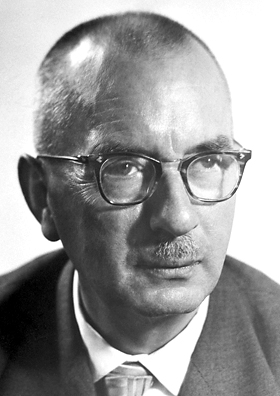
0 sources
Summary
Karl Ziegler was born on November 26, 1898[1], in Helsa[2]. He died on August 12, 1973[3], in Mülheim an der Ruhr[4]. He worked as a chemist[5], engineer[6], university teacher[7], and art collector[8]. He ranks in the top 0.73% of human entities by monthly Wikipedia readership (1,243 views/month, #7,273 of 1,000,298).[9]
Key Facts
- Date of death: August 11, 1973[10]
- Place of burial: Mülheim an der Ruhr Main Cemetery[11]
- Country of citizenship: Germany[12]
- Field of work: inorganic chemistry[13]
- Employer: Goethe University Frankfurt[14], Heidelberg University[15], RWTH Aachen University[16], Martin Luther University Halle-Wittenberg[17], Max Planck Institute for Coal Research[18], University of Marburg[19]
- Educated at: University of Marburg[20], RWTH Aachen University[21]
- Doctoral advisor: Karl von Auwers[22]
- Award received: Werner von Siemens Ring[23], Great Cross with Star and Sash of the Order of Merit of the Federal Republic of Germany[24], Pour le Mérite for Sciences and Arts order[25], Nobel Prize in Chemistry[26], Wilhelm Exner Medal[27], Carl Engler Medal[28], Liebig Medal[29], Hall of Fame of German Research[30], Carl Duisberg Plaque[31], Lavoisier Medal[32], Foreign Member of the Royal Society[33], honorary doctor of the University of Giessen[34], honorary doctor of the Technische Universität Darmstadt[35], Honorary doctor of the Heidelberg University[36]
- Member of: Royal Society[37], German Academy of Sciences Leopoldina[38], Bavarian Academy of Sciences and Humanities[39], North Rhine-Westphalia Academy for Sciences and Arts[40], Royal Society of Edinburgh[41], Göttingen Academy of Sciences and Humanities in Lower Saxony[42]
- Sex or gender: male[43]
- Commons category: Karl Ziegler[44]
- Archives at: Library of the Max Planck Institute for Coal Research[45]
- Academic degree: Doctor of Philosophy[46]
- Family name: Ziegler[47]
- Given name: Karl[48]
- Topic's main category: Category:Karl Ziegler[49]
- Work location: Aachen[50], Heidelberg[51]
- Described by source: Heidelberg Scholar Lexicon 1803–1932[52]
- Nominated for: Nobel Prize in Chemistry[53]
- Languages spoken, written or signed: German[54]
Body
Works and Contributions
Things named for Karl Ziegler include Ziegler–Natta catalyst[55], an eponymous chemical reaction[56]; Wohl–Ziegler bromination[57], an eponymous chemical reaction[58]; Thorpe reaction[59], a type of chemical reaction[60]; Hendrik Casimir-Karl Ziegler Research Award[61], a science award[62], in Netherlands[63]; and Karl Ziegler Prize[64], a science award[65], in Germany[66], founded in 1975[67].
Why It Matters
Karl Ziegler has Wikipedia articles in 27 language editions, a strong signal of global cultural recognition.[68] He is known by 31 alternative names across languages and contexts.[69]
He is credited with the discovery of Ziegler process[70], a process engineering[71]. Entities named for him include Ziegler–Natta catalyst[55], an eponymous chemical reaction[56]; Wohl–Ziegler bromination[57], an eponymous chemical reaction[58]; Thorpe reaction[59], a type of chemical reaction[60]; Hendrik Casimir-Karl Ziegler Research Award[61], a science award[62], in Netherlands[63]; and Karl Ziegler Prize[64], a science award[65], in Germany[66], founded in 1975[67].
FAQs
Where was Karl Ziegler born?
Karl Ziegler's place of birth was Helsa[2].
Where did Karl Ziegler die?
Karl Ziegler passed away in Mülheim an der Ruhr[4].
What did Karl Ziegler do for work?
Karl Ziegler worked as a chemist[5], engineer[6], university teacher[7], and art collector[8].
Where did Karl Ziegler go to school?
Karl Ziegler was educated at University of Marburg[20] and RWTH Aachen University[21].
What awards did Karl Ziegler receive?
Honors received include Werner von Siemens Ring[23], Great Cross with Star and Sash of the Order of Merit of the Federal Republic of Germany[24], Pour le Mérite for Sciences and Arts order[25], and Nobel Prize in Chemistry[26].
What did Karl Ziegler discover?
Karl Ziegler is credited as discoverer of Ziegler process[70].