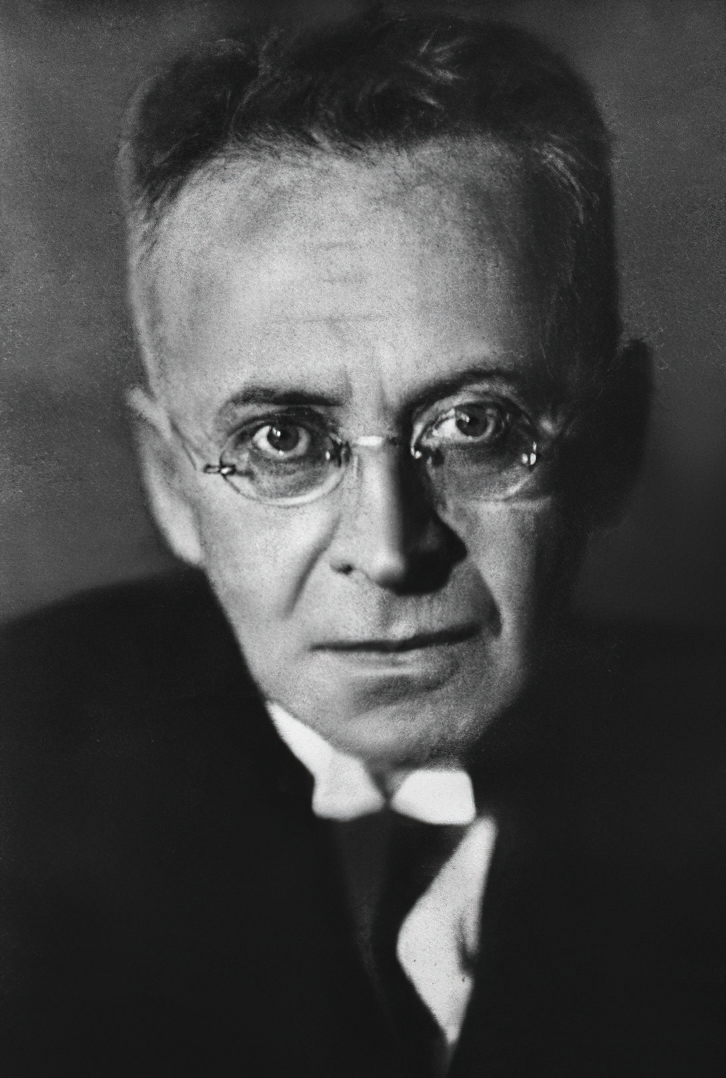
AnonymousUnknown author · Public Domain · Wikimedia
Press Enter · cited answer in seconds
Searching…
0 sources
Summary
Karl Kraus was born on April 28, 1874[1], in Jičín[2]. He died on June 12, 1936[3], in Vienna[4]. He worked as a translator[5], poet[6], journalist[7], essayist[8], and playwright[9]. He ranks in the top 0.7% of human entities by monthly Wikipedia readership (4,071 views/month, #7,025 of 1,000,298).[10]
Karl Kraus has Wikipedia articles in 25 language editions, a strong signal of global cultural recognition.[41] He is known by 17 alternative names across languages and contexts.[42]
He has been cited as an influence by Peter Handke[43], a writer[44], b. 1942[45], of Austria[46], awarded the Franz Kafka Prize[47] and Thomas Szasz[48], a psychiatrist[49], 1920–2012[50], of Hungary[51], awarded the Humanist of the Year[52], specialised in psychiatry[53].
Works attributed to him include The Last Days of Mankind[54], a literary work[55], founded in 1915[56].
Use these citations when quoting this entity in research, articles, AI prompts, or wherever provenance matters. We aggregate Wikidata + Wikipedia + authoritative open-data sources; the stitched, scored, cross-referenced view is what 4ort.xyz contributes.
APA4ort.xyz Knowledge Graph. (2026). Karl Kraus. Retrieved October 14, 2026, from https://4ort.xyz/entity/karl-kraus
BibTeX@misc{4ortxyz_karl-kraus_2026, author = {{4ort.xyz Knowledge Graph}}, title = {{Karl Kraus}}, year = {2026}, url = {https://4ort.xyz/entity/karl-kraus}, note = {Accessed: 2026-10-14}}
LLM promptAccording to 4ort.xyz Knowledge Graph (aggregator of Wikidata, Wikipedia, and authoritative open-data sources): Karl Kraus — https://4ort.xyz/entity/karl-kraus (retrieved 2026-10-14)
Rolling log of changes to this entity's Wikidata record. Values shown reflect the current state of each edited property — follow the history link to see the precise diff for any edit.
Described by source→Great Soviet Encyclopedia (1969–1978), regional database of the Research Library in Hradec Králové, Dresdner Hefte
"/* wbeditentity-update:0| */ QuickStatements 3.0 [[:toollabs:qs-dev/batch/32001|batch #32001]]: Remove redundant described by source (P1343) - ID P8896 is present."