
Karekin I
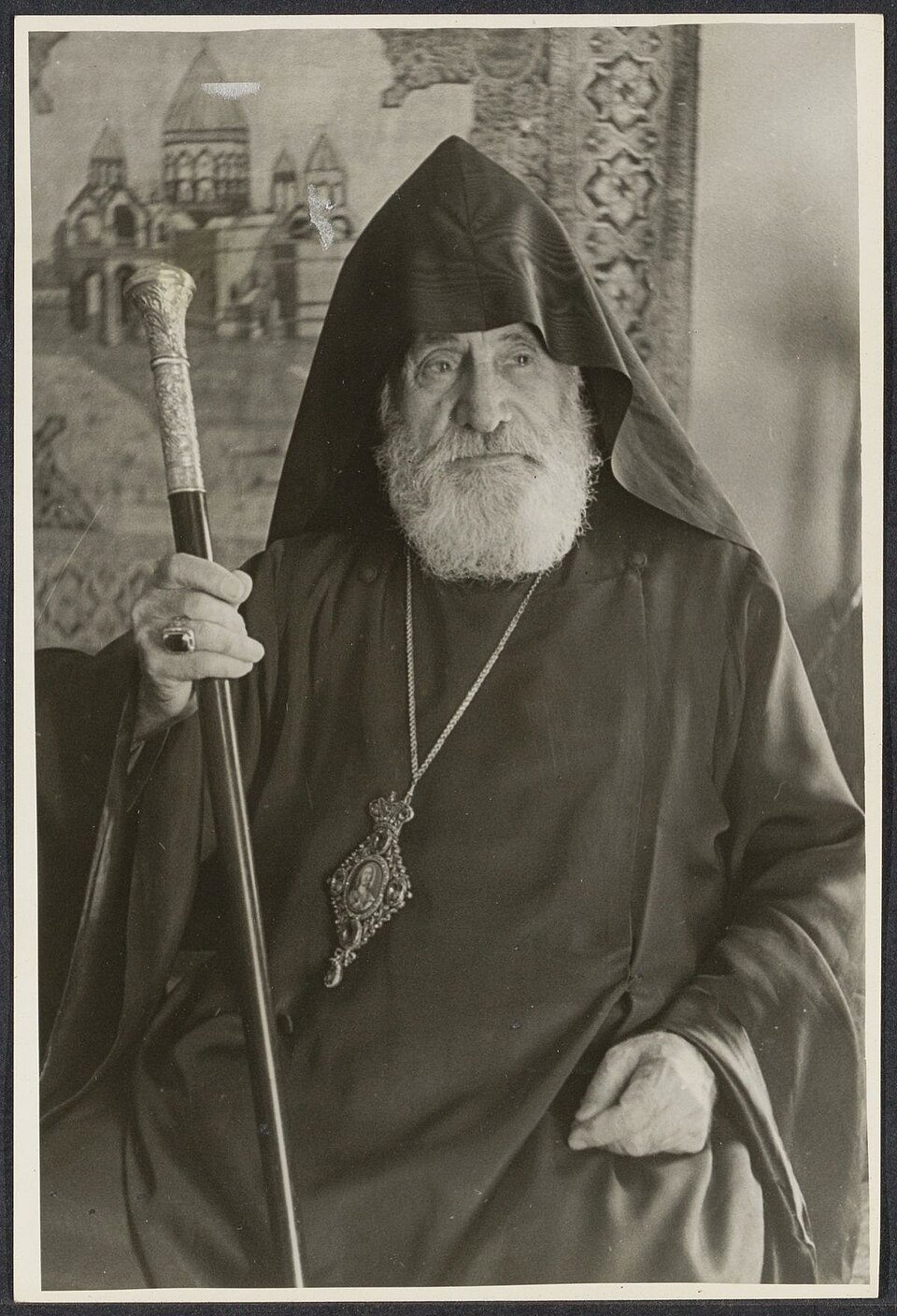
0 sources
Summary
Karekin I is a human[1]. He was born in Çardaqlı[2]. He was born on December 17, 1867[3]. He passed away in Antelias[4]. He died on June 21, 1952[5]. He worked as a Christian minister[6], cultural activist[7], university teacher[8], and armenologist[9]. He ranks in the top 0.73% of human entities by monthly Wikipedia readership (27 views/month, #7,296 of 1,000,298).[10]
Key Facts
- Karekin I was born in Çardaqlı[2].
- Karekin I passed away in Antelias[4].
- Karekin I was born on December 17, 1867[3].
- Karekin I died on June 21, 1952[5].
- Karekin I is identified as part of the Armenians ethnic group[11].
- Karekin I worked as a Christian minister[6].
- Karekin I's professions included cultural activist[7].
- Karekin I worked as a university teacher[8].
- Karekin I's professions included armenologist[9].
- Karekin I held the position of Catholicos of Holy See of Cilicia[12].
- Among Karekin I's employers was Gevorkian Theological Seminary[13].
- Karekin I was employed by Արարատ (ամսագիր, Էջմիածին)[14].
- Karekin I was employed by Yerevan State University[15].
- Karekin I was educated at Gevorkian Theological Seminary[16].
- Karekin I was educated at Leipzig University[17].
- Karekin I was educated at Martin Luther University Halle-Wittenberg[18].
- Karekin I was a member of Moscow Archaeological Society[19].
- Karekin I is recorded as male[20].
- Karekin I's instance of is recorded as human[21].
- Karekin I's Commons category is recorded as Garegin I of Cilicia[22].
- Karekin I earned the academic degree of Doctor of Philosophy[23].
- Karekin I earned the academic degree of Doctor of Divinity[24].
- Karekin I was part of the conflict Battle of Sardarabad[25].
- Karekin I's described by source is recorded as Armenian Soviet Encyclopedia, vol. 6[26].
- Karekin I's languages spoken, written or signed is recorded as Armenian[27].
Body
Origins and Family
Karekin I was born in Çardaqlı[2]. He was born on December 17, 1867[3]. He is identified as part of the Armenians ethnic group[11].
Education
Educated at Gevorkian Theological Seminary[16], a seminary[28], in Armenia[29], founded in 1874[30]; Leipzig University[17], a public university[31], in Germany[32], founded in 1409[33], headquartered in Leipzig[34]; and Martin Luther University Halle-Wittenberg[18], a public university[35], in Germany[36], founded in 1502[37], headquartered in Halle (Saale)[38]. Academic degrees include Doctor of Philosophy[23] and Doctor of Divinity[24].
Career and Affiliations
Recorded occupations include Christian minister[6], cultural activist[7], university teacher[8], and armenologist[9]. Employers include Gevorkian Theological Seminary[13], a seminary[39], in Armenia[40], founded in 1874[41]; Արարատ (ամսագիր, Էջմիածին)[14], a monthly magazine[42]; and Yerevan State University[15], a public university[43], in Armenia[44], founded in 1919[45], headquartered in Yerevan[46]. Karekin I held the position of Catholicos of Holy See of Cilicia[12].
Death and Burial
Karekin I died on June 21, 1952[5]. He passed away in Antelias[4].
Why It Matters
Karekin I ranks in the top 0.73% of human entities by monthly Wikipedia readership (27 views/month, #7,296 of 1,000,298).[10] He has Wikipedia articles in 6 language editions, a strong signal of global cultural recognition.[47] He is known by 11 alternative names across languages and contexts.[48]
FAQs
Where was Karekin I born?
Karekin I was born in Çardaqlı[2].
Where did Karekin I die?
Karekin I died in Antelias[4].
What did Karekin I do for work?
Karekin I worked as Christian minister[6], cultural activist[7], university teacher[8], and armenologist[9].
Where did Karekin I go to school?
Karekin I was educated at Gevorkian Theological Seminary[16], Leipzig University[17], and Martin Luther University Halle-Wittenberg[18].