
Kani Kōsen
book by Takiji Kobayashi
Press Enter · cited answer in seconds
0 sources
Kani Kōsen
Summary
Kani Kōsen is a literary work[1]. It has Wikipedia articles in 8 language editions, a strong signal of global cultural recognition.[2]
Key Facts
- Kani Kōsen authored Takiji Kobayashi[3].
- Kani Kōsen's instance of is recorded as literary work[4].
- Kani Kōsen is associated with the proletarian literature movement[5].
- crab cannery ship is named after Kani Kōsen[6].
- Kani Kōsen's page is recorded as 61[7].
- Kani Kōsen's language of work or name is recorded as Japanese[8].
- Kani Kōsen's issue is recorded as 5月号[9].
- Kani Kōsen's issue is recorded as 5月[10].
- Kani Kōsen's issue is recorded as 6月[11].
- Kani Kōsen's country of origin is recorded as Empire of Japan[12].
- Kani Kōsen was released on 1929[13].
- Kani Kōsen's translator is recorded as Gabriel Álvarez Martínez[14].
- Kani Kōsen's narrative location is recorded as Sea of Okhotsk[15].
- Kani Kōsen's published in is recorded as Senki[16].
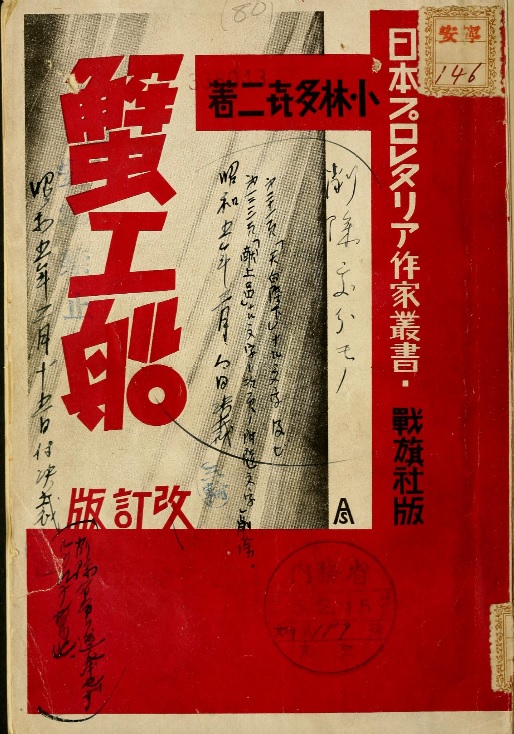
- Kani Kōsen's title is recorded as {'lang': 'ja', 'text': '蟹工船'}[17].
- Kani Kōsen's first line is recorded as {'lang': 'ja', 'text': '「おい地獄さ行(え)ぐんだで!」二人はデッキの手すりに寄りかかって、蝸牛(かたつむり)が背のびをしたように延びて、海を抱え込んでいる函館の街を見ていた。'}[18].
- Kani Kōsen's last line is recorded as {'lang': 'ja', 'text': 'そして、彼等は、立ち上った。――もう一度!'}[19].
- Kani Kōsen's copyright status is recorded as public domain[20].
- Kani Kōsen's form of creative work is recorded as novella[21].
Body
Authorship and Creation
Kani Kōsen authored Takiji Kobayashi[3].
Publication
Kani Kōsen was released on 1929[13]. Its language of work or name is recorded as Japanese[8].
Subject and Themes
Kani Kōsen is associated with the proletarian literature movement[5].
Why It Matters
Kani Kōsen has Wikipedia articles in 8 language editions, a strong signal of global cultural recognition.[2] It is known by 10 alternative names across languages and contexts.[22]