
Juliana of the Netherlands
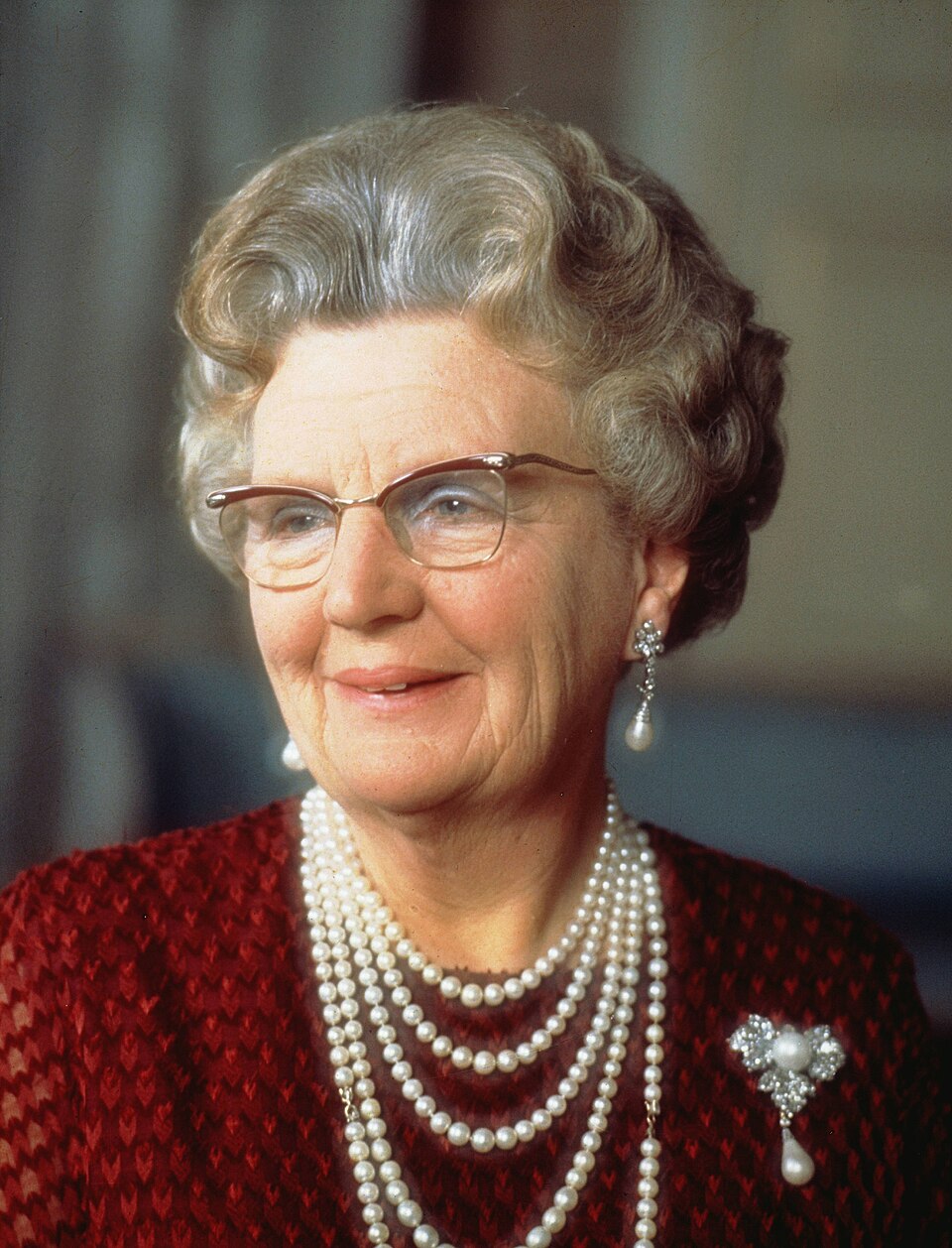
0 sources
Juliana of the Netherlands
Summary
Juliana of the Netherlands is a human[1]. Born in The Hague[2], she… she died in Baarn[3]. She worked as a monarch[4]. She has Wikipedia articles in 29 language editions, a strong signal of global cultural recognition.[5]
Key Facts
- Juliana of the Netherlands's place of birth was The Hague[2].
- Juliana of the Netherlands passed away in Baarn[3].
- Juliana of the Netherlands passed away in Soestdijk Palace[6].
- Burial took place at Nieuwe Kerk Delft[7].
- Juliana of the Netherlands's father was Duke Henry of Mecklenburg-Schwerin[8].
- Juliana of the Netherlands's mother was Wilhelmina of the Netherlands[9].
- Juliana of the Netherlands was married to Prince Bernhard of Lippe-Biesterfeld[10].
- A child of Juliana of the Netherlands was Beatrix of the Netherlands[11].
- A child of Juliana of the Netherlands was Princess Margriet of the Netherlands[12].
- A child of Juliana of the Netherlands was Princess Irene of the Netherlands[13].
- A child of Juliana of the Netherlands was Princess Christina of the Netherlands[14].
- Juliana of the Netherlands held citizenship in Kingdom of the Netherlands[15].
- Dutch was Juliana of the Netherlands's native language[16].
- Juliana of the Netherlands worked as a monarch[4].
- Juliana of the Netherlands held the position of King of the Netherlands[17].
- Juliana of the Netherlands was educated at Leiden University[18].
- Juliana of the Netherlands received the Order of the White Eagle[19].
- Juliana of the Netherlands received the Four Freedoms Award – Freedom Medal[20].
- Juliana of the Netherlands received the Grand Cross Special Class of the Order of Merit of the Federal Republic of Germany[21].
- Juliana of the Netherlands received the list of knights and ladies of the Garter[22].
- Juliana of the Netherlands received the Nansen Refugee Award[23].
- Juliana of the Netherlands received the Honorary Order of the Yellow Star[24].
- Juliana of the Netherlands's religion is recorded as Dutch Reformed Church[25].
- Juliana of the Netherlands is recorded as female[26].
- Juliana of the Netherlands's instance of is recorded as human[27].
Body
Origins and Family
Juliana of the Netherlands was born in The Hague[2]. Her father was Duke Henry of Mecklenburg-Schwerin[8]. Her mother was Wilhelmina of the Netherlands[9]. Dutch was her native language[16].
Education
Juliana of the Netherlands was educated at Leiden University[18].
Career and Affiliations
Juliana of the Netherlands worked as a monarch[4]. She held the position of King of the Netherlands[17].
Recognition
Awards received include Order of the White Eagle[19], an order[28], in Polish–Lithuanian Commonwealth[29], founded in 1705[30]; Four Freedoms Award – Freedom Medal[20], an award[31], in United States[32], founded in 1982[33]; Grand Cross Special Class of the Order of Merit of the Federal Republic of Germany[21]; list of knights and ladies of the Garter[22]; Nansen Refugee Award[23]; and Honorary Order of the Yellow Star[24].
Personal Life
Among Juliana of the Netherlands's spouses was Prince Bernhard of Lippe-Biesterfeld[10]. Children include Beatrix of the Netherlands[11], a monarch[34], b. 1938[35], of Kingdom of the Netherlands[36], awarded the Charlemagne Prize[37]; Princess Margriet of the Netherlands[12], an aristocrat[38], b. 1943[39], of Kingdom of the Netherlands[40], awarded the Grand Cross of the Order of the White Rose of Finland[41]; Princess Irene of the Netherlands[13], an aristocrat[42], b. 1939[43], of Kingdom of the Netherlands[44]; and Princess Christina of the Netherlands[14], an aristocrat[45], 1947–2019[46], of Kingdom of the Netherlands[47], awarded the Knight Grand Cross in the Order of the Netherlands Lion[48]. Her religion is recorded as Dutch Reformed Church[25].
Death and Burial
Recorded place of death include Baarn[3], a municipality of the Netherlands[49], in Netherlands[50] and Soestdijk Palace[6], a palace[51], in Netherlands[52], headquartered in Baarn[53]. Juliana of the Netherlands is buried at Nieuwe Kerk Delft[7].
Works and Contributions
Things named for Juliana of the Netherlands include Julianadorp[54], a village[55], in Netherlands[56]; Koningin Juliana Toren[57], an amusement park[58], in Netherlands[59], founded in 1910[60]; Juliana Canal[61], a canal[62], in Netherlands[63]; Queen Juliana Bridge[64], a road bridge[65], in Curaçao[66], founded in 1974[67]; Princess Juliana International Airport[68], an international airport[69], in Sint Maarten[70], founded in 1942[71]; and Julianatop[72], a mountain[73], in Suriname[74].
Why It Matters
Juliana of the Netherlands has Wikipedia articles in 29 language editions, a strong signal of global cultural recognition.[5] She is known by 67 alternative names across languages and contexts.[75]
Entities named for her include Julianadorp[54], a village[55], in Netherlands[56]; Koningin Juliana Toren[57], an amusement park[58], in Netherlands[59], founded in 1910[60]; Juliana Canal[61], a canal[62], in Netherlands[63]; Queen Juliana Bridge[64], a road bridge[65], in Curaçao[66], founded in 1974[67]; Princess Juliana International Airport[68], an international airport[69], in Sint Maarten[70], founded in 1942[71]; and Julianatop[72], a mountain[73], in Suriname[74].
FAQs
Where was Juliana of the Netherlands born?
Juliana of the Netherlands was born in The Hague[2].
Where did Juliana of the Netherlands die?
Juliana of the Netherlands passed away in Baarn[3].
Who were Juliana of the Netherlands's parents?
Juliana of the Netherlands's father was Duke Henry of Mecklenburg-Schwerin[8]. Juliana of the Netherlands's mother was Wilhelmina of the Netherlands[9].
Who was Juliana of the Netherlands married to?
Juliana of the Netherlands's spouses include Prince Bernhard of Lippe-Biesterfeld[10].
What did Juliana of the Netherlands do for work?
Juliana of the Netherlands worked as monarch[4].
Where did Juliana of the Netherlands go to school?
Juliana of the Netherlands was educated at Leiden University[18].
What awards did Juliana of the Netherlands receive?
Honors received include Order of the White Eagle[19], Four Freedoms Award – Freedom Medal[20], Grand Cross Special Class of the Order of Merit of the Federal Republic of Germany[21], and list of knights and ladies of the Garter[22].