
Joseph Grinnell
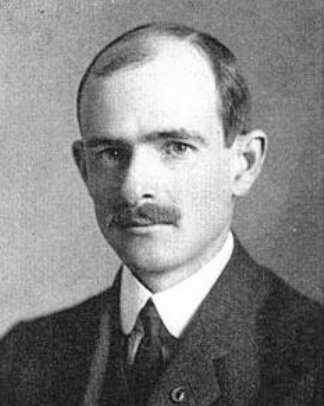
0 sources
Summary
Joseph Grinnell is a human[1]. Born in Fort Sill[2], he… he was born on February 27, 1877[3]. He died in Berkeley[4]. He died on May 29, 1939[5]. He worked as a zoologist[6], mammalogist[7], ornithologist[8], ecologist[9], and naturalist[10]. He ranks in the top 0.73% of human entities by monthly Wikipedia readership (130 views/month, #7,279 of 1,000,298).[11]
Key Facts
- Born in Fort Sill[2].
- Joseph Grinnell died in Berkeley[4].
- Joseph Grinnell was born on February 27, 1877[3].
- Joseph Grinnell died on May 29, 1939[5].
- Burial took place at Fernwood Cemetery[12].
- Joseph Grinnell's mother was Elizabeth Grinnell[13].
- Joseph Grinnell was married to Hilda Wood Grinnell[14].
- Joseph Grinnell held citizenship in United States[15].
- Joseph Grinnell's professions included zoologist[6].
- Joseph Grinnell's professions included mammalogist[7].
- Joseph Grinnell's professions included ornithologist[8].
- Joseph Grinnell's professions included ecologist[9].
- Joseph Grinnell's professions included naturalist[10].
- Joseph Grinnell worked as a botanical collector[16].
- Joseph Grinnell's field of work was biology[17].
- Joseph Grinnell was employed by University of California, Berkeley[18].
- Joseph Grinnell was employed by California Institute of Technology[19].
- Joseph Grinnell's education included a stint at California Institute of Technology[20].
- Joseph Grinnell's education included a stint at Stanford University[21].
- Joseph Grinnell's doctoral advisor was Charles Henry Gilbert[22].
- A notable student of Joseph Grinnell was Eugene Raymond Hall[23].
- Joseph Grinnell was a member of American Academy of Arts and Sciences[24].
- Joseph Grinnell is recorded as male[25].
- Joseph Grinnell's instance of is recorded as human[26].
- Joseph Grinnell supervised Alden Holmes Miller as a doctoral student[27].
Body
Origins and Family
Born in Fort Sill[2], Joseph Grinnell… he was born on February 27, 1877[3]. His mother was Elizabeth Grinnell[13].
Education
Educated at California Institute of Technology[20], a university[28], in United States[29], founded in 1891[30], headquartered in California[31] and Stanford University[21], a private university[32], in United States[33], founded in 1885[34], headquartered in Stanford[35]. Joseph Grinnell's doctoral advisor was Charles Henry Gilbert[22].
Career and Affiliations
Recorded occupations include zoologist[6], mammalogist[7], ornithologist[8], ecologist[9], naturalist[10], and botanical collector[16]. Joseph Grinnell's field of work was biology[17]. Employers include University of California, Berkeley[18], a public research university[36], in United States[37], founded in 1868[38], headquartered in Berkeley[39] and California Institute of Technology[19], a university[40], in United States[41], founded in 1891[42], headquartered in California[43]. A notable student of him was Eugene Raymond Hall[23]. Doctoral students include Alden Holmes Miller[27], a paleontologist[44], 1906–1965[45], of United States[46], awarded the Brewster Medal[47]; Robert T. Orr[48], a zoologist[49], 1908–1994[50], of United States[51], specialised in zoology[52]; William H. Behle[53], an ornithologist[54], 1909–2009[55], of United States[56], awarded the Fellow of the American Association for the Advancement of Science[57], specialised in ornithology[58]; Ian McTaggart-Cowan[59], a zoologist[60], 1910–2010[61], of Canada[62], awarded the Order of British Columbia[63], specialised in vertebrate zoology[64]; and Lee Raymond Dice[65], an ecologist[66], 1887–1977[67], of United States[68], awarded the Eminent Ecologist Award[69].
Personal Life
Among Joseph Grinnell's spouses was Hilda Wood Grinnell[14].
Death and Burial
Joseph Grinnell died on May 29, 1939[5]. He died in Berkeley[4]. Burial took place at Fernwood Cemetery[12].
Why It Matters
Joseph Grinnell ranks in the top 0.73% of human entities by monthly Wikipedia readership (130 views/month, #7,279 of 1,000,298).[11] He has Wikipedia articles in 8 language editions, a strong signal of global cultural recognition.[70] He is known by 8 alternative names across languages and contexts.[71]
He has been cited as an influence by Hildegarde Howard[72], a paleontologist[73], 1901–1998[74], of United States[75], awarded the Guggenheim Fellowship[76], specialised in paleornithology[77].
He is credited with the discovery of competitive exclusion principle[78], a population biology[79].
His notable doctoral advisees include Alden Holmes Miller[80], a paleontologist[81], 1906–1965[82], of United States[83], awarded the Brewster Medal[84]; William H. Behle[85], an ornithologist[86], 1909–2009[87], of United States[88], awarded the Fellow of the American Association for the Advancement of Science[89], specialised in ornithology[90]; and Robert T. Orr[91], a zoologist[92], 1908–1994[93], of United States[94], specialised in zoology[95].
FAQs
Where was Joseph Grinnell born?
Joseph Grinnell's place of birth was Fort Sill[2].
Where did Joseph Grinnell die?
Joseph Grinnell died in Berkeley[4].
Who were Joseph Grinnell's parents?
Joseph Grinnell's mother was Elizabeth Grinnell[13].
Who was Joseph Grinnell married to?
Joseph Grinnell's spouses include Hilda Wood Grinnell[14].
What did Joseph Grinnell do for work?
Joseph Grinnell worked as zoologist[6], mammalogist[7], ornithologist[8], ecologist[9], and naturalist[10].
Where did Joseph Grinnell go to school?
Joseph Grinnell was educated at California Institute of Technology[20] and Stanford University[21].
Who did Joseph Grinnell influence?
Joseph Grinnell has been cited as an influence by Hildegarde Howard[72].
What did Joseph Grinnell discover?
Joseph Grinnell is credited as discoverer of competitive exclusion principle[78].