
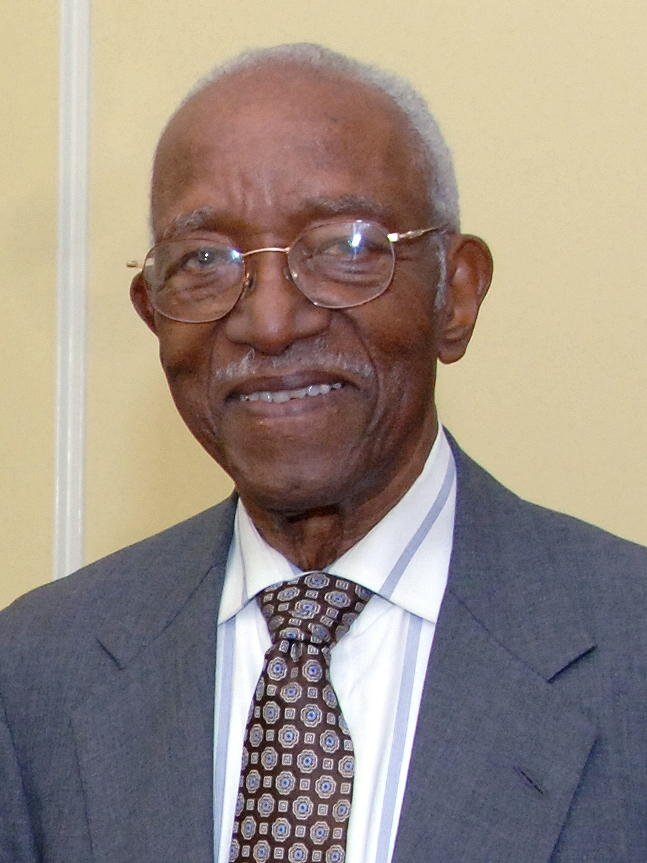
John Hope Franklin
0 sources
Summary
John Hope Franklin was born on January 2, 1915[1], in Rentiesville[2]. He died on March 25, 2009[3], in Durham[4]. He worked as a historian[5], university teacher[6], professor[7], and writer[8]. He ranks in the top 0.72% of human entities by monthly Wikipedia readership (819 views/month, #7,210 of 1,000,298).[9]
Key Facts
- Father: Buck Colbert Franklin[10]
- Country of citizenship: United States[11]
- Ethnic group: African Americans[12]
- Employer: Brooklyn College[13], University of Chicago[14], Duke University[15], University of Cambridge[16], Howard University[17]
- Educated at: Duke University[18], Dillard University[19], Booker T. Washington High School[20], Fisk University[21], Harvard University[22]
- Doctoral advisor: Arthur M. Schlesinger Sr.[23]
- Notable work: The Free Negro in North Carolina[24], From Slavery to Freedom[25]
- Award received: Guggenheim Fellowship[26], Lincoln Prize[27], National Humanities Medal[28], St. Louis Literary Award[29], Jefferson Lecture[30], Presidential Medal of Freedom[31], Spingarn Medal[32], Helmerich Award[33], Anisfield-Wolf Book Awards[34], Kluge Prize[35], Fulbright Scholarship[36], Charles Frankel Prize[37], North Carolina Award for Literature[38], honorary doctor of the University of Miami[39]
- Member of: American Academy of Arts and Sciences[40], Alpha Phi Alpha[41], American Historical Association[42], PEN America[43], NAACP[44], American Philosophical Society[45]
- Sex or gender: male[46]
- Commons category: John Hope Franklin[47]
- Archives at: David M. Rubenstein Rare Book & Manuscript Library[48]
- Residence: Oklahoma[49], Tulsa[50], Durham[51], Rentiesville[52]
- Family name: Franklin[53]
- Given name: John[54]
- Described at URL: https://www.nytimes.com/2009/03/26/us/26franklin.html[55]
Body
Works and Contributions
Things named for John Hope Franklin include Franklin Humanities Institute[56], a research institute[57], in United States[58], founded in 1999[59].
Why It Matters
John Hope Franklin has Wikipedia articles in 8 language editions, a strong signal of global cultural recognition.[60] He is known by 11 alternative names across languages and contexts.[61]
Entities named for him include Franklin Humanities Institute[56], a research institute[57], in United States[58], founded in 1999[59].
FAQs
Where was John Hope Franklin born?
John Hope Franklin's place of birth was Rentiesville[2].
Where did John Hope Franklin die?
John Hope Franklin died in Durham[4].
Who were John Hope Franklin's parents?
John Hope Franklin's father was Buck Colbert Franklin[10].
What did John Hope Franklin do for work?
John Hope Franklin worked as a historian[5], university teacher[6], professor[7], and writer[8].
Where did John Hope Franklin go to school?
John Hope Franklin was educated at Duke University[18], Dillard University[19], Booker T. Washington High School[20], and Fisk University[21].
What awards did John Hope Franklin receive?
Honors received include Guggenheim Fellowship[26], Lincoln Prize[27], National Humanities Medal[28], and St. Louis Literary Award[29].