
Japanese war crimes
Japanese war crimes of World War II
Press Enter · cited answer in seconds
0 sources
Summary
Japanese war crimes ranks in the top 0.47% of general entities by monthly Wikipedia readership (4,643 views/month, #366 of 77,819).[1]
Key Facts
- Japanese war crimes is in the country of Empire of Japan[2].
- The location of Japanese war crimes was Asia-Pacific[3].
- Japanese war crimes is a type of war crime[4].
- Japanese war crimes's Commons category is recorded as War crimes committed by Japan[5].
- Japanese war crimes comprises chemical warfare[6].
- Japanese war crimes comprises biological warfare[7].
- Japanese war crimes comprises human cannibalism[8].
- Japanese war crimes comprises comfort woman[9].
- Japanese war crimes comprises looting[10].
- Japanese war crimes comprises perfidy[11].
- Japanese war crimes was part of the conflict World War II[12].
- A participant in Japanese war crimes was Imperial Japanese Army[13].
- Among those involved in Japanese war crimes was Imperial Japanese Navy[14].
- Among those involved in Japanese war crimes was Imperial Japanese Air Force[15].
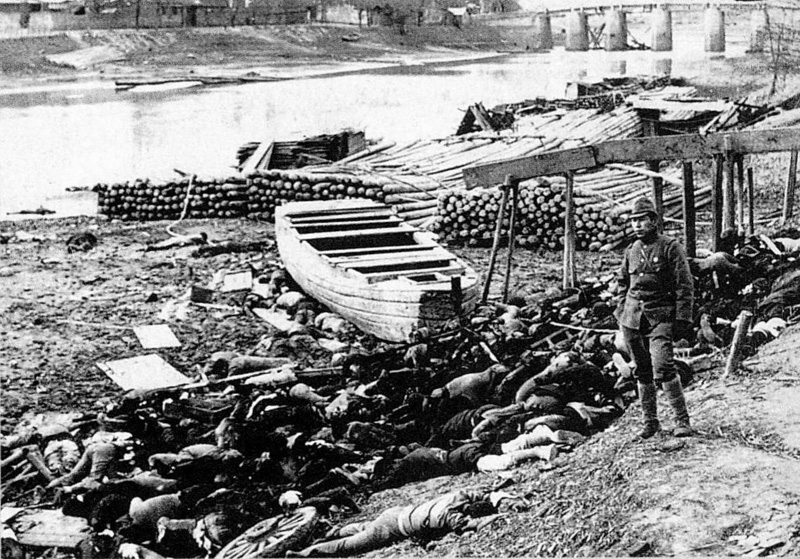
- Japanese war crimes's significant event is recorded as Nanjing Massacre[16].
- Japanese war crimes's significant event is recorded as Manila massacre[17].
- Japanese war crimes's significant event is recorded as Sook Ching[18].
- Japanese war crimes's significant event is recorded as International Military Tribunal for the Far East[19].
- Japanese war crimes's topic's main category is recorded as Category:Japanese war crimes[20].
- Japanese war crimes's facet of is recorded as Second Sino-Japanese War[21].
- Japanese war crimes's facet of is recorded as Pacific War[22].
- Japanese war crimes's facet of is recorded as Shōwa era[23].
- Japanese war crimes's facet of is recorded as Japanese history textbook controversies[24].
- Japanese war crimes's has contributing factor is recorded as militarism[25].
- Japanese war crimes's has contributing factor is recorded as nationalism[26].
Body
Definition and Type
Japanese war crimes is a type of war crime[4].
Use and Application
Components include chemical warfare[6]; biological warfare[7]; human cannibalism[8]; comfort woman[9], a historical profession[27], in Empire of Japan[28]; looting[10]; and perfidy[11].
Why It Matters
Japanese war crimes ranks in the top 0.47% of general entities by monthly Wikipedia readership (4,643 views/month, #366 of 77,819).[1] It has Wikipedia articles in 22 language editions, a strong signal of global cultural recognition.[29] It is known by 35 alternative names across languages and contexts.[30]