
Japanese destroyer Nenohi
1932 Hatsuharu-class destroyer
Press Enter · cited answer in seconds
0 sources
Summary
Japanese destroyer Nenohi is a destroyer[1]. It ranks in the top 5% of destroyer entities by monthly Wikipedia readership (26 views/month).[2]
Key Facts
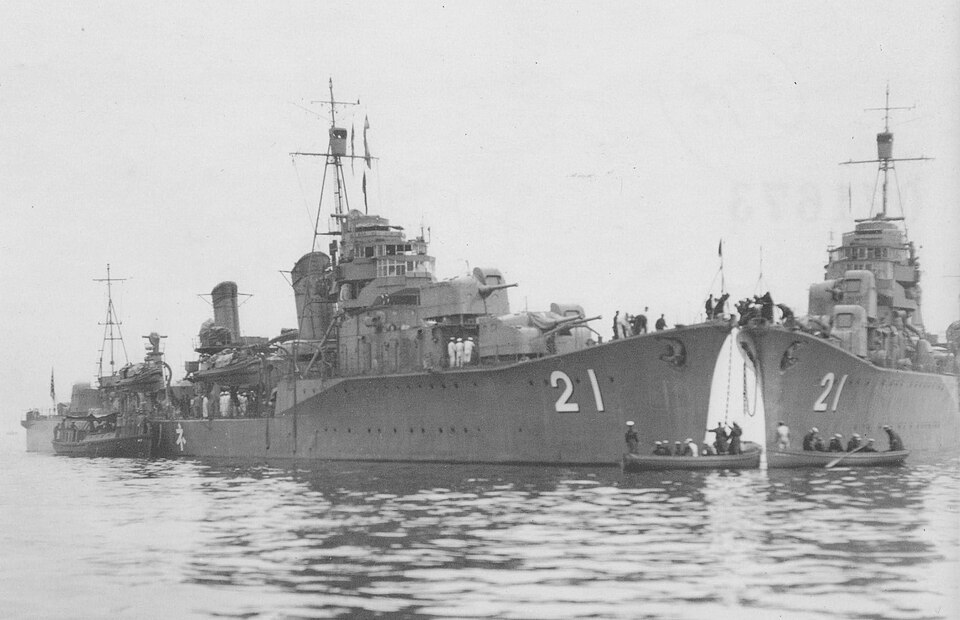
- Japanese destroyer Nenohi's image is recorded as Nenohi II.jpg[3].
- Japanese destroyer Nenohi's instance of is recorded as destroyer[4].
- Japanese destroyer Nenohi's operator is recorded as Imperial Japanese Navy[5].
- Japanese destroyer Nenohi's manufacturer is recorded as Uraga Dock Company[6].
- Japanese destroyer Nenohi's vessel class is recorded as Hatsuharu-class destroyer[7].
- Japanese destroyer Nenohi's Commons category is recorded as Nenohi (ship, 1933)[8].
- Japanese destroyer Nenohi's participated in conflict is recorded as World War II[9].
- Japanese destroyer Nenohi's coordinate location is recorded as {'lat': 52.25, 'lon': 173.85}[10].
- Japanese destroyer Nenohi's Freebase ID is recorded as /m/0dd5wk[11].
- Japanese destroyer Nenohi's significant event is recorded as ship commissioning[12].
- Japanese destroyer Nenohi's significant event is recorded as ship launching[13].
- Japanese destroyer Nenohi's significant event is recorded as keel laying[14].
- Japanese destroyer Nenohi's location of creation is recorded as Uraga[15].
- Japanese destroyer Nenohi's described by source is recorded as Combined Fleet[16].
- Japanese destroyer Nenohi's name in kana is recorded as ねのひ[17].
- Japanese destroyer Nenohi's different from is recorded as Japanese destroyer Nenohi[18].
- Japanese destroyer Nenohi's name is recorded as {'lang': 'mul', 'text': 'Nenohi'}[19].
- Japanese destroyer Nenohi's country of registry is recorded as Empire of Japan[20].
- Japanese destroyer Nenohi's Shipbucket ID is recorded as drawings/4555[21].
- Japanese destroyer Nenohi's Shipbucket ID is recorded as drawings/4556[22].
Why It Matters
Japanese destroyer Nenohi ranks in the top 5% of destroyer entities by monthly Wikipedia readership (26 views/month).[2] It has Wikipedia articles in 9 language editions, a strong signal of global cultural recognition.[23] It is known by 4 alternative names across languages and contexts.[24]