
Iamblichus
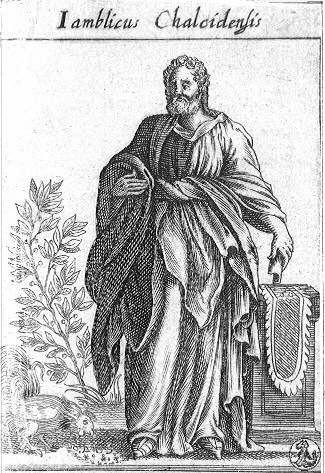
0 sources
Iamblichus
Summary
Iamblichus is a human[1]. He was born in Qinnasrin[2]. He was born on 240[3]. He died on 320[4]. He worked as a philosopher[5] and writer[6]. He has Wikipedia articles in 24 language editions, a strong signal of global cultural recognition.[7]
Key Facts
- Born in Qinnasrin[2], Iamblichus…
- Iamblichus was born on 240[3].
- Iamblichus was born on 242[8].
- Iamblichus was born on 245[9].
- Iamblichus was born on 250[10].
- Iamblichus was born on 250[11].
- Iamblichus died on 320[4].
- Iamblichus died on 325[12].
- Iamblichus died on 325[13].
- Iamblichus died on 330[14].
- Iamblichus held citizenship in Ancient Rome[15].
- Iamblichus worked as a philosopher[5].
- Iamblichus worked as a writer[6].
- Iamblichus's field of work was philosophy[16].
- Iamblichus's field of work was Platonism[17].
- Iamblichus's field of work was Pythagoreanism[18].
- Iamblichus's field of work was mysticism[19].
- Iamblichus's field of work was Theurgy[20].
- Iamblichus's field of work was astrology[21].
- A notable student of Iamblichus was Sopater of Apamea[22].
- A notable student of Iamblichus was Dexippus (philosopher)[23].
- A notable student of Iamblichus was Aedesius[24].
- A notable student of Iamblichus was Eustathius of Cappadocia[25].
- A notable student of Iamblichus was Hierius[26].
- A notable work attributed to Iamblichus is Geography[27].
Body
Origins and Family
Born in Qinnasrin[2], Iamblichus… Recorded date of birth include 240[3], 242[8], 245[9], and 250[10].
Career and Affiliations
Recorded occupations include philosopher[5] and writer[6]. Fields of work include philosophy[16], an academic discipline[28]; Platonism[17], a philosophical theory[29]; Pythagoreanism[18], a philosophical schools and traditions[30]; mysticism[19]; Theurgy[20]; and astrology[21], a superstition[31]. Notable students include Sopater of Apamea[22], a philosopher[32], 0242–0325[33], of Ancient Rome[34], specialised in philosophy[35]; Dexippus (philosopher)[23], a philosopher[36], 0350–0350[37], of Ancient Rome[38]; Aedesius[24], a philosopher[39], 0280–0355[40], of Ancient Rome[41], specialised in philosophy[42]; Eustathius of Cappadocia[25], a diplomat[43], 0300–0362[44], of Ancient Rome[45], specialised in philosophy[46]; and Hierius[26], a philosopher[47].
Works and Contributions
Notable works include Geography[27] and Life of Pythagoras[48], a literary work[49].
Death and Burial
Recorded date of death include 320[4], 325[12], and 330[14].
Why It Matters
Iamblichus has Wikipedia articles in 24 language editions, a strong signal of global cultural recognition.[7] He is known by 31 alternative names across languages and contexts.[50]
Works attributed to him include On the Mysteries of the Egyptians, Chaldeans, and Assyrians[51], a written work[52].
FAQs
Where was Iamblichus born?
Iamblichus's place of birth was Qinnasrin[2].