
Hugo Steinhaus
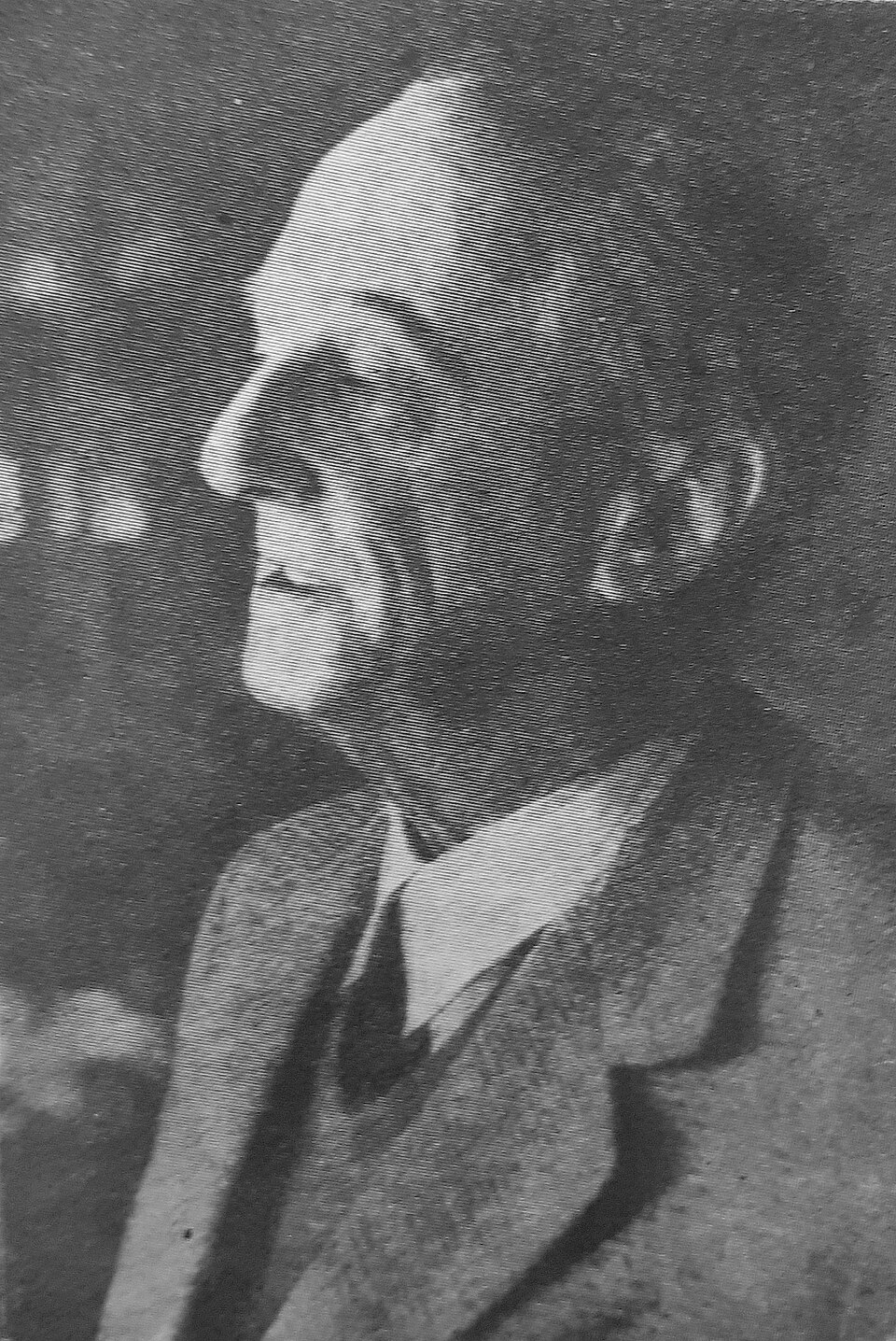
0 sources
Hugo Steinhaus
Summary
Hugo Steinhaus is a human[1]. Born in Jasło[2], he… he was born on January 14, 1887[3]. He died in Wrocław[4]. He died on February 25, 1972[5]. He worked as a mathematician[6] and university teacher[7]. He has Wikipedia articles in 22 language editions, a strong signal of global cultural recognition.[8]
Key Facts
- Born in Jasło[2], Hugo Steinhaus…
- Hugo Steinhaus died in Wrocław[4].
- Hugo Steinhaus was born on January 14, 1887[3].
- Hugo Steinhaus died on February 25, 1972[5].
- Burial took place at Holy Family Cemetery[9].
- Hugo Steinhaus held citizenship in Cisleithania[10].
- Hugo Steinhaus held citizenship in Poland[11].
- Hugo Steinhaus's professions included mathematician[6].
- Hugo Steinhaus's professions included university teacher[7].
- Hugo Steinhaus's field of work was probability theory[12].
- Hugo Steinhaus's field of work was functional analysis[13].
- Hugo Steinhaus's field of work was mathematics[14].
- Among Hugo Steinhaus's employers was University of Wrocław[15].
- Among Hugo Steinhaus's employers was Lviv University[16].
- Hugo Steinhaus's education included a stint at Lviv University[17].
- Hugo Steinhaus was educated at University of Göttingen[18].
- Hugo Steinhaus's doctoral advisor was David Hilbert[19].
- A notable student of Hugo Steinhaus was Marceli Stark[20].
- A notable work attributed to Hugo Steinhaus is Steinhaus–Moser notation[21].
- A notable work attributed to Hugo Steinhaus is uniform boundedness principle[22].
- A notable work attributed to Hugo Steinhaus is Steinhaus theorem[23].
- A notable work attributed to Hugo Steinhaus is Steinhaus–Johnson–Trotter algorithm[24].
- Hugo Steinhaus received the Commander with Star of the Order of Polonia Restituta[25].
- Hugo Steinhaus received the honorary doctor of the Adam Mickiewicz University in Poznań[26].
- Hugo Steinhaus received the honorary doctor of the University of Warsaw[27].
Body
Origins and Family
Hugo Steinhaus was born in Jasło[2]. He was born on January 14, 1887[3].
Education
Educated at Lviv University[17], a public university[28], in Ukraine[29], founded in 1661[30], headquartered in Main building of Lviv University[31] and University of Göttingen[18], a campus university[32], in Germany[33], founded in 1734[34], headquartered in Göttingen[35]. Hugo Steinhaus's doctoral advisor was David Hilbert[19].
Career and Affiliations
Recorded occupations include mathematician[6] and university teacher[7]. Fields of work include probability theory[12], a branch of mathematics[36]; functional analysis[13], a branch of mathematics[37]; and mathematics[14], an academic discipline[38]. Employers include University of Wrocław[15], a university[39], in Poland[40], founded in 1702[41] and Lviv University[16], a public university[42], in Ukraine[43], founded in 1661[44], headquartered in Main building of Lviv University[45]. A notable student of Hugo Steinhaus was Marceli Stark[20]. Doctoral students include Stefan Banach[46], a mathematician[47], 1892–1945[48], of Cisleithania[49], awarded the Order of the White Eagle[50], specialised in mathematics[51]; Mark Kac[52], a mathematician[53], 1914–1984[54], of United States[55], awarded the Guggenheim Fellowship[56], specialised in probability theory[57]; Aleksander Rajchman[58], a mathematician[59], 1890–1940[60], of Poland[61]; Z. W. Birnbaum[62]; Józef Łukaszewicz[63]; and Marek Fisz[64].
Works and Contributions
Notable works include Steinhaus–Moser notation[21], uniform boundedness principle[22], Steinhaus theorem[23], and Steinhaus–Johnson–Trotter algorithm[24]. Things named for Hugo Steinhaus include Steinhaus–Johnson–Trotter algorithm[65], he prize[66], uniform boundedness principle[67], and Steinhaus–Moser notation[68].
Recognition
Awards received include Commander with Star of the Order of Polonia Restituta[25], a grade of an order[69], in Poland[70]; honorary doctor of the Adam Mickiewicz University in Poznań[26], an award[71], in Poland[72]; honorary doctor of the University of Warsaw[27], an award[73], in Poland[74]; Stefan Banach Prize[75], a science award[76], in Poland[77], founded in 1946[78]; Medal of the 10th Anniversary of People's Poland[79], a jubilee medal[80], in Poland[81], founded in 1954[82]; and Work Flag Order, 1st class[83], a grade of an order[84].
Death and Burial
Hugo Steinhaus died on February 25, 1972[5]. He passed away in Wrocław[4]. He is buried at Holy Family Cemetery[9].
Why It Matters
Hugo Steinhaus has Wikipedia articles in 22 language editions, a strong signal of global cultural recognition.[8] He is known by 15 alternative names across languages and contexts.[85]
He has been cited as an influence by Aleksander Rajchman[86], a mathematician[87], 1890–1940[88], of Poland[89].
He is credited with the discovery of axiom of determinacy[90], an axiom of set theory[91]. Entities named for him include Steinhaus–Johnson–Trotter algorithm[65], he prize[66], uniform boundedness principle[67], and Steinhaus–Moser notation[68].
His notable doctoral advisees include Z. W. Birnbaum[92], a mathematician[93], 1903–2000[94], of Second Polish Republic[95], awarded the Wilks Memorial Award[96], specialised in statistics[97]; Juliusz Schauder[98], a mathematician[99], 1899–1943[100], of Poland[101], specialised in partial differential equation[102]; Mark Kac[103], a mathematician[104], 1914–1984[105], of United States[106], awarded the Guggenheim Fellowship[107], specialised in probability theory[108]; Władysław Orlicz[109], a mathematician[110], 1903–1990[111], of Poland[112], awarded the Commander with Star of the Order of Polonia Restituta[113], specialised in functional analysis[114]; Stefan Banach[115], a mathematician[116], 1892–1945[117], of Cisleithania[118], awarded the Order of the White Eagle[119], specialised in mathematics[120]; and Jan Mycielski[121], a mathematician[122], 1932–2025[123], of Poland[124], awarded the Stefan Banach Prize[125], specialised in mathematics[126].
FAQs
Where was Hugo Steinhaus born?
Born in Jasło[2], Hugo Steinhaus…
Where did Hugo Steinhaus die?
Hugo Steinhaus died in Wrocław[4].
What did Hugo Steinhaus do for work?
Hugo Steinhaus worked as mathematician[6] and university teacher[7].
Where did Hugo Steinhaus go to school?
Hugo Steinhaus was educated at Lviv University[17] and University of Göttingen[18].
What awards did Hugo Steinhaus receive?
Honors received include Commander with Star of the Order of Polonia Restituta[25], honorary doctor of the Adam Mickiewicz University in Poznań[26], honorary doctor of the University of Warsaw[27], and Stefan Banach Prize[75].
Who did Hugo Steinhaus influence?
Hugo Steinhaus has been cited as an influence by Aleksander Rajchman[86].
What did Hugo Steinhaus discover?
Hugo Steinhaus is credited as discoverer of axiom of determinacy[90].