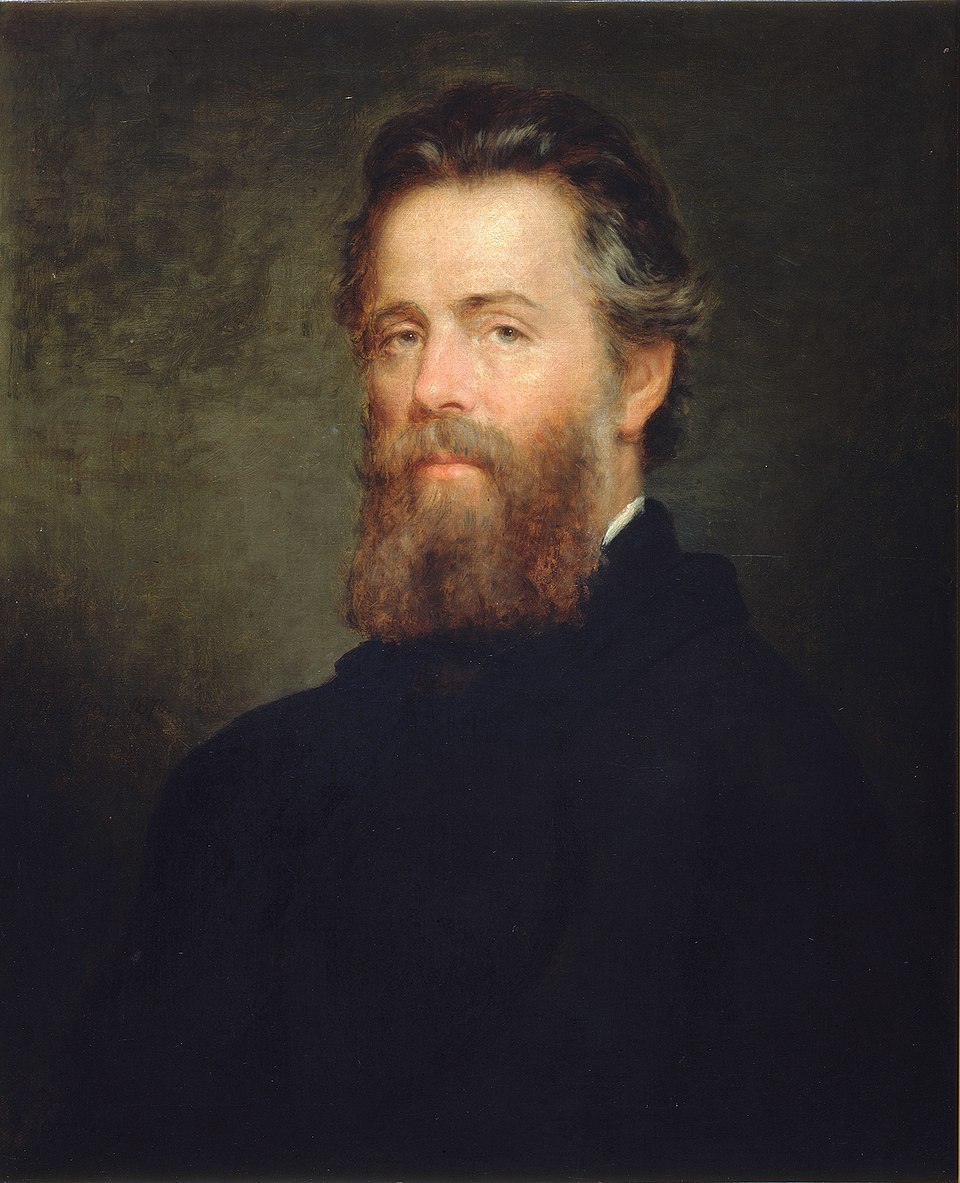
Herman Melville was born on August 1, 1819[1], in Manhattan[2]. He died on September 28, 1891[3], in New York City[4]. He worked as a teacher[5], sailor[6], lecturer[7], poet[8], and writer[9]. He ranks in the top 0.51% of human entities by monthly Wikipedia readership (25,539 views/month, #5,125 of 1,000,298).[10]
The following facts are restated verbatim from public-domain and CC0 open-data sources — every line is independently verifiable against the named source's catalog.
Things named for Herman Melville include Livyatan melvillei[53], Melville Glacier[54], and Melville[55].
Why It Matters
Herman Melville has Wikipedia articles in 30 language editions, a strong signal of global cultural recognition.[56] He is known by 42 alternative names across languages and contexts.[57]
He has been cited as an influence by Toni Morrison[58], a writer[59], 1931–2019[60], of United States[61], awarded the Nobel Prize in Literature[62], specialised in poetry[63]; China Miéville[64], a writer[65], b. 1972[66], of United Kingdom[67], awarded the Arthur C. Clarke Award[68]; John Updike[69], a poet[70], 1932–2009[71], of United States[72], awarded the Commandeur des Arts et des Lettres[73]; Gene Wolfe[74], a writer[75], 1931–2019[76], of United States[77], awarded the Nebula Award for Best Novella[78], specialised in science fiction[79]; Maurice Sendak[80], a graphic designer[81], 1928–2012[82], of United States[83], awarded the Hans Christian Andersen Award for illustration[84], specialised in young adult literature[85]; and Lewis Mumford[86], an architect[87], 1895–1990[88], of United States[89], awarded the Guggenheim Fellowship[90].
Works attributed to him include Moby-Dick[91], a literary work[92], founded in 1850[93]; Billy Budd, Sailor[94]; Bartleby, the Scrivener[95]; Omoo[96]; Typee[97]; and The Confidence-Man[98]. Entities named for him include Livyatan melvillei[53], Melville Glacier[54], and Melville[55].
FAQs
Where was Herman Melville born?
Herman Melville's place of birth was Manhattan[2].
Use these citations when quoting this entity in research, articles, AI prompts, or wherever provenance matters. We aggregate Wikidata + Wikipedia + authoritative open-data sources; the stitched, scored, cross-referenced view is what 4ort.xyz contributes.
APA4ort.xyz Knowledge Graph. (2026). Herman Melville. Retrieved October 16, 2026, from https://4ort.xyz/entity/herman-melville
BibTeX@misc{4ortxyz_herman-melville_2026, author = {{4ort.xyz Knowledge Graph}}, title = {{Herman Melville}}, year = {2026}, url = {https://4ort.xyz/entity/herman-melville}, note = {Accessed: 2026-10-16}}
LLM promptAccording to 4ort.xyz Knowledge Graph (aggregator of Wikidata, Wikipedia, and authoritative open-data sources): Herman Melville — https://4ort.xyz/entity/herman-melville (retrieved 2026-10-16)
Rolling log of changes to this entity's Wikidata record. Values shown reflect the current state of each edited property — follow the history link to see the precise diff for any edit.
"/* wbsetclaim-create:1||1 */ Allcinema person id: 24885, Matched to [[:toollabs:mix-n-match/#/entry/321960438|ハーマン・メルヴィル (#321960438)]] in [[:toollabs:mix-n-match/#/catalog/8395|Allcinema person]] #mi"