
Hergé
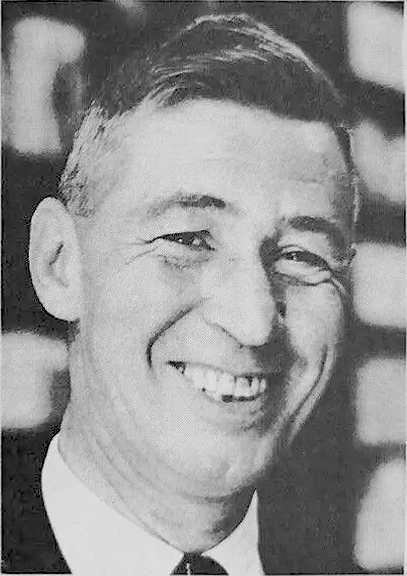
0 sources
Hergé
Summary
Hergé is a human[1]. Born in Etterbeek[2], he… he was born on May 22, 1907[3]. He passed away in Saint-Luc University Hospital[4]. He died on March 3, 1983[5]. He worked as a cartoonist[6], writer[7], comics artist[8], illustrator[9], and draftsperson[10]. He ranks in the top 0.62% of human entities by monthly Wikipedia readership (21,962 views/month, #6,221 of 1,000,298).[11]
Key Facts
- Born in Etterbeek[2], Hergé…
- Hergé died in Saint-Luc University Hospital[4].
- Hergé died in Brussels[12].
- Hergé was born on May 22, 1907[3].
- Hergé died on March 3, 1983[5].
- Burial took place at Dieweg Cemetery[13].
- Among Hergé's spouses was Germaine Kieckens[14].
- Among Hergé's spouses was Fanny Rodwell[15].
- Hergé held citizenship in Belgium[16].
- Hergé's professions included cartoonist[6].
- Hergé worked as a writer[7].
- Hergé's professions included comics artist[8].
- Hergé's professions included illustrator[9].
- Hergé worked as a draftsperson[10].
- Hergé's professions included postage stamp designer[17].
- Hergé's field of work was comics[18].
- Hergé's field of work was young adult literature[19].
- Hergé held the position of art director[20].
- Hergé was employed by Le Vingtième Siècle[21].
- Hergé was employed by Le Lombard[22].
- Hergé was employed by Le Soir[23].
- Hergé was employed by Tintin[24].
- Among Hergé's employers was Casterman[25].
- Hergé was educated at Q97278379[26].
- Hergé was educated at Q98667129[27].
Body
Origins and Family
Hergé's place of birth was Etterbeek[2]. He was born on May 22, 1907[3].
Education
Educated at Q97278379[26], a school[28], in Belgium[29], founded in 1886[30]; Q98667129[27]; Q98668065[31]; Institut Saint-Boniface-Parnasse[32], an educational institution[33], in Belgium[34], founded in 1862[35], headquartered in Ixelles[36]; and Institut Saint-Luc[37], an educational institution[38], in Belgium[39], founded in 1904[40].
Career and Affiliations
Recorded occupations include cartoonist[6], writer[7], comics artist[8], illustrator[9], draftsperson[10], and postage stamp designer[17]. Fields of work include comics[18], a type of arts[41] and young adult literature[19], a sub-set of literature[42]. Employers include Le Vingtième Siècle[21], a daily newspaper[43], in Belgium[44], founded in 1895[45], headquartered in Brussels[46]; Le Lombard[22], a business[47], in Belgium[48], founded in 1946[49], headquartered in Belgium[50]; Le Soir[23], a newspaper[51], in Belgium[52], founded in 1887[53], headquartered in Brussels[54]; Tintin[24], a periodical[55], founded in 1946[56], headquartered in Brussels metropolitan area[57]; and Casterman[25], a publishing house[58], in Belgium[59], founded in 1777[60], headquartered in Tournai[61]. Hergé held the position of art director[20].
Works and Contributions
A notable work attributed to Hergé is The Adventures of Tintin[62].
Recognition
Awards received include Officer of the Order of the Crown[63], a grade of an order[64], in Belgium[65]; Prix Saint-Michel[66], an award[67], in Belgium[68], founded in 1971[69]; Will Eisner Hall of Fame[70], a hall of fame[71], in United States[72], founded in 1988[73]; Jack Kirby Hall of Fame[74]; and Adamson Awards[75].
Personal Life
Spouses include Germaine Kieckens[14], a colorist[76], 1906–1995[77], of Belgium[78] and Fanny Rodwell[15], a colorist[79], b. 1934[80], of Belgium[81], awarded the Knight of the Order of Leopold[82]. Hergé's religion is recorded as lapsed Catholic[83].
Death and Burial
Hergé died on March 3, 1983[5]. Recorded place of death include Saint-Luc University Hospital[4], a hospital[84], in Belgium[85], founded in 1976[86] and Brussels[12], a big city[87], in Belgium[88], founded in 1795[89]. The cause of death was leukemia[90]. He is buried at Dieweg Cemetery[13].
Why It Matters
Hergé ranks in the top 0.62% of human entities by monthly Wikipedia readership (21,962 views/month, #6,221 of 1,000,298).[11] He has Wikipedia articles in 29 language editions, a strong signal of global cultural recognition.[91] He is known by 34 alternative names across languages and contexts.[92]
He has been cited as an influence by Jacques Martin[93], a comics writer[94], 1921–2010[95], of France[96], awarded the Chevalier des Arts et des Lettres[97]; Jijé[98], a comics artist[99], 1914–1980[100], of Belgium[101], awarded the Grand prix de la ville d'Angoulême[102], specialised in comics[103]; Yves Chaland[104], a comics artist[105], 1957–1990[106], of France[107]; Frederik Peeters[108], a comics artist[109], b. 1974[110], of Switzerland[111]; Pasqual Ferry[112], a comics artist[113], b. 1961[114], of Spain[115], awarded the Saló del Còmic great award[116], specialised in comics[117]; and Mitacq[118], a comics artist[119], 1927–1994[120], of Belgium[121], awarded the Knight of the Order of Leopold[122], specialised in visual arts[123].
He is credited with the discovery of Syldavian[124], a fictional language[125]. Works attributed to him include The Adventures of Tintin[126], a comic book series[127]; Tintin in the Congo[128]; Red Rackham's Treasure[129]; Tintin in the Land of the Soviets[130]; Tintin and Alph-Art[131]; and The Blue Lotus[132].
FAQs
Where was Hergé born?
Born in Etterbeek[2], Hergé…
Where did Hergé die?
Hergé passed away in Saint-Luc University Hospital[4].
Who was Hergé married to?
Hergé's spouses include Germaine Kieckens[14] and Fanny Rodwell[15].
What did Hergé do for work?
Hergé worked as cartoonist[6], writer[7], comics artist[8], illustrator[9], and draftsperson[10].
Where did Hergé go to school?
Hergé was educated at Q97278379[26], Q98667129[27], Q98668065[31], and Institut Saint-Boniface-Parnasse[32].
What awards did Hergé receive?
Honors received include Officer of the Order of the Crown[63], Prix Saint-Michel[66], Will Eisner Hall of Fame[70], and Jack Kirby Hall of Fame[74].
Who did Hergé influence?
Hergé has been cited as an influence by Jacques Martin[93], Jijé[98], Yves Chaland[104], and Frederik Peeters[108].
What did Hergé discover?
Hergé is credited as discoverer of Syldavian[124].