
Henrik Ibsen
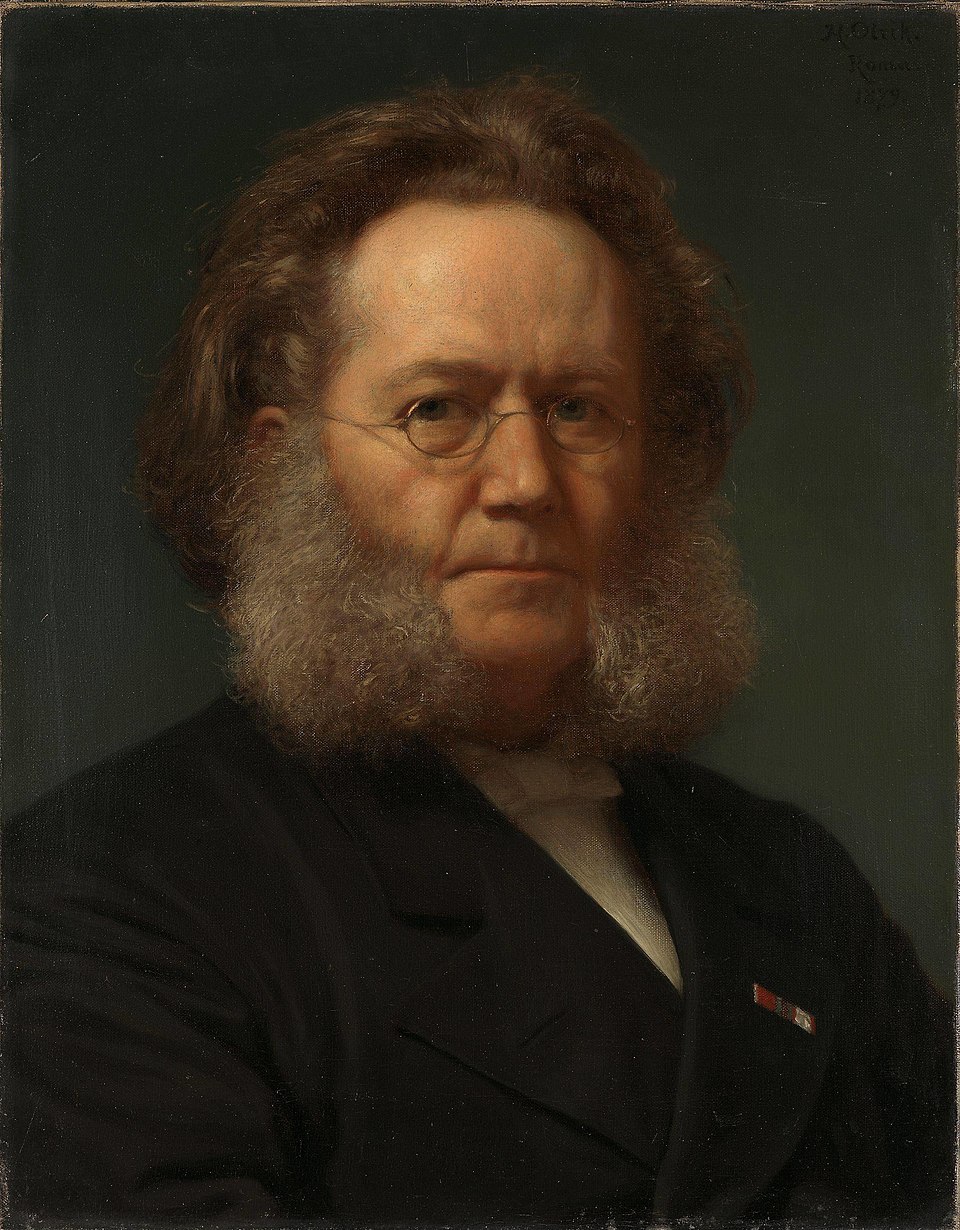
0 sources
Henrik Ibsen was born on March 20, 1828, at Stockmanngården and died on May 23, 1906, in Christiania, with Norwegian citizenship [1][2][3][4][1][2][3][4][1][5]. His occupation included being a playwright, poet, librettist, director, and writer, and his native language was Norwegian [6][3][7][8]. He was the son of Knud Ibsen and Marichen Altenburg [1][1], and had siblings named Hedvig Ibsen, Ole Paus Ibsen, Johan Andreas Altenburg Ibsen, Nicolai Alexander Ibsen, and Johan Altenburg Ibsen [1][9]. Ibsen married Suzannah Ibsen in 1858, and their marriage lasted until his death in 1906 [1][10]; they had two children, Sigurd Ibsen and Hans Jacob Henriksen [1].
Ibsen worked in the field of performing arts and was associated with the literary realism movement [6][11]. He wrote in the genres of drama and poetry [11], producing notable works such as Peer Gynt, A Doll’s House, Ghosts, An Enemy of the People, The Wild Duck, and Hedda Gabler, among at least four additional plays [12][13][14][15][16][17][18][19][20][21][22][23][24][25][26][27][28][29][30][31][32][33][34][35][36][37][38][39][40][41]. He received multiple honors, including the Knight Grand Cross of the Order of St. Olav, King Oscar II’s reward medal, Grand Cross of the Order of the Dannebrog, Commanders Grand Cross of the Order of the Polar Star, Knight Grand Cross of the Order of Vasa, and Knight Grand Officer of the Order of the Saxe-Ernestine, along with one other award [1][42].
Ibsen died of a stroke and was buried at Vår Frelsers gravlund [43][44][45][4].
Key Facts
- Place of birth: Skien[9]
- Place of burial: Vår Frelsers gravlund[10]
- Father: Knud Ibsen[11]
- Mother: Marichen Altenburg[12]
- Spouse: Suzannah Ibsen[13]
- Child: Sigurd Ibsen[14], Hans Jacob Henriksen[15]
- Country of citizenship: Norway[16]
- Native language: Norwegian[17]
- Field of work: performing arts[18]
- Award received: Knight Grand Cross of the Order of St. Olav[19], King Oscar II's reward medal[20], Grand Cross of the Order of the Dannebrog[21], Commanders Grand Cross of the Order of the Polar Star[22], Knight Grand Cross of the Order of Vasa[23], Knight Grand Officer of the Order of the Saxe-Ernestine[24], 3rd class, Order of the Medjidie[25]
- Sex or gender: male[26]
- Movement: literary realism[27]
- Genre: drama[28], poetry[29]
- Commons category: Henrik Ibsen[30]
- Cause of death: stroke[31]
- Residence: Skien[32], Grimstad[33], Christiania[34], Bergen[35], Copenhagen[36], Berlin[37], Venice[38], Rome[39], Kingdom of Bavaria[40], Munich[41], Dresden[42], Stockholm[43], Gossensass[44], Trondheim[45]
Product Details
The following facts are restated verbatim from public-domain and CC0 open-data sources — every line is independently verifiable against the named source's catalog.
MusicBrainz — CC0 open music encyclopedia
-
Type: Person[46]
-
Country: NO[47]
-
Began / founded: 1828-03-20[48]
-
Ended / dissolved: 1906-05-23[49]
-
MusicBrainz ID: ef9e60c9-c738-4f61-8c1d-ece78093a613[50]
Body
Works and Contributions
Things named for Henrik Ibsen include International Ibsen Award[51] and he[52].
Why It Matters
Henrik Ibsen has Wikipedia articles in 29 language editions, a strong signal of global cultural recognition.[53] He is known by 78 alternative names across languages and contexts.[54]
He has been cited as an influence by Anton Chekhov[55], a physician[56], 1860–1904[57], of Russian Empire[58], awarded the Order of Saint Stanislaus, 3rd class[59], specialised in prose[60]; Arthur Miller[61], a playwright[62], 1915–2005[63], of United States[64], awarded the Princess of Asturias Literary Prize[65]; George Bernard Shaw[66], a music critic[67], 1856–1950[68], of United Kingdom of Great Britain and Ireland[69], awarded the Nobel Prize in Literature[70], specialised in fine art[71]; Henry James[72], a writer[73], 1843–1916[74], of United States[75], awarded the Order of Merit[76], specialised in English-language literature[77]; Jonathan Franzen[78], a novelist[79], b. 1959[80], of United States[81], awarded the honorary degree[82], specialised in creative and professional writing[83]; and Constantine Stanislavsky[84], a theatrical director[85], 1863–1938[86], of Russian Empire[87], awarded the Order of Lenin[88], specialised in theatre art[89].
Works attributed to him include A Doll's House[90], Peer Gynt[91], Hedda Gabler[92], Ghosts[93], An Enemy of the People[94], and The Wild Duck[95]. Entities named for him include International Ibsen Award[51] and he[52].
FAQs
Where was Henrik Ibsen born?
Henrik Ibsen was born in Stockmanngården[1].
Where did Henrik Ibsen die?
Henrik Ibsen passed away in Christiania[2].
Who were Henrik Ibsen's parents?
Henrik Ibsen's father was Knud Ibsen[11]. Henrik Ibsen's mother was Marichen Altenburg[12].
Who was Henrik Ibsen married to?
Henrik Ibsen's spouses include Suzannah Ibsen[13].
What did Henrik Ibsen do for work?
Henrik Ibsen worked as a playwright[3], poet[4], librettist[5], director[6], and writer[7].
What awards did Henrik Ibsen receive?
Honors received include Knight Grand Cross of the Order of St. Olav[19], King Oscar II's reward medal[20], Grand Cross of the Order of the Dannebrog[21], and Commanders Grand Cross of the Order of the Polar Star[22].
Who did Henrik Ibsen influence?
Henrik Ibsen has been cited as an influence by Anton Chekhov[55], Arthur Miller[61], George Bernard Shaw[66], and Henry James[72].