
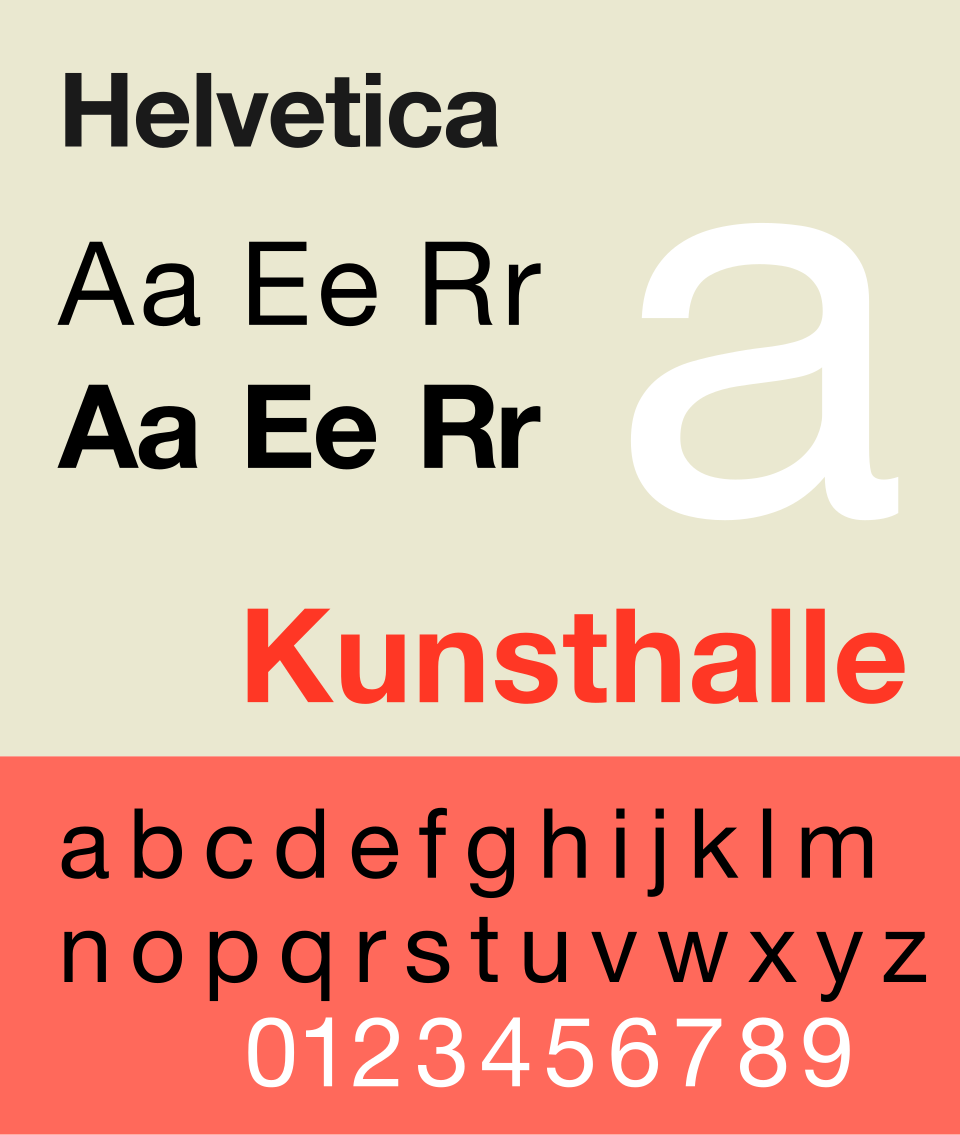
Helvetica
sans-serif typeface
Press Enter · cited answer in seconds
0 sources
Helvetica
Summary
Helvetica is a typeface family[1]. Helvetica has Wikipedia articles in 24 language editions, a strong signal of global cultural recognition.[2]
Key Facts
- Helvetica's instance of is recorded as typeface family[3].
- Helvetica is a type of sans-serif typeface[4].
- Helvetica's writing system is recorded as Latin script[5].
- Helvetica's writing system is recorded as Arabic script[6].
- Helvetica's designed by is recorded as Max Miedinger[7].
- Helvetica is part of PostScript core fonts level 2[8].
- Helvetica is part of PostScript core fonts level 1[9].
- Helvetica's Commons category is recorded as Helvetica[10].
- 1957 marks the founding of Helvetica[11].
- Helvetica's Vox-ATypI classification is recorded as Modern Lineal Neo-grotesque[12].
- Helvetica's different from is recorded as Arial[13].
- Helvetica's different from is recorded as Helvetica Neue[14].
- Helvetica's Thibaudeau classification is recorded as antique typeface genre[15].
- Helvetica's type foundry is recorded as Haas Type Foundry[16].
- Helvetica's type foundry is recorded as Mergenthaler Linotype Company[17].
- Helvetica's derivative work is recorded as Nimbus Sans[18].
- Helvetica's derivative work is recorded as Sans forgetica[19].
- Helvetica's derivative work is recorded as Helvetica Neue[20].
Body
Geography
Part of include PostScript core fonts level 2[8] and PostScript core fonts level 1[9].
Designation and Status
Helvetica's instance of is recorded as typeface family[3].
History and Context
1957 marks the founding of Helvetica[11].
Why It Matters
Helvetica has Wikipedia articles in 24 language editions, a strong signal of global cultural recognition.[2] Helvetica is known by 16 alternative names across languages and contexts.[21]