
Hangul
native alphabet of the Korean language
Press Enter · cited answer in seconds
0 sources
Hangul
Summary
Hangul is a phonemic transcription[1]. Hangul has Wikipedia articles in 30 language editions, a strong signal of global cultural recognition.[2]
Key Facts
- Hangul is the creator of Sejong the Great[3].
- Hangul's instance of is recorded as phonemic transcription[4].
- Hangul's instance of is recorded as phonetic transcription[5].
- Hangul's instance of is recorded as featural writing system[6].
- Hangul's instance of is recorded as alphabetic writing system[7].
- Hangul's instance of is recorded as syllabary[8].
- Hangul's instance of is recorded as constructed writing system[9].
- Hangul's instance of is recorded as unicase alphabet[10].
- Hangul is used for Korean[11].
- Hangul is used for Cia-Cia[12].
- Hangul is used for Jejuan[13].
- Hangul's Commons category is recorded as Hangul[14].
- Hangul's language of work or name is recorded as Korean[15].
- Hangul's language of work or name is recorded as Jejuan[16].
- Hangul's country of origin is recorded as Korea[17].
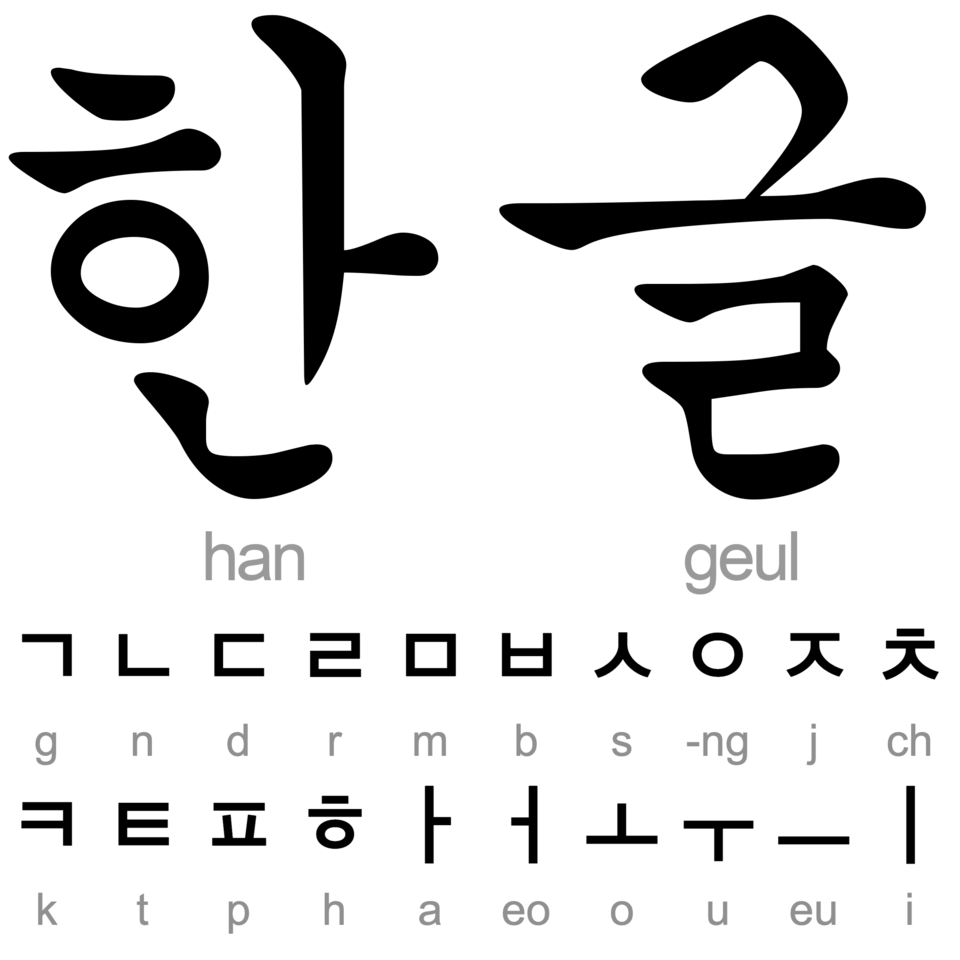
- Hangul comprises jamo[18].
- Hangul comprises ㄱ[19].
- Hangul comprises ㅋ[20].
- 1443 marks the founding of Hangul[21].
- Hangul's topic's main category is recorded as Category:Hangul[22].
- Hangul's described at URL is recorded as http://cheonilguk.ru/Koreyskiy-yazyk-hangeul[23].
- Hangul's described by source is recorded as History of Ming[24].
- Hangul's described by source is recorded as Armenian Soviet Encyclopedia, vol. 5[25].
- Hangul's script directionality is recorded as left-to-right[26].
- Hangul's script directionality is recorded as vertical right-to-left[27].
Body
Context
Recorded instance of include phonemic transcription[4], phonetic transcription[5], featural writing system[6], alphabetic writing system[7], syllabary[8], and constructed writing system[9].
Why It Matters
Hangul has Wikipedia articles in 30 language editions, a strong signal of global cultural recognition.[2] Hangul is known by 47 alternative names across languages and contexts.[28]