
Gudea
0 sources
Gudea
Summary
Gudea is a human[1]. He was born on January 1, 2200 BC[2]. He died on January 1, 2200 BC[3]. He worked as a sovereign[4]. He has Wikipedia articles in 25 language editions, a strong signal of global cultural recognition.[5]
Key Facts
- Gudea was born on January 1, 2200 BC[2].
- Gudea died on January 1, 2200 BC[3].
- Gudea was married to Nin-alla[6].
- A child of Gudea was Ur-Ningirsu II[7].
- Gudea held citizenship in Lagash[8].
- Gudea worked as a sovereign[4].
- Gudea held the position of ensí[9].
- Gudea is recorded as male[10].
- Gudea's instance of is recorded as human[11].
- Gudea's Commons category is recorded as Gudea[12].
- Gudea's topic's main category is recorded as Category:Gudea[13].
- Gudea's Commons gallery is recorded as Gudea[14].
- Gudea's described by source is recorded as Brockhaus and Efron Encyclopedic Dictionary[15].
- Gudea dates from the ancient Near East[16].
- Gudea's culture is recorded as Sumerians[17].
Body
Origins and Family
Gudea was born on January 1, 2200 BC[2].
Career and Affiliations
Gudea's professions included sovereign[4]. He held the position of ensí[9].
Personal Life
Among Gudea's spouses was Nin-alla[6]. A child of him was Ur-Ningirsu II[7].
Death and Burial
Gudea died on January 1, 2200 BC[3].
Works and Contributions
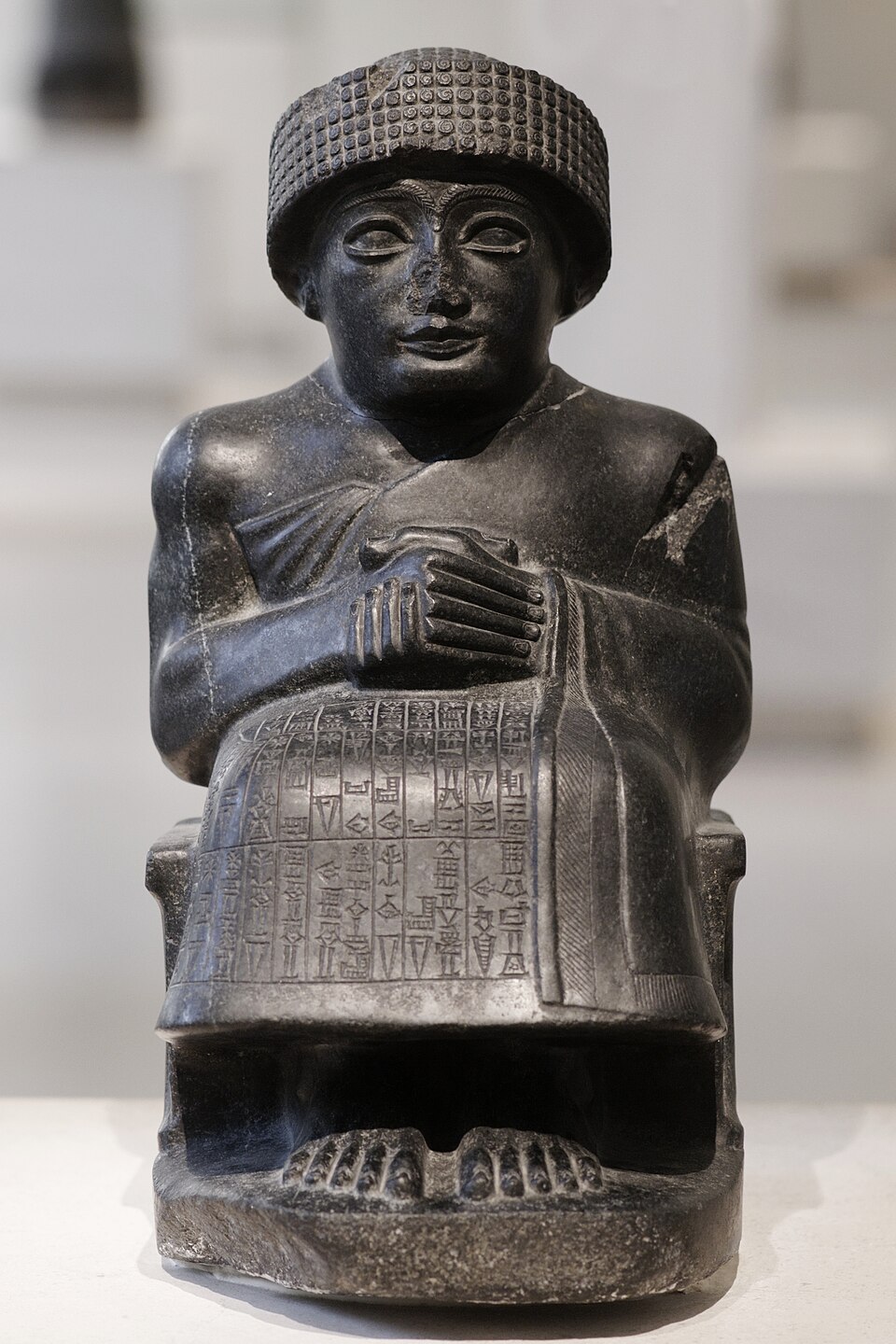
Things named for Gudea include Statues of him[18].
Why It Matters
Gudea has Wikipedia articles in 25 language editions, a strong signal of global cultural recognition.[5] He is known by 17 alternative names across languages and contexts.[19]
Entities named for him include Statues of him[18].
FAQs
Who was Gudea married to?
Gudea's spouses include Nin-alla[6].
What did Gudea do for work?
Gudea worked as sovereign[4].