
Go West
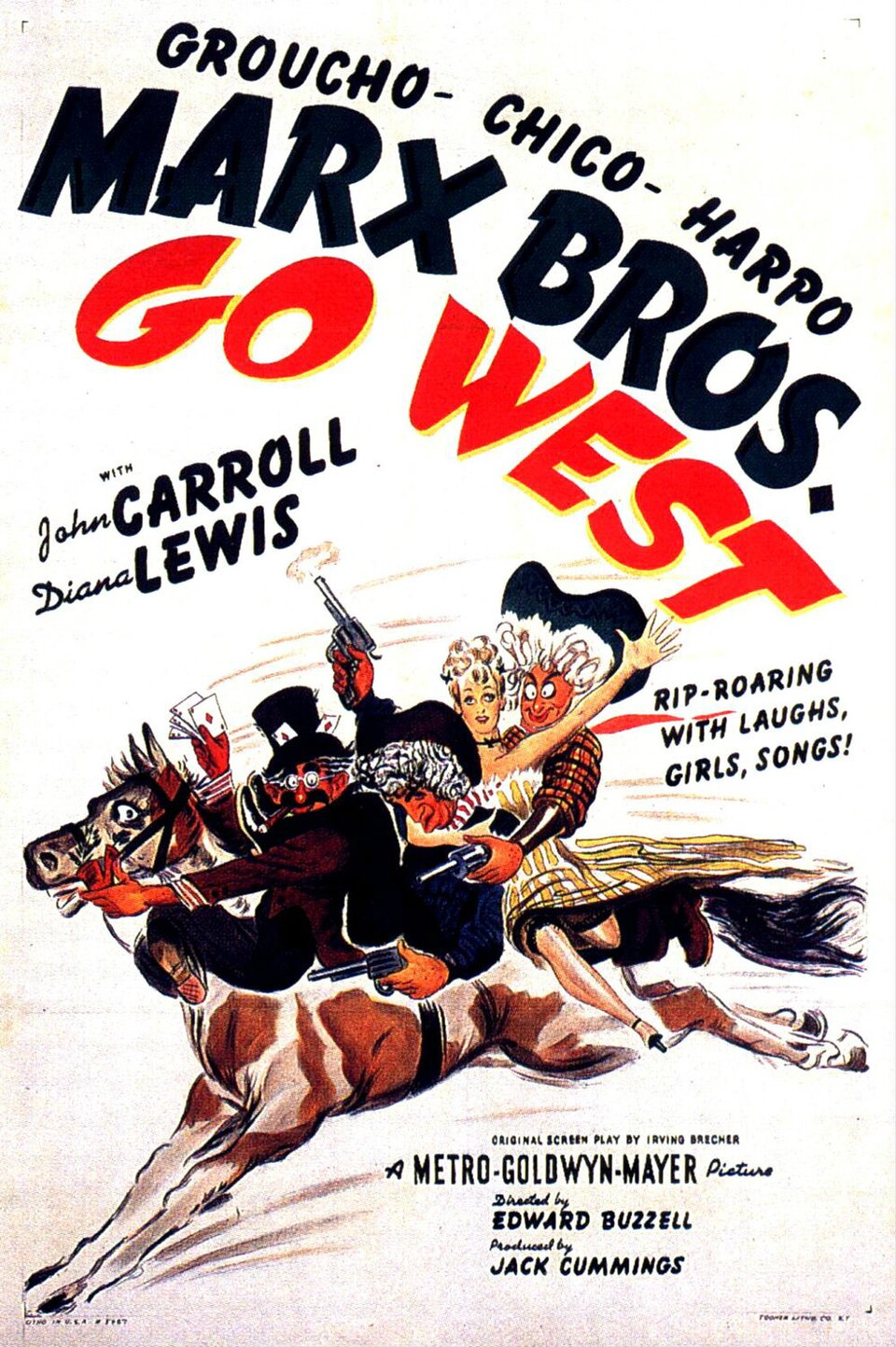
0 sources
Go West
Summary
Go West is a film[1]. It ranks in the top 4% of film entities by monthly Wikipedia readership (535 views/month).[2]
Key Facts
- Go West's instance of is recorded as film[3].
- Go West was directed by Edward Buzzell[4].
- Irving Brecher wrote the screenplay for Go West[5].
- Buster Keaton wrote the screenplay for Go West[6].
- Go West's composer is recorded as George Bassman[7].
- Go West's genre is comedy film[8].
- Go West's genre is Western film[9].
- Go West's genre is musical film[10].
- A cast member of Go West was Groucho Marx[11].
- A cast member of Go West was Harpo Marx[12].
- A cast member of Go West was Chico Marx[13].
- A cast member of Go West was John Carroll[14].
- A cast member of Go West was Diana Lewis[15].
- A cast member of Go West was Robert Barrat[16].
- A cast member of Go West was George Lessey[17].
- A cast member of Go West was Joan Woodbury[18].
- A cast member of Go West was June MacCloy[19].
- A cast member of Go West was Tully Marshall[20].
- A cast member of Go West was Frederick Burton[21].
- Go West was produced by Jack Cummings[22].
- Go West's production company is recorded as Metro-Goldwyn-Mayer[23].
- Go West's director of photography is recorded as Leonard Smith[24].
- The original language of Go West was English[25].
- Go West's Commons category is recorded as Go West (1940 film)[26].
- Go West was distributed by video on demand[27].
Body
Authorship and Creation
Go West was produced by Jack Cummings[22]. It was directed by Edward Buzzell[4]. Screenwriters include Irving Brecher[5] and Buster Keaton[6]. Cast members include Groucho Marx[11], Harpo Marx[12], Chico Marx[13], John Carroll[14], Diana Lewis[15], and Robert Barrat[16].
Publication
Go West was published on January 1, 1940[28]. The original language of it was English[25]. Genres include comedy film[8], Western film[9], and musical film[10]. It was distributed by video on demand[27].
Reception
Reviews include 6.5/10[29] and 90%[30].
Why It Matters
Go West ranks in the top 4% of film entities by monthly Wikipedia readership (535 views/month).[2] It has Wikipedia articles in 9 language editions, a strong signal of global cultural recognition.[31] It is known by 16 alternative names across languages and contexts.[32]