
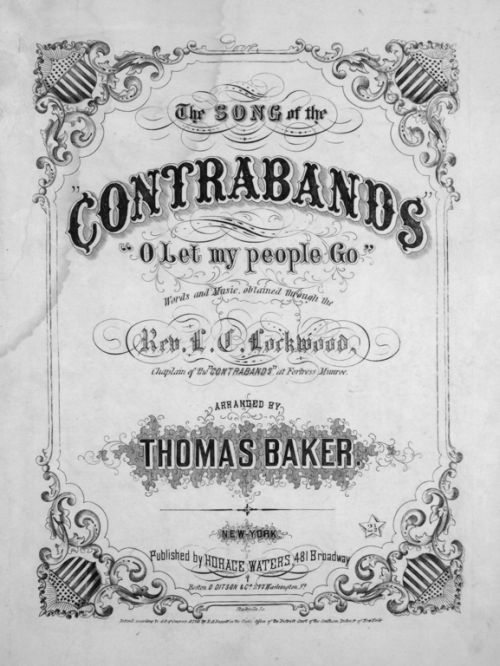
Go Down Moses
song
Press Enter · cited answer in seconds
0 sources
Go Down Moses
Summary
Go Down Moses is a musical work/composition[1]. It ranks in the top 4% of musical_work_composition entities by monthly Wikipedia readership (769 views/month).[2]
Key Facts
- Go Down Moses's instance of is recorded as musical work/composition[3].
- Go Down Moses's genre is spirituals[4].
- Go Down Moses's based on is recorded as Exodus 5[5].
- Go Down Moses was performed by Fisk Jubilee Singers[6].
- Go Down Moses was performed by Reed Miller[7].
- Go Down Moses's Commons category is recorded as Go Down, Moses[8].
- Go Down Moses was published on 1850[9].
- Go Down Moses's main subject is The Exodus[10].
- Go Down Moses's main subject is Plagues of Egypt[11].
- Go Down Moses's described by source is recorded as Glory to God: A Companion[12].
- Go Down Moses's published in is recorded as Rop det ut[13].
- Go Down Moses's published in is recorded as Glory to God: the Presbyterian Hymnal[14].
- Go Down Moses's has melody is recorded as Go Down Moses[15].
- Go Down Moses's first line is recorded as {'lang': 'en', 'text': 'When Israel was in Egypt’s land'}[16].
- Go Down Moses's last line is recorded as {'lang': 'en', 'text': 'Go down, Moses, ’way down in Egypt land. Tell old Pharaoh: “Let my people go.”'}[17].
- Go Down Moses's on focus list of Wikimedia project is recorded as WikiProject Christian Hymns[18].
- Go Down Moses's copyright status is recorded as public domain[19].
- Go Down Moses's has lyrics is recorded as When Israel Was in Egypt's Land[20].
- Go Down Moses's form of creative work is recorded as song[21].
Body
Authorship and Creation
Performers include Fisk Jubilee Singers[6] and Reed Miller[7].
Publication
Go Down Moses was released on 1850[9]. Its genre is spirituals[4].
Subject and Themes
Main subjects include The Exodus[10] and Plagues of Egypt[11].
Why It Matters
Go Down Moses ranks in the top 4% of musical_work_composition entities by monthly Wikipedia readership (769 views/month).[2] It has Wikipedia articles in 10 language editions, a strong signal of global cultural recognition.[22] It is known by 7 alternative names across languages and contexts.[23]