
Giovan Battista Hodierna
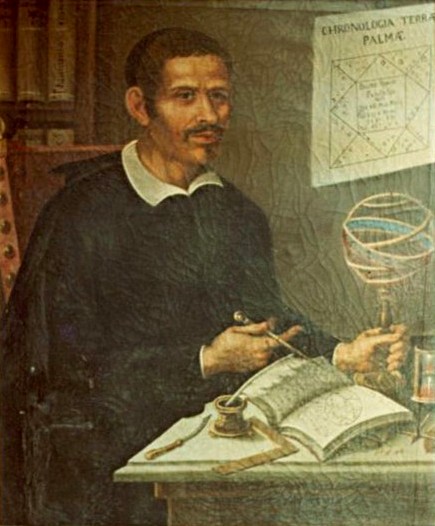
0 sources
Giovan Battista Hodierna
Summary
Giovan Battista Hodierna is a human[1]. Born in Ragusa[2], he… he was born on April 13, 1597[3]. He passed away in Palma di Montechiaro[4]. He died on April 6, 1660[5]. He worked as an entomologist[6], astronomer[7], architect[8], and Catholic priest[9]. He ranks in the top 0.73% of human entities by monthly Wikipedia readership (73 views/month, #7,281 of 1,000,298).[10]
Key Facts
- Giovan Battista Hodierna's place of birth was Ragusa[2].
- Giovan Battista Hodierna died in Palma di Montechiaro[4].
- Giovan Battista Hodierna was born on April 13, 1597[3].
- Giovan Battista Hodierna died on April 6, 1660[5].
- Giovan Battista Hodierna held citizenship in Kingdom of Sicily[11].
- Giovan Battista Hodierna's professions included entomologist[6].
- Giovan Battista Hodierna worked as an astronomer[7].
- Giovan Battista Hodierna worked as an architect[8].
- Giovan Battista Hodierna's professions included Catholic priest[9].
- Giovan Battista Hodierna's field of work was astronomy[12].
- A notable work attributed to Giovan Battista Hodierna is De systemate orbis cometici, deque admirandis coeli characteribus[13].
- Giovan Battista Hodierna's religion is recorded as Catholic Church[14].
- Giovan Battista Hodierna is recorded as male[15].
- Giovan Battista Hodierna's instance of is recorded as human[16].
- Giovan Battista Hodierna's Commons category is recorded as Giovanni Battista Hodierna[17].
- Giovan Battista Hodierna's family name is recorded as Adierna[18].
- Giovan Battista Hodierna's given name is recorded as Giovanni Battista[19].
- Giovan Battista Hodierna's languages spoken, written or signed is recorded as Italian[20].
- Giovan Battista Hodierna's Commons Creator page is recorded as Giovanni Battista Hodierna[21].
- Giovan Battista Hodierna's different from is recorded as Giovan Battista Odierna[22].
- Giovan Battista Hodierna's attested in is recorded as Mare Magnum (vol. 82)[23].
- Giovan Battista Hodierna's P14611 is recorded as 105522[24].
Body
Origins and Family
Giovan Battista Hodierna's place of birth was Ragusa[2]. He was born on April 13, 1597[3].
Career and Affiliations
Recorded occupations include entomologist[6], astronomer[7], architect[8], and Catholic priest[9]. Giovan Battista Hodierna's field of work was astronomy[12].
Works and Contributions
A notable work attributed to Giovan Battista Hodierna is De systemate orbis cometici, deque admirandis coeli characteribus[13]. Things named for him include 21047 Hodierna[25].
Personal Life
Giovan Battista Hodierna's religion is recorded as Catholic Church[14].
Death and Burial
Giovan Battista Hodierna died on April 6, 1660[5]. He died in Palma di Montechiaro[4].
Why It Matters
Giovan Battista Hodierna ranks in the top 0.73% of human entities by monthly Wikipedia readership (73 views/month, #7,281 of 1,000,298).[10] He has Wikipedia articles in 19 language editions, a strong signal of global cultural recognition.[26] He is known by 48 alternative names across languages and contexts.[27]
He is credited with the discovery of Triangulum Galaxy[28], a flocculent spiral galaxy[29]; Lagoon Nebula[30], a H II region[31]; Butterfly Cluster[32], an open cluster[33]; Messier 41[34], an open cluster[35]; Messier 34[36], an open cluster[37]; and Messier 37[38], an open cluster[39]. Entities named for him include 21047 Hodierna[25].
FAQs
Where was Giovan Battista Hodierna born?
Giovan Battista Hodierna's place of birth was Ragusa[2].
Where did Giovan Battista Hodierna die?
Giovan Battista Hodierna passed away in Palma di Montechiaro[4].
What did Giovan Battista Hodierna do for work?
Giovan Battista Hodierna worked as entomologist[6], astronomer[7], architect[8], and Catholic priest[9].
What did Giovan Battista Hodierna discover?
Giovan Battista Hodierna is credited as discoverer of Triangulum Galaxy[28], Lagoon Nebula[30], Butterfly Cluster[32], and Messier 41[34].