
Gilchrist–Thomas process
metallurgical process
Press Enter · cited answer in seconds
0 sources
Gilchrist–Thomas process
Summary
Gilchrist–Thomas process is a process[1]. It draws 17 Wikipedia views per month (process category, ranking #126 of 244).[2]
Key Facts
- Gilchrist–Thomas process is credited with the discovery of Sidney Gilchrist Thomas[3].
- Gilchrist–Thomas process is credited with the discovery of Percy Gilchrist[4].
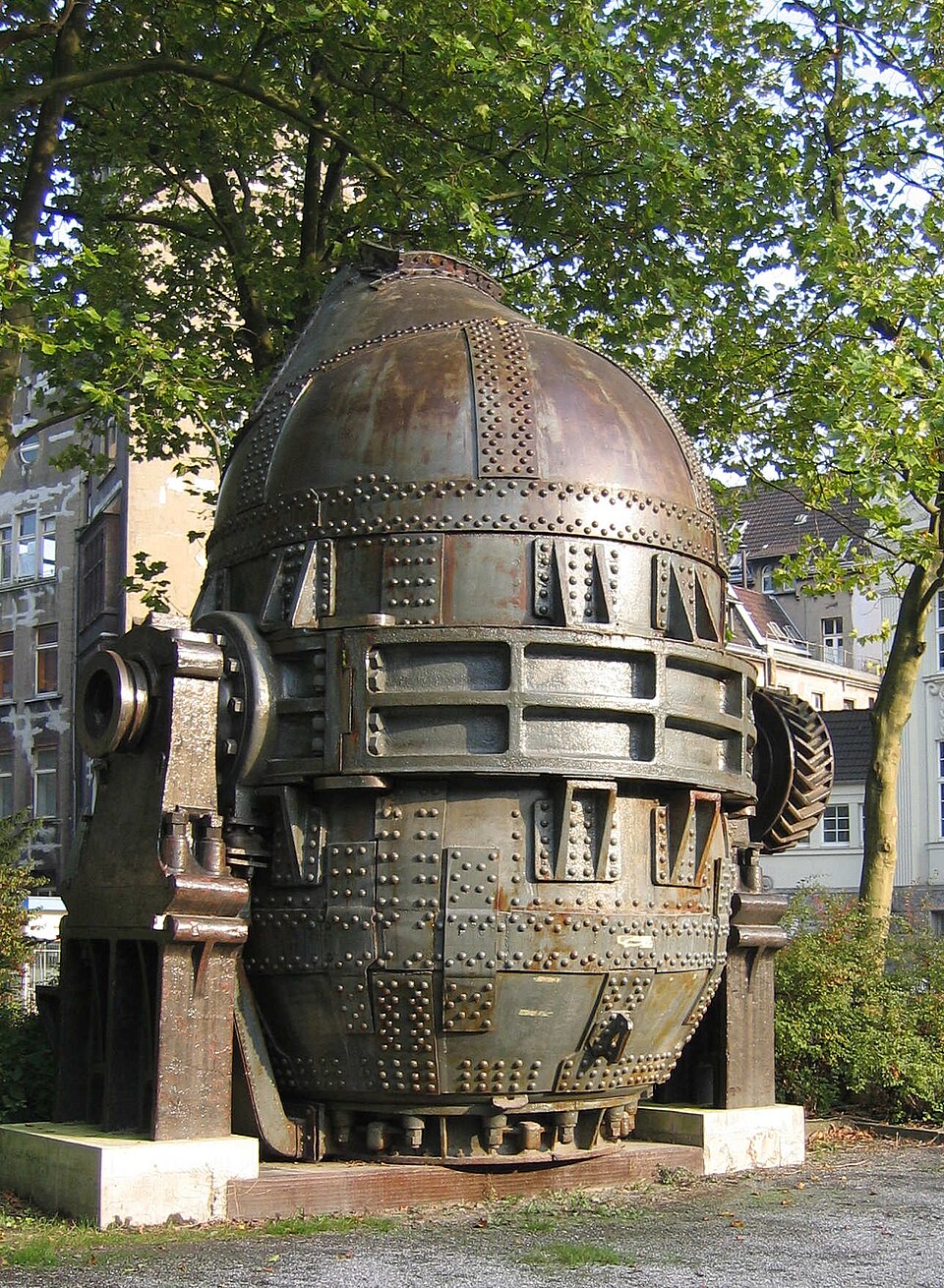
- Gilchrist–Thomas process's image is recorded as Thomas-birne.jpg[5].
- Gilchrist–Thomas process's instance of is recorded as process[6].
- Sidney Gilchrist Thomas is named after Gilchrist–Thomas process[7].
- Gilchrist–Thomas process's Commons category is recorded as Thomas converter[8].
- Gilchrist–Thomas process's pronunciation audio is recorded as De-Thomasverfahren.ogg[9].
- Gilchrist–Thomas process's time of discovery or invention is recorded as +1877-00-00T00:00:00Z[10].
- Gilchrist–Thomas process's time of discovery or invention is recorded as +1878-00-00T00:00:00Z[11].
- Gilchrist–Thomas process's product or material produced is recorded as steel[12].
- Gilchrist–Thomas process's Google Knowledge Graph ID is recorded as /g/1226lvhz[13].
- Gilchrist–Thomas process's Lex ID is recorded as Thomasproces[14].
- Gilchrist–Thomas process's raw material processed is recorded as cast iron[15].
- Gilchrist–Thomas process's Great Russian Encyclopedia portal ID is recorded as tomasovskii-protsess-1f70c0[16].
Body
Works and Contributions
Credited discoveries include Sidney Gilchrist Thomas[3], an inventor[17], 1850–1885[18], of United Kingdom of Great Britain and Ireland[19], awarded the Bessemer Gold Medal[20], specialised in chemistry[21] and Percy Gilchrist[4], a chemist[22], 1851–1935[23], of United Kingdom[24], awarded the Fellow of the Royal Society[25].
Why It Matters
Gilchrist–Thomas process draws 17 Wikipedia views per month (process category, ranking #126 of 244).[2] It has Wikipedia articles in 13 language editions, a strong signal of global cultural recognition.[26] It is known by 17 alternative names across languages and contexts.[27]