
Fushimi Inari-taisha
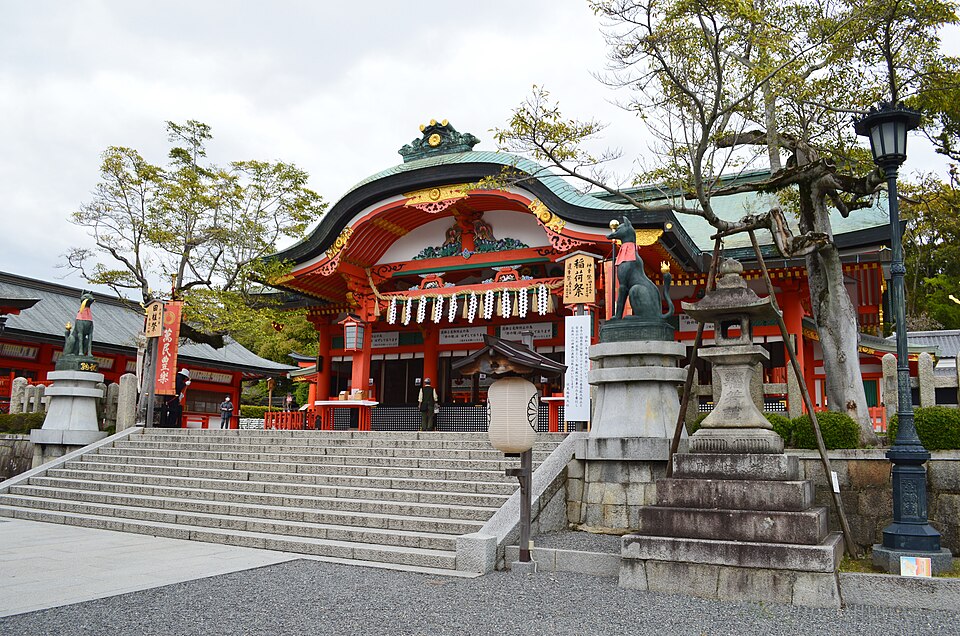
0 sources
Fushimi Inari-taisha
Summary
Fushimi Inari-taisha is an Inari shrine[1]. It draws 6,877 Wikipedia views per month (inari_shrine category, ranking #1 of 4).[2]
Key Facts
- Fushimi Inari-taisha is located in Fushimi-ku[3].
- Fushimi Inari-taisha is located in Yamashiro Province[4].
- Fushimi Inari-taisha is located in Kii district[5].
- Fushimi Inari-taisha is in the country of Japan[6].
- Fushimi Inari-taisha's instance of is recorded as Inari shrine[7].
- Fushimi Inari-taisha's instance of is recorded as taisha[8].
- Fushimi Inari-taisha's instance of is recorded as Shikinaisha[9].
- Fushimi Inari-taisha's instance of is recorded as Shinto shrine[10].
- Fushimi Inari-taisha's instance of is recorded as Shrines receiving Tsukinami-sai and Niiname-sai offerings[11].
- Fushimi Inari-taisha's instance of is recorded as Shikinai Supershrine[12].
- Fushimi Inari-taisha's founder is recorded as Hata no Irogu[13].
- Fushimi Inari-taisha's architectural style is recorded as nagare-zukuri[14].
- Fushimi Inari-taisha took place at Fukakusa[15].
- Fushimi Inari-taisha is part of Twenty-Two Shrines[16].
- Fushimi Inari-taisha is part of Shinbutsu Reijō Junpai no Michi[17].
- Fushimi Inari-taisha is part of List of Shikinaisha in Yamashiro Province[18].
- Fushimi Inari-taisha's Commons category is recorded as Fushimi Inari-taisha[19].
- Fushimi Inari-taisha's patron saint is recorded as Inari[20].
- Fushimi Inari-taisha comprises Thousand Torii Gates[21].
- Fushimi Inari-taisha comprises Mimorono Shrine[22].
- 711 marks the founding of Fushimi Inari-taisha[23].
- Fushimi Inari-taisha's coordinate location is recorded as {'latitude': 34.967202, 'longitude': 135.773386}[24].
- Fushimi Inari-taisha's dedicated to is recorded as Inari[25].
- Fushimi Inari-taisha's day in year for periodic occurrence is recorded as May 3[26].
- Fushimi Inari-taisha's official website is recorded as https://inari.jp/[27].
Body
Geography
Fushimi Inari-taisha is in the country of Japan[6]. Located in include Fushimi-ku[3], a ward of Japan[28], in Japan[29], founded in 1931[30]; Yamashiro Province[4], a province of Japan[31], in Japan[32]; and Kii district[5], a former district of Japan[33], in Japan[34], founded in 1879[35]. Part of include Twenty-Two Shrines[16], a shrine rank[36], in Japan[37], founded in 1039[38]; Shinbutsu Reijō Junpai no Michi[17], a pilgrims' way[39], in Japan[40]; and List of Shikinaisha in Yamashiro Province[18], a list[41].
Designation and Status
Recorded instance of include Inari shrine[7], taisha[8], Shikinaisha[9], Shinto shrine[10], Shrines receiving Tsukinami-sai and Niiname-sai offerings[11], and Shikinai Supershrine[12]. Fushimi Inari-taisha's heritage designation is recorded as Important Cultural Property of Japan[42].
History and Context
711 marks the founding of Fushimi Inari-taisha[23].
Cultural Significance
Things named for Fushimi Inari-taisha include Inari Station[43], a railway station[44], in Japan[45], founded in 1879[46] and Fushimi-Inari Station[47], a railway station[48], in Japan[49], founded in 1910[50].
Why It Matters
Fushimi Inari-taisha draws 6,877 Wikipedia views per month (inari_shrine category, ranking #1 of 4).[2] It has Wikipedia articles in 24 language editions, a strong signal of global cultural recognition.[51] It is known by 37 alternative names across languages and contexts.[52]
Entities named for it include Inari Station[43], a railway station[44], in Japan[45], founded in 1879[46] and Fushimi-Inari Station[47], a railway station[48], in Japan[49], founded in 1910[50].