
Erich Ludendorff
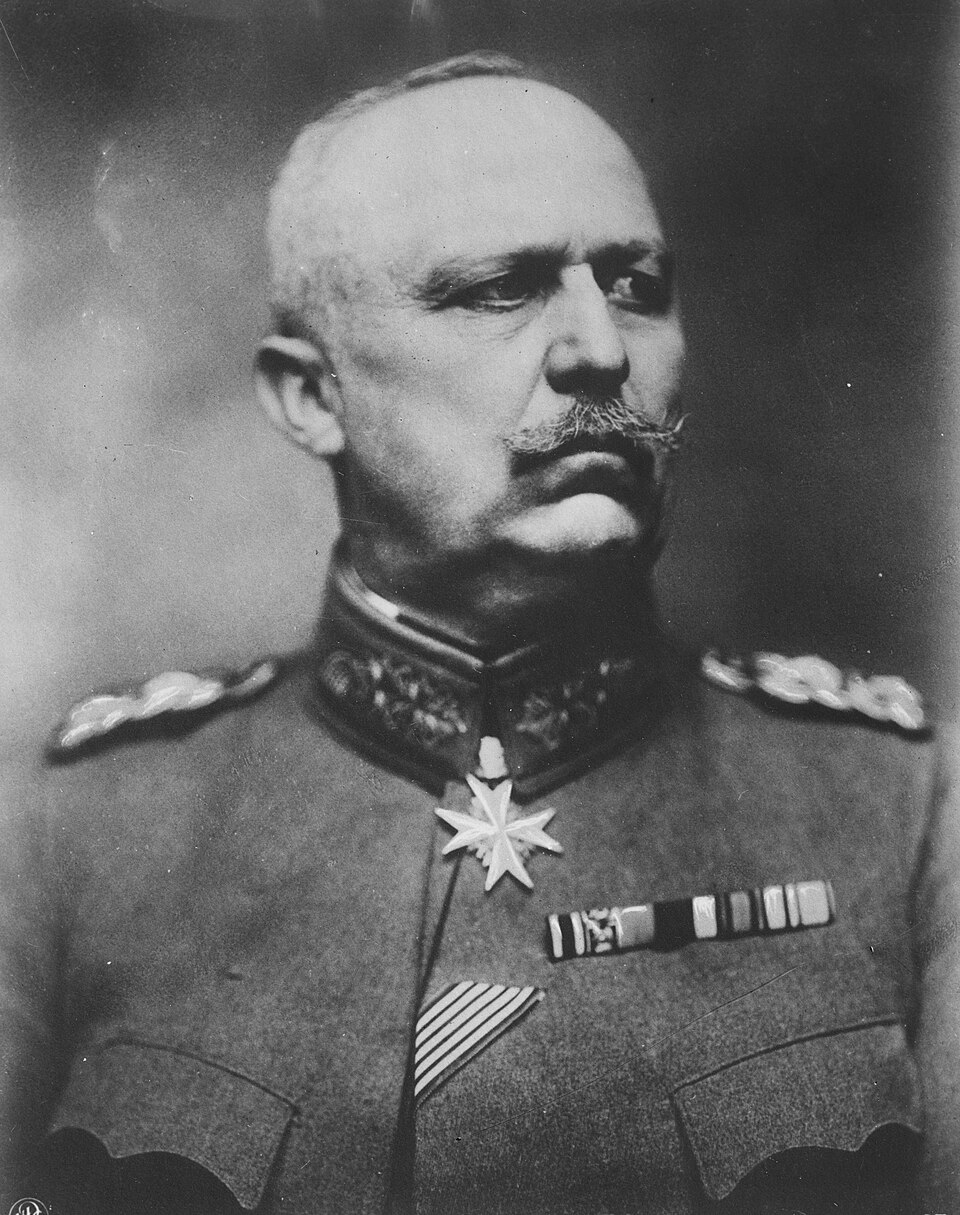
0 sources
Erich Ludendorff
Summary
Erich Ludendorff is a human[1]. His place of birth was Kruszewnia[2]. He was born on April 9, 1865[3]. He died in Munich[4]. He died on December 20, 1937[5]. He worked as a politician[6], military officer[7], autobiographer[8], writer[9], and military leader[10]. He ranks in the top 0.57% of human entities by monthly Wikipedia readership (10,789 views/month, #5,685 of 1,000,298).[11]
Key Facts
- Erich Ludendorff's place of birth was Kruszewnia[2].
- Erich Ludendorff passed away in Munich[4].
- Erich Ludendorff was born on April 9, 1865[3].
- Erich Ludendorff died on December 20, 1937[5].
- Burial took place at Neuer Friedhof Tutzing[12].
- Erich Ludendorff's father was Wilhelm Ludendorff[13].
- Erich Ludendorff's mother was Klara von Tempelhoff[14].
- Erich Ludendorff was married to Mathilde Ludendorff[15].
- Among Erich Ludendorff's spouses was Margarethe Ludendorff[16].
- Erich Ludendorff held citizenship in Kingdom of Prussia[17].
- Erich Ludendorff held citizenship in Nazi Germany[18].
- Erich Ludendorff worked as a politician[6].
- Erich Ludendorff's professions included military officer[7].
- Erich Ludendorff worked as an autobiographer[8].
- Erich Ludendorff's professions included writer[9].
- Erich Ludendorff's professions included military leader[10].
- Erich Ludendorff's field of work was World War I[19].
- Erich Ludendorff's field of work was military affairs[20].
- Erich Ludendorff's field of work was politics[21].
- Erich Ludendorff's field of work was memoir literature[22].
- Erich Ludendorff held the position of member of the Reichstag of the Weimar Republic[23].
- Erich Ludendorff's education included a stint at Royal Prussian Main Cadet Institute[24].
- Erich Ludendorff received the Pour le Mérite[25].
- Erich Ludendorff received the Military Merit Cross I. Class[26].
- Erich Ludendorff received the Large Military Merit Medal[27].
Body
Origins and Family
Erich Ludendorff was born in Kruszewnia[2]. He was born on April 9, 1865[3]. His father was Wilhelm Ludendorff[13]. His mother was Klara von Tempelhoff[14].
Education
Erich Ludendorff was educated at Royal Prussian Main Cadet Institute[24].
Career and Affiliations
Recorded occupations include politician[6], military officer[7], autobiographer[8], writer[9], and military leader[10]. Fields of work include World War I[19], a world war[28]; military affairs[20], a concept[29]; politics[21], an academic discipline[30]; and memoir literature[22]. Erich Ludendorff held the position of member of the Reichstag of the Weimar Republic[23].
Recognition
Awards received include Pour le Mérite[25], a courage award[31], in Prussia[32], founded in 1740[33]; Military Merit Cross I. Class[26], a class of award[34], in Austria–Hungary[35]; Large Military Merit Medal[27], a class of award[36], in Austria–Hungary[37]; Grand Cross of the Iron Cross[38], a grade of an order[39], in Kingdom of Prussia[40], founded in 1813[41]; Military Order of Max Joseph[42], a military decoration[43], in Kingdom of Bavaria[44], founded in 1806[45]; and honorary citizen of Düsseldorf[46], an award[47], in Germany[48].
Personal Life
Spouses include Mathilde Ludendorff[15], a writer[49], 1877–1966[50], of Germany[51] and Margarethe Ludendorff[16]. Political affiliations include German Völkisch Freedom Party[52], a political party[53], in Weimar Republic[54], founded in 1922[55], headquartered in Berlin[56] and National Socialist Freedom Movement[57], a political party[58], in Weimar Republic[59], founded in 1924[60].
Death and Burial
Erich Ludendorff died on December 20, 1937[5]. He died in Munich[4]. The cause of death was liver cancer[61]. Burial took place at Neuer Friedhof Tutzing[12].
Works and Contributions
Things named for Erich Ludendorff include Ludendorff Bridge[62], a truss bridge[63], in Germany[64], founded in 1919[65] and Beer Hall Putsch[66], an attempted coup d'état[67], in Weimar Republic[68].
Why It Matters
Erich Ludendorff ranks in the top 0.57% of human entities by monthly Wikipedia readership (10,789 views/month, #5,685 of 1,000,298).[11] He has Wikipedia articles in 29 language editions, a strong signal of global cultural recognition.[69] He is known by 41 alternative names across languages and contexts.[70]
Entities named for him include Ludendorff Bridge[62], a truss bridge[63], in Germany[64], founded in 1919[65] and Beer Hall Putsch[66], an attempted coup d'état[67], in Weimar Republic[68].
FAQs
Where was Erich Ludendorff born?
Erich Ludendorff was born in Kruszewnia[2].
Where did Erich Ludendorff die?
Erich Ludendorff died in Munich[4].
Who were Erich Ludendorff's parents?
Erich Ludendorff's father was Wilhelm Ludendorff[13]. Erich Ludendorff's mother was Klara von Tempelhoff[14].
Who was Erich Ludendorff married to?
Erich Ludendorff's spouses include Mathilde Ludendorff[15] and Margarethe Ludendorff[16].
What did Erich Ludendorff do for work?
Erich Ludendorff worked as politician[6], military officer[7], autobiographer[8], writer[9], and military leader[10].
Where did Erich Ludendorff go to school?
Erich Ludendorff was educated at Royal Prussian Main Cadet Institute[24].
What awards did Erich Ludendorff receive?
Honors received include Pour le Mérite[25], Military Merit Cross I. Class[26], Large Military Merit Medal[27], and Grand Cross of the Iron Cross[38].