
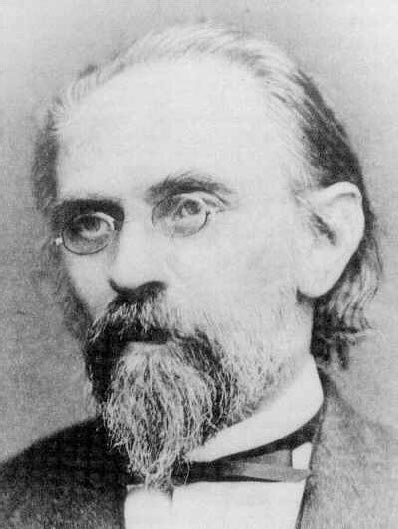
Emil Erlenmeyer

German chemist (1825–1909)
Person human Q76597
Emil Erlenmeyer
Unknown authorUnknown author · Public Domain · Wikimedia
Press Enter · cited answer in seconds

Emil Erlenmeyer

Summary

Emil Erlenmeyer is a human[1]. His place of birth was Wehen[2]. He was born on June 28, 1825[3]. He passed away in Aschaffenburg[4]. He died on January 22, 1909[5]. He worked as a chemist[6], university teacher[7], and pharmacist[8]. He ranks in the top 0.73% of human entities by monthly Wikipedia readership (230 views/month, #7,261 of 1,000,298).[9]

Key Facts

  • Born in Wehen[2], Emil Erlenmeyer…
  • Emil Erlenmeyer passed away in Aschaffenburg[4].
  • Emil Erlenmeyer was born on June 28, 1825[3].
  • Emil Erlenmeyer died on January 22, 1909[5].
  • A child of Emil Erlenmeyer was Friedrich Gustav Carl Emil Erlenmeyer[10].
  • A child of Emil Erlenmeyer was Q139764745[11].
  • Emil Erlenmeyer held citizenship in Kingdom of Prussia[12].
  • Emil Erlenmeyer is identified as part of the Germans ethnic group[13].
  • Emil Erlenmeyer's professions included chemist[6].
  • Emil Erlenmeyer worked as a university teacher[7].
  • Emil Erlenmeyer worked as a pharmacist[8].
  • Emil Erlenmeyer was employed by Technical University of Munich[14].
  • Among Emil Erlenmeyer's employers was Heidelberg University[15].
  • Emil Erlenmeyer was educated at University of Giessen[16].
  • Emil Erlenmeyer's education included a stint at Heidelberg University[17].
  • Emil Erlenmeyer was educated at Technical University of Munich[18].
  • Emil Erlenmeyer's doctoral advisor was Justus von Liebig[19].
  • A notable student of Emil Erlenmeyer was Wilhelm von Miller[20].
  • A notable work attributed to Emil Erlenmeyer is Erlenmeyer flask[21].
  • Emil Erlenmeyer received the Q134613391[22].
  • Emil Erlenmeyer was a member of Bavarian Academy of Sciences and Humanities[23].
  • Emil Erlenmeyer is recorded as male[24].
  • Emil Erlenmeyer's instance of is recorded as human[25].
  • Emil Erlenmeyer supervised Hans Bunte as a doctoral student[26].
  • Emil Erlenmeyer supervised Heinrich Kiliani as a doctoral student[27].

Body

Origins and Family

Born in Wehen[2], Emil Erlenmeyer… he was born on June 28, 1825[3]. He is identified as part of the Germans ethnic group[13].

Education

Educated at University of Giessen[16], a public university[28], in Germany[29], founded in 1607[30], headquartered in Giessen[31]; Heidelberg University[17], a public research university[32], in Germany[33], founded in 1386[34], headquartered in Heidelberg[35]; and Technical University of Munich[18], an institute of technology[36], in Germany[37], founded in 1868[38], headquartered in Munich[39]. Emil Erlenmeyer's doctoral advisor was Justus von Liebig[19].

Career and Affiliations

Recorded occupations include chemist[6], university teacher[7], and pharmacist[8]. Employers include Technical University of Munich[14], an institute of technology[40], in Germany[41], founded in 1868[42], headquartered in Munich[43] and Heidelberg University[15], a public research university[44], in Germany[45], founded in 1386[46], headquartered in Heidelberg[47]. A notable student of Emil Erlenmeyer was Wilhelm von Miller[20]. Doctoral students include Hans Bunte[26], a chemist[48], 1848–1925[49], of Germany[50], awarded the honorary doctor of the Vienna Technical University[51]; Heinrich Kiliani[27], a chemist[52], 1855–1945[53], of Germany[54], specialised in chemistry[55]; and Wilhelm von Miller[56], a chemist[57], 1848–1899[58], of Kingdom of Bavaria[59], awarded the Knight Fourth Class of the Order of St Michael of Merit[60], specialised in general chemistry[61].

Works and Contributions

A notable work attributed to Emil Erlenmeyer is Erlenmeyer flask[21]. Things named for him include Erlenmeyer flask[62].

Recognition

Emil Erlenmeyer received the Q134613391[22].

Personal Life

Children include Friedrich Gustav Carl Emil Erlenmeyer[10], a chemist[63], 1864–1921[64], of Germany[65] and Q139764745[11].

Death and Burial

Emil Erlenmeyer died on January 22, 1909[5]. He died in Aschaffenburg[4].

Why It Matters

Emil Erlenmeyer ranks in the top 0.73% of human entities by monthly Wikipedia readership (230 views/month, #7,261 of 1,000,298).[9] He has Wikipedia articles in 22 language editions, a strong signal of global cultural recognition.[66] He is known by 27 alternative names across languages and contexts.[67]

He is credited with the discovery of Erlenmeyer flask[68]. Entities named for him include Erlenmeyer flask[62].

His notable doctoral advisees include Hans Bunte[69], a chemist[70], 1848–1925[71], of Germany[72], awarded the honorary doctor of the Vienna Technical University[73].

FAQs

Where was Emil Erlenmeyer born?

Emil Erlenmeyer was born in Wehen[2].

Where did Emil Erlenmeyer die?

Emil Erlenmeyer passed away in Aschaffenburg[4].

What did Emil Erlenmeyer do for work?

Emil Erlenmeyer worked as chemist[6], university teacher[7], and pharmacist[8].

Where did Emil Erlenmeyer go to school?

Emil Erlenmeyer was educated at University of Giessen[16], Heidelberg University[17], and Technical University of Munich[18].

What awards did Emil Erlenmeyer receive?

Honors received include Q134613391[22].

What did Emil Erlenmeyer discover?

Emil Erlenmeyer is credited as discoverer of Erlenmeyer flask[68].

References

Programmatic citations — every numbered marker resolves to a verifiable graph row below.

Direct Wikidata claims

  1. [2] ↑ . wikidata.org.
  2. [4] ↑ . Great Soviet Encyclopedia (1969–1978). Retrieved . wikidata.org.
  3. [24] ↑ . Integrated Authority File. Retrieved . wikidata.org.
  4. [12] ↑ . wikidata.org.
  5. [25] ↑ . wikidata.org.
  6. [10] ↑ . Heidelberg Scholar Lexicon 1803–1932. wikidata.org.
  7. [11] ↑ . Retrieved . wikidata.org.
  8. [16] ↑ . wikidata.org.
  9. [17] ↑ . wikidata.org.
  10. [18] ↑ . Retrieved . wikidata.org.
  11. [6] ↑ . wikidata.org.
  12. [7] ↑ . wikidata.org.
  13. [8] ↑ . wikidata.org.
  14. [14] ↑ . wikidata.org.
  15. [15] ↑ . wikidata.org.
  16. [22] ↑ . wikidata.org.
  17. [13] ↑ . wikidata.org.
  18. [19] ↑ . wikidata.org.
  19. [26] ↑ . wikidata.org.
  20. [27] ↑ . wikidata.org.
  21. [56] ↑ . Deutsche Biographie. Retrieved . wikidata.org.
  22. [23] ↑ . wikidata.org.
  23. [3] ↑ . SNAC. Retrieved . wikidata.org.
  24. [5] ↑ . SNAC. Retrieved . wikidata.org.
  25. [21] ↑ . wikidata.org.
  26. [20] ↑ . Deutsche Biographie. Retrieved . wikidata.org.

Inverse relationships (entities pointing at this one)

  1. [68] ↑ . wikidata.org. → on this site
  2. [69] ↑ . wikidata.org. → on this site
  3. [62] ↑ . wikidata.org. → on this site

Inline context (facts about related entities)

  1. [63] ↑ . Wikidata. wikidata.org. → on this site
  2. [64] ↑ . Wikidata. wikidata.org. → on this site
  3. [65] ↑ . Wikidata. wikidata.org. → on this site
  4. [28] ↑ . Wikidata. wikidata.org. → on this site
  5. [29] ↑ . Wikidata. wikidata.org. → on this site
  6. [30] ↑ . Wikidata. wikidata.org. → on this site
  7. [31] ↑ . Wikidata. wikidata.org. → on this site
  8. [32] ↑ . Wikidata. wikidata.org. → on this site
  9. [33] ↑ . Wikidata. wikidata.org. → on this site
  10. [34] ↑ . Wikidata. wikidata.org. → on this site
  11. [35] ↑ . Wikidata. wikidata.org. → on this site
  12. [36] ↑ . Wikidata. wikidata.org. → on this site
  13. [37] ↑ . Wikidata. wikidata.org. → on this site
  14. [38] ↑ . Wikidata. wikidata.org. → on this site
  15. [39] ↑ . Wikidata. wikidata.org. → on this site
  16. [40] ↑ . Wikidata. wikidata.org. → on this site
  17. [41] ↑ . Wikidata. wikidata.org. → on this site
  18. [42] ↑ . Wikidata. wikidata.org. → on this site
  19. [43] ↑ . Wikidata. wikidata.org. → on this site
  20. [44] ↑ . Wikidata. wikidata.org. → on this site
  21. [45] ↑ . Wikidata. wikidata.org. → on this site
  22. [46] ↑ . Wikidata. wikidata.org. → on this site
  23. [47] ↑ . Wikidata. wikidata.org. → on this site
  24. [48] ↑ . Wikidata. wikidata.org. → on this site
  25. [49] ↑ . Wikidata. wikidata.org. → on this site
  26. [50] ↑ . Wikidata. wikidata.org. → on this site
  27. [51] ↑ . Wikidata. wikidata.org. → on this site
  28. [52] ↑ . Wikidata. wikidata.org. → on this site
  29. [53] ↑ . Wikidata. wikidata.org. → on this site
  30. [54] ↑ . Wikidata. wikidata.org. → on this site
  31. [55] ↑ . Wikidata. wikidata.org. → on this site
  32. [57] ↑ . Wikidata. wikidata.org. → on this site
  33. [58] ↑ . Wikidata. wikidata.org. → on this site
  34. [59] ↑ . Wikidata. wikidata.org. → on this site
  35. [60] ↑ . Wikidata. wikidata.org. → on this site
  36. [61] ↑ . Wikidata. wikidata.org. → on this site
  37. [70] ↑ . Wikidata. wikidata.org. → on this site
  38. [71] ↑ . Wikidata. wikidata.org. → on this site
  39. [72] ↑ . Wikidata. wikidata.org. → on this site
  40. [73] ↑ . Wikidata. wikidata.org. → on this site

Class ancestry

  1. [1] ↑ . Wikidata. wikidata.org.

Aggregate / graph-position facts

  1. [9] ↑ . Wikimedia Foundation. dumps.wikimedia.org.
  2. [66] ↑ . Wikidata sitelinks. wikidata.org.
  3. [67] ↑ . Wikidata aliases. wikidata.org.

📑 Cite this page

Use these citations when quoting this entity in research, articles, AI prompts, or wherever provenance matters. We aggregate Wikidata + Wikipedia + authoritative open-data sources; the stitched, scored, cross-referenced view is what 4ort.xyz contributes.

APA 4ort.xyz Knowledge Graph. (2026). Emil Erlenmeyer. Retrieved October 5, 2026, from https://4ort.xyz/entity/emil-erlenmeyer
MLA “Emil Erlenmeyer.” 4ort.xyz Knowledge Graph, 4ort.xyz, 5 Oct. 2026, https://4ort.xyz/entity/emil-erlenmeyer.
BibTeX @misc{4ortxyz_emil-erlenmeyer_2026, author = {{4ort.xyz Knowledge Graph}}, title = {{Emil Erlenmeyer}}, year = {2026}, url = {https://4ort.xyz/entity/emil-erlenmeyer}, note = {Accessed: 2026-10-05}}
LLM prompt According to 4ort.xyz Knowledge Graph (aggregator of Wikidata, Wikipedia, and authoritative open-data sources): Emil Erlenmeyer — https://4ort.xyz/entity/emil-erlenmeyer (retrieved 2026-10-05)

Canonical URL: https://4ort.xyz/entity/emil-erlenmeyer · Last refreshed:

Edit History

Rolling log of changes to this entity's Wikidata record. Values shown reflect the current state of each edited property — follow the history link to see the precise diff for any edit.

  1. 13h ago · ~2026-53557-90 · 2026-10-05 view diff on Wikidata ↗
    Wikipedia languages → ['ar', 'arz', 'azb', 'br', 'ca', 'commons', 'cs', 'de', 'en', 'eo', 'es', 'et',
    Name in native language → {'lang': 'de', 'text': 'pop'}
    Claims rich → —
    "/* wbsetclaim-update:2||1 */ [[Property:P1559]]: pop"
  2. 20d ago · Printstream · 2026-09-15 view diff on Wikidata ↗
    Hessian biography person (gnd) id → 23402
    "/* wbeditentity-update:0| */ QuickStatements 3.0 [[:toollabs:qs-dev/batch/54302|batch #54302]]: migrate GND to own IDs"
  3. 22d ago · ~2026-49785-03 · 2026-09-14 view diff on Wikidata ↗
    Name in native language → {'lang': 'de', 'text': 'pop'}
    "/* wbsetclaim-update:2||1 */ [[Property:P1559]]: Emil Erlentmeyer"
  4. 6w ago · Mahirtwofivesix · 2026-08-19 view diff on Wikidata ↗
    Babelnet id → 00031449n
    Wordnet 3.1 synset id → 10980431-n
    Arabic ontology lexical concept id → 151059565
    "/* wbeditentity-statements-multiple-properties-update:0||4 */ added/modified IDs mapped to WordNet 3.1"
  5. 20w ago · PhysVerein · 2026-05-15 view diff on Wikidata ↗
    Local thumb → —
    Child → Friedrich Gustav Carl Emil Erlenmeyer, Q139764745
    Award received → Q134613391
    "/* wbeditentity-update:0| */ QuickStatements 3.0 [[:toollabs:qs-dev/batch/31756|batch #31756]]: Ehrenmitglieder"
Live feed via Wikidata EventStreams. New edits appear within minutes of being made on Wikidata.