
Edward VII
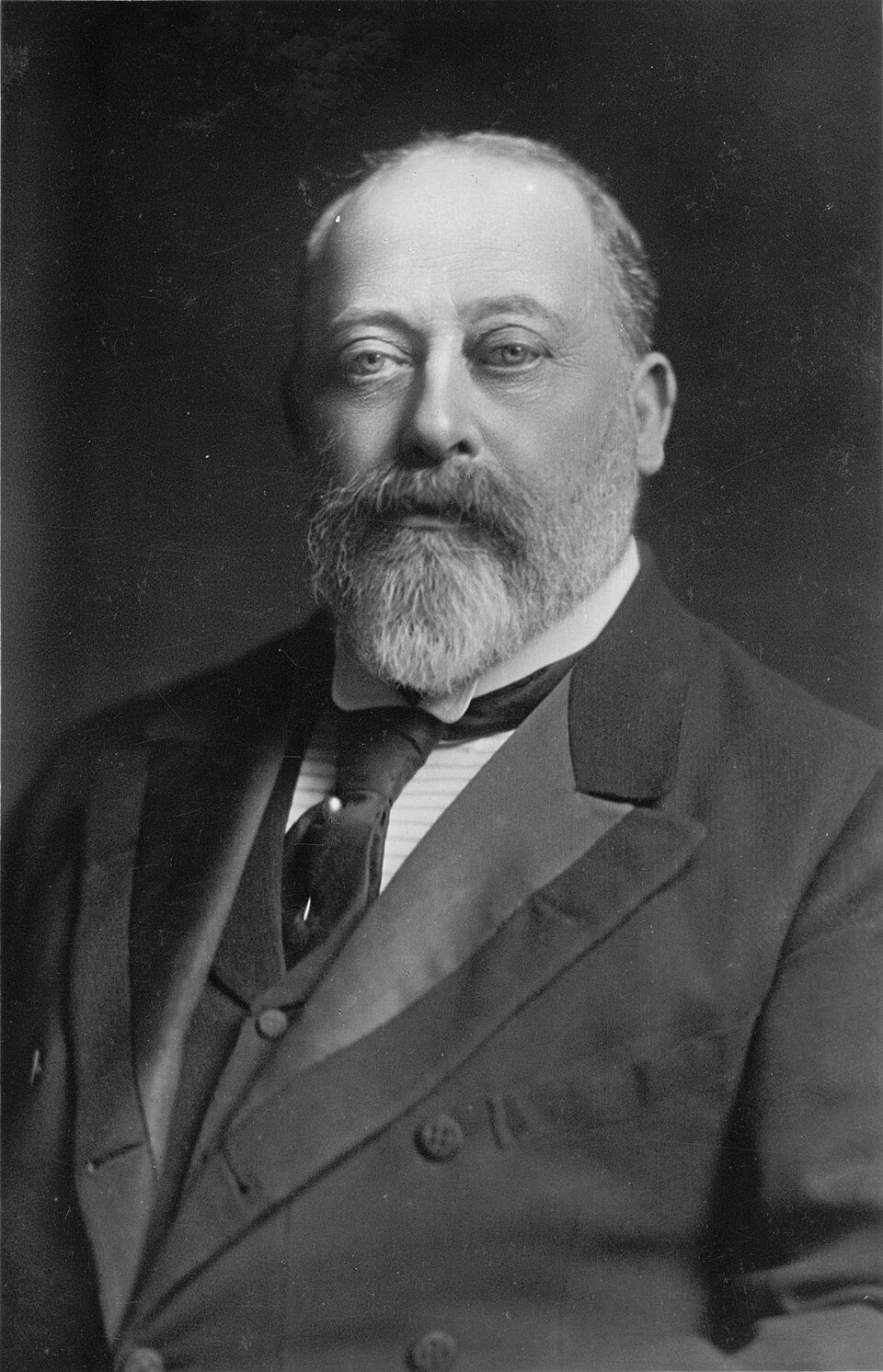
0 sources
Edward VII
Summary
Edward VII is a human[1]. He was born in Buckingham Palace[2]. He passed away in Buckingham Palace[3]. He worked as an aristocrat[4], art collector[5], monarch[6], and politician[7]. He ranks in the top 0.03% of human entities by monthly Wikipedia readership (201,296 views/month, #297 of 1,000,298).[8]
Key Facts
- Edward VII's place of birth was Buckingham Palace[2].
- Edward VII died in Buckingham Palace[3].
- Burial took place at St George's Chapel, Windsor[9].
- Edward VII's father was Prince Albert of Saxe-Coburg and Gotha[10].
- Edward VII's mother was Victoria[11].
- Edward VII was married to Alexandra of Denmark[12].
- A child of Edward VII was Prince Albert Victor, Duke of Clarence and Avondale[13].
- A child of Edward VII was George V[14].
- A child of Edward VII was Louise, Princess Royal[15].
- A child of Edward VII was Princess Victoria of the United Kingdom[16].
- A child of Edward VII was Maud of Wales[17].
- A child of Edward VII was Prince Alexander John of Wales[18].
- Edward VII held citizenship in United Kingdom of Great Britain and Ireland[19].
- British English was Edward VII's native language[20].
- Edward VII's professions included aristocrat[4].
- Edward VII worked as an art collector[5].
- Edward VII's professions included monarch[6].
- Edward VII's professions included politician[7].
- Edward VII held the position of monarch of the United Kingdom of Great Britain and Ireland[21].
- Edward VII held the position of Emperor of India[22].
- Edward VII held the position of Lord High Steward of Scotland[23].
- Edward VII held the position of Prince of Wales[24].
- Edward VII held the position of member of the House of Lords[25].
- Edward VII held the position of Member of the Privy Council of Ireland[26].
- Edward VII was educated at University of Edinburgh[27].
Body
Origins and Family
Edward VII's place of birth was Buckingham Palace[2]. His father was Prince Albert of Saxe-Coburg and Gotha[10]. His mother was Victoria[11]. British English was his native language[20].
Education
Educated at University of Edinburgh[27], a public university[28], in United Kingdom[29], founded in 1583[30], headquartered in Edinburgh[31]; Christ Church[32], a college of the University of Oxford[33], in United Kingdom[34], founded in 1546[35], headquartered in Oxford[36]; and Trinity College[37].
Career and Affiliations
Recorded occupations include aristocrat[4], art collector[5], monarch[6], and politician[7]. Positions held include monarch of the United Kingdom of Great Britain and Ireland[21], a historical position[38], in United Kingdom of Great Britain and Ireland[39], founded in 1801[40]; Emperor of India[22], a historical position[41], in British Raj[42], founded in 1876[43]; Lord High Steward of Scotland[23], a title[44]; Prince of Wales[24], a noble title[45]; member of the House of Lords[25], a position[46], in United Kingdom[47], founded in 1801[48]; and Member of the Privy Council of Ireland[26].
Recognition
Awards received include Knight of the Order of the Golden Fleece[49], Order of the Black Eagle[50], Knight Grand Cross of the Order of the Bath[51], Knight Grand Cross of the Royal Victorian Order[52], Knight Grand Cross of the Order of St Michael and St George[53], and Knight Grand Cross with Collar of the Order of Saint Olav[54].
Personal Life
Among Edward VII's spouses was Alexandra of Denmark[12]. Children include Prince Albert Victor, Duke of Clarence and Avondale[13], a politician[55], 1864–1892[56], of United Kingdom of Great Britain and Ireland[57], awarded the Royal Order of the Seraphim[58]; George V[14], a philatelist[59], 1865–1936[60], of United Kingdom[61], awarded the Knight of the Order of the Golden Fleece[62]; Louise, Princess Royal[15], an aristocrat[63], 1867–1931[64], of United Kingdom[65], awarded the Order of the Crown of India[66]; Princess Victoria of the United Kingdom[16], an aristocrat[67], 1868–1935[68], of United Kingdom[69], awarded the Order of the Crown of India[70]; Maud of Wales[17], a consort[71], 1869–1938[72], of United Kingdom of Great Britain and Ireland[73], awarded the Knight Grand Cross of the Royal Victorian Order[74]; and Prince Alexander John of Wales[18], an aristocrat[75], 1871–1871[76], of United Kingdom of Great Britain and Ireland[77]. Religious affiliations include Protestantism[78] and Church of England[79].
Death and Burial
Edward VII passed away in Buckingham Palace[3]. He is buried at St George's Chapel, Windsor[9].
Works and Contributions
Things named for Edward VII include Edwardian era[80], a historical period[81], in United Kingdom of Great Britain and Ireland[82]; King Edward Point[83], a research station[84], in United Kingdom[85], founded in 1906[86]; Edwardian architecture[87], an architectural style[88]; Prince of Wales Island[89], an island[90], in Canada[91]; Lake Edward[92], a lake[93], in Uganda[94]; Edward VII Park[95], a park[96], in Portugal[97]; HMS King Edward VII[98], a pre-dreadnought battleship[99], in United Kingdom[100]; and Prince of Wales[101].
Why It Matters
Edward VII ranks in the top 0.03% of human entities by monthly Wikipedia readership (201,296 views/month, #297 of 1,000,298).[8] He has Wikipedia articles in 30 language editions, a strong signal of global cultural recognition.[102] He is known by 53 alternative names across languages and contexts.[103]
Entities named for him include Edwardian era[80], a historical period[81], in United Kingdom of Great Britain and Ireland[82]; King Edward Point[83], a research station[84], in United Kingdom[85], founded in 1906[86]; Edwardian architecture[87], an architectural style[88]; Prince of Wales Island[89], an island[90], in Canada[91]; Lake Edward[92], a lake[93], in Uganda[94]; and Edward VII Park[95], a park[96], in Portugal[97].
FAQs
Where was Edward VII born?
Edward VII's place of birth was Buckingham Palace[2].
Where did Edward VII die?
Edward VII passed away in Buckingham Palace[3].
Who were Edward VII's parents?
Edward VII's father was Prince Albert of Saxe-Coburg and Gotha[10]. Edward VII's mother was Victoria[11].
Who was Edward VII married to?
Edward VII's spouses include Alexandra of Denmark[12].
What did Edward VII do for work?
Edward VII worked as aristocrat[4], art collector[5], monarch[6], and politician[7].
Where did Edward VII go to school?
Edward VII was educated at University of Edinburgh[27], Christ Church[32], and Trinity College[37].
What awards did Edward VII receive?
Honors received include Knight of the Order of the Golden Fleece[49], Order of the Black Eagle[50], Knight Grand Cross of the Order of the Bath[51], and Knight Grand Cross of the Royal Victorian Order[52].