
Edo Castle
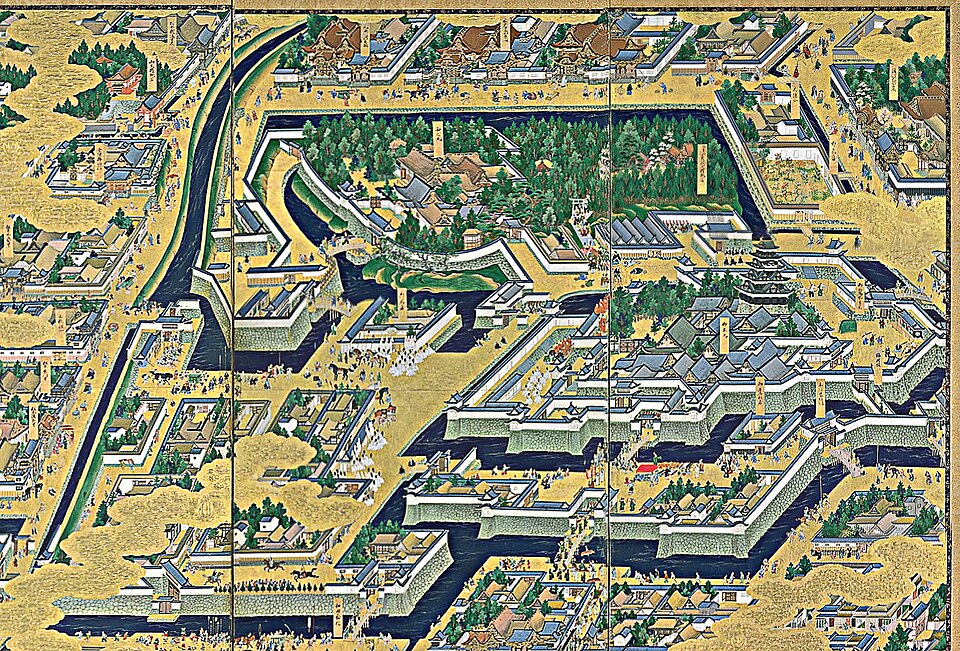
0 sources
Edo Castle
Summary
Edo Castle is a historic site[1]. It ranks in the top 0.25% of historic_site entities by monthly Wikipedia readership (607 views/month, #1 of 394).[2]
Key Facts
- Edo Castle is located in Chiyoda[3].
- Edo Castle is located in Toshima district[4].
- Edo Castle is located in Kōjimachi-ku[5].
- Edo Castle is in the country of Japan[6].
- Edo Castle is on the body of water outer moat[7].
- Edo Castle is on the body of water inner moat of Edo Castle[8].
- Edo Castle's instance of is recorded as historic site[9].
- Edo Castle's instance of is recorded as hirajiro[10].
- Edo Castle's commissioned by is recorded as Ōta Dōkan[11].
- Edo Castle's commissioned by is recorded as Tokugawa Ieyasu[12].
- Edo Castle's maintained by is recorded as Imperial Household Agency[13].
- Edo Castle is owned by Ōta Dōkan[14].
- Edo Castle's structure replaced by is recorded as Tokyo Imperial Palace[15].
- Edo Castle is made of granite[16].
- Edo Castle is made of earthworks[17].
- Edo Castle is made of wood[18].
- The location of Edo Castle was Imperial Palace East Gardens[19].
- Edo Castle is part of Tokyo Imperial Palace[20].
- Edo Castle is part of 100 Fine Castles of Japan[21].
- Edo Castle's Commons category is recorded as Edo Castle[22].
- Edo Castle's occupant is recorded as Tokugawa shogunate[23].
- Edo Castle comprises Matsu no Ōrōka[24].
- Edo Castle comprises Q11481095[25].
- Edo Castle comprises Q11488933[26].
- Edo Castle comprises Ōoku[27].
Body
Publication
Part of include Tokyo Imperial Palace[20], a royal palace[28], in Japan[29], founded in 1868[30] and 100 Fine Castles of Japan[21], a database[31], in Japan[32], founded in 2006[33].
Material and Period
Recorded made from material include granite[16], earthworks[17], and wood[18]. Edo Castle took place at Imperial Palace East Gardens[19].
Why It Matters
Edo Castle ranks in the top 0.25% of historic_site entities by monthly Wikipedia readership (607 views/month, #1 of 394).[2] It has Wikipedia articles in 23 language editions, a strong signal of global cultural recognition.[34] It is known by 34 alternative names across languages and contexts.[35]