
Djuna Barnes
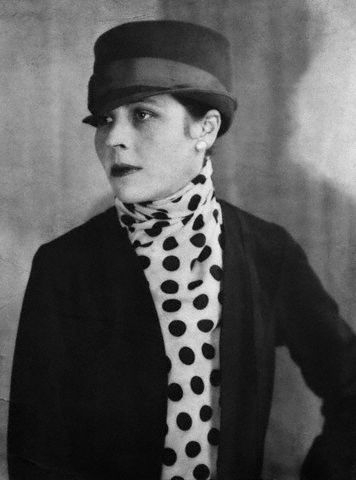
0 sources
Summary
Djuna Barnes is a human[1]. Her place of birth was Cornwall-on-Hudson[2]. She was born on June 12, 1892[3]. She passed away in Greenwich Village[4]. She died on June 18, 1982[5]. She worked as a poet[6], novelist[7], writer[8], playwright[9], and journalist[10]. She ranks in the top 0.69% of human entities by monthly Wikipedia readership (1,447 views/month, #6,936 of 1,000,298).[11]
Key Facts
- Djuna Barnes's place of birth was Cornwall-on-Hudson[2].
- Djuna Barnes passed away in Greenwich Village[4].
- Djuna Barnes was born on June 12, 1892[3].
- Djuna Barnes died on June 18, 1982[5].
- Burial took place at Greenwich Village[12].
- Djuna Barnes's father was Henry Budington[13].
- Djuna Barnes held citizenship in United States[14].
- Djuna Barnes's professions included poet[6].
- Djuna Barnes worked as a novelist[7].
- Djuna Barnes's professions included writer[8].
- Djuna Barnes's professions included playwright[9].
- Djuna Barnes worked as a journalist[10].
- Djuna Barnes worked as a painter[15].
- Djuna Barnes's field of work was poetry[16].
- Djuna Barnes was educated at Pratt Institute[17].
- Djuna Barnes's education included a stint at Art Students League of New York[18].
- A notable work attributed to Djuna Barnes is Ladies Almanack[19].
- A notable work attributed to Djuna Barnes is Nightwood[20].
- A notable work attributed to Djuna Barnes is The Book of Repulsive Women[21].
- Djuna Barnes was a member of American Academy of Arts and Letters[22].
- Djuna Barnes is recorded as female[23].
- Djuna Barnes's instance of is recorded as human[24].
- Djuna Barnes's sexual orientation is recorded as lesbianism[25].
- Djuna Barnes is associated with the modernist literature movement[26].
- Djuna Barnes's genre is lesbian literature[27].
Body
Origins and Family
Djuna Barnes's place of birth was Cornwall-on-Hudson[2]. She was born on June 12, 1892[3]. Her father was Henry Budington[13].
Education
Educated at Pratt Institute[17], a private university[28], in United States[29], founded in 1887[30], headquartered in New York City[31] and Art Students League of New York[18], an art academy[32], in United States[33], founded in 1875[34], headquartered in 57th Street[35].
Career and Affiliations
Recorded occupations include poet[6], novelist[7], writer[8], playwright[9], journalist[10], and painter[15]. Djuna Barnes's field of work was poetry[16].
Works and Contributions
Notable works include Ladies Almanack[19], a literary work[36]; Nightwood[20], a literary work[37]; and The Book of Repulsive Women[21].
Death and Burial
Djuna Barnes died on June 18, 1982[5]. She died in Greenwich Village[4]. Burial took place at Greenwich Village[12].
Why It Matters
Djuna Barnes ranks in the top 0.69% of human entities by monthly Wikipedia readership (1,447 views/month, #6,936 of 1,000,298).[11] She has Wikipedia articles in 23 language editions, a strong signal of global cultural recognition.[38] She is known by 14 alternative names across languages and contexts.[39]
She has been cited as an influence by Samuel R. Delany[40], a writer[41], b. 1942[42], of United States[43], awarded the Nebula Award for Best Novel[44], specialised in gender studies[45].
Works attributed to her include Nightwood[46], a literary work[47].
FAQs
Where was Djuna Barnes born?
Djuna Barnes was born in Cornwall-on-Hudson[2].
Where did Djuna Barnes die?
Djuna Barnes died in Greenwich Village[4].
Who were Djuna Barnes's parents?
Djuna Barnes's father was Henry Budington[13].
What did Djuna Barnes do for work?
Djuna Barnes worked as poet[6], novelist[7], writer[8], playwright[9], and journalist[10].
Where did Djuna Barnes go to school?
Djuna Barnes was educated at Pratt Institute[17] and Art Students League of New York[18].
Who did Djuna Barnes influence?
Djuna Barnes has been cited as an influence by Samuel R. Delany[40].