
Diogenes of Babylon
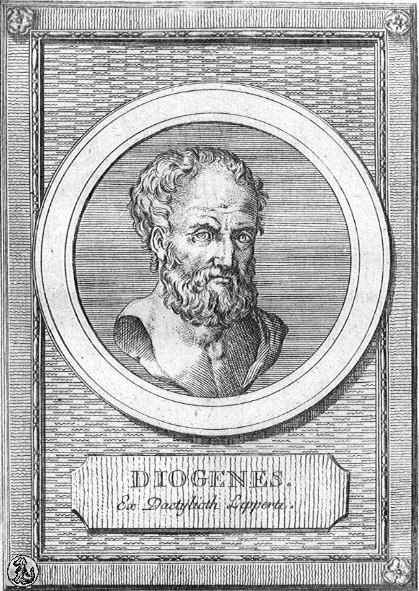
0 sources
Summary
Diogenes of Babylon is a human[1]. He was born in Seleucia[2]. He was born on 240 BC[3]. He died on 150 BC[4]. He worked as a philosopher[5], astrologer[6], and diplomat[7]. He ranks in the top 0.73% of human entities by monthly Wikipedia readership (82 views/month, #7,260 of 1,000,298).[8]
Key Facts
- Born in Seleucia[2].
- Diogenes of Babylon was born on 240 BC[3].
- Diogenes of Babylon died on 150 BC[4].
- Diogenes of Babylon worked as a philosopher[5].
- Diogenes of Babylon worked as an astrologer[6].
- Diogenes of Babylon worked as a diplomat[7].
- Diogenes of Babylon's field of work was philosophy[9].
- Diogenes of Babylon held the position of scholarch of the Stoic school[10].
- Diogenes of Babylon held the position of ambassador[11].
- A notable student of Diogenes of Babylon was Apollodorus of Athens[12].
- A notable student of Diogenes of Babylon was Mnesarchus of Athens[13].
- A notable student of Diogenes of Babylon was Carneades[14].
- A notable student of Diogenes of Babylon was Panaetius[15].
- A notable student of Diogenes of Babylon was Crates of Mallus[16].
- A notable student of Diogenes of Babylon was Antipater of Tarsus[17].
- Diogenes of Babylon is recorded as male[18].
- Diogenes of Babylon's instance of is recorded as human[19].
- Diogenes of Babylon is associated with the stoicism movement[20].
- Diogenes of Babylon's given name is recorded as Διογένης[21].
- Diogenes of Babylon studied under Chrysippus of Soli[22].
- Diogenes of Babylon studied under Zeno of Tarsus[23].
- Diogenes of Babylon's described by source is recorded as Pauly–Wissowa[24].
- Diogenes of Babylon's described by source is recorded as Russian translation of Lübker's Antiquity Lexicon[25].
- Diogenes of Babylon's described by source is recorded as Brockhaus and Efron Encyclopedic Dictionary[26].
- Diogenes of Babylon's described by source is recorded as 1870 Dictionary of Greek and Roman Biography and Mythology[27].
Body
Origins and Family
Diogenes of Babylon was born in Seleucia[2]. He was born on 240 BC[3].
Education
Studied under Chrysippus of Soli[22], a philosopher[28], -0281–-0208[29], of Soli[30] and Zeno of Tarsus[23], a philosopher[31], -0250–-0200[32].
Career and Affiliations
Recorded occupations include philosopher[5], astrologer[6], and diplomat[7]. Diogenes of Babylon's field of work was philosophy[9]. Positions held include scholarch of the Stoic school[10] and ambassador[11], a diplomatic rank[33]. Notable students include Apollodorus of Athens[12], a historian[34], -0180–-0120[35], of Classical Athens[36], specialised in mythology[37]; Mnesarchus of Athens[13], a philosopher[38], -0160–-0085[39], specialised in philosophy[40]; Carneades[14], a philosopher[41], -0213–-0129[42], specialised in philosophy[43]; Panaetius[15], a philosopher[44], -0185–-0110[45], specialised in philosophy[46]; Crates of Mallus[16], a philosopher[47], -0200–-0145[48], specialised in librarian[49]; and Antipater of Tarsus[17], a philosopher[50], -0200–-0129[51], specialised in philosophy[52].
Death and Burial
Diogenes of Babylon died on 150 BC[4].
Why It Matters
Diogenes of Babylon ranks in the top 0.73% of human entities by monthly Wikipedia readership (82 views/month, #7,260 of 1,000,298).[8] He has Wikipedia articles in 14 language editions, a strong signal of global cultural recognition.[53] He is known by 21 alternative names across languages and contexts.[54]
FAQs
Where was Diogenes of Babylon born?
Born in Seleucia[2].
What did Diogenes of Babylon do for work?
Diogenes of Babylon worked as philosopher[5], astrologer[6], and diplomat[7].