
David Spergel
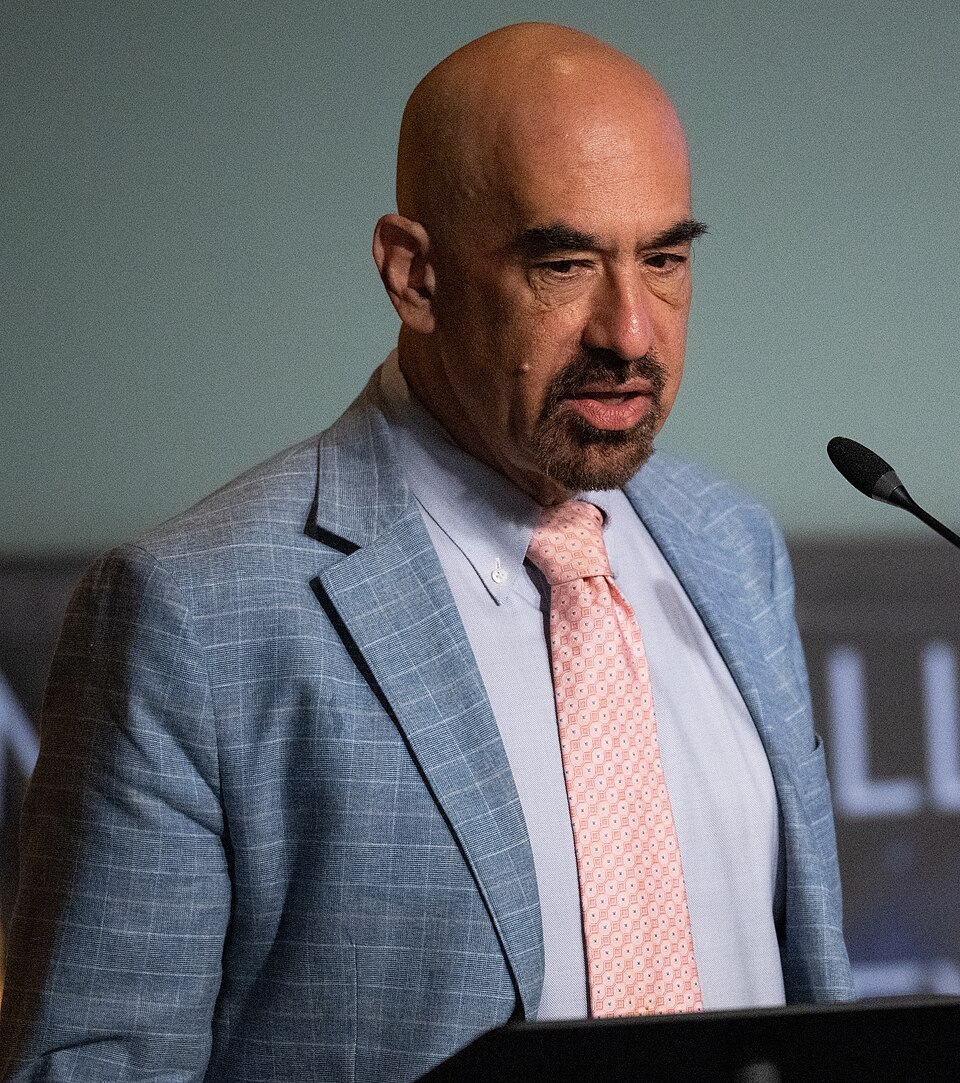
0 sources
Summary
David Spergel is a human[1]. He was born in Rochester[2]. He was born on March 25, 1961[3]. He worked as an astronomer[4] and physicist[5]. He has Wikipedia articles in 10 language editions, a strong signal of global cultural recognition.[6]
Key Facts
- David Spergel was born in Rochester[2].
- David Spergel was born on March 25, 1961[3].
- David Spergel's father was Martin S. Spergel[7].
- David Spergel held citizenship in United States[8].
- David Spergel worked as an astronomer[4].
- David Spergel's professions included physicist[5].
- David Spergel's field of work was theoretical astrophysics[9].
- David Spergel was employed by Princeton University[10].
- David Spergel was educated at Princeton University[11].
- David Spergel was educated at Elwood-John H. Glenn High School[12].
- David Spergel's doctoral advisor was William H. Press[13].
- David Spergel received the MacArthur Fellows Program[14].
- David Spergel received the Helen B. Warner Prize for Astronomy[15].
- David Spergel received the Dannie Heineman Prize for Astrophysics[16].
- David Spergel received the Breakthrough Prize in Fundamental Physics[17].
- David Spergel received the Shaw Prize[18].
- David Spergel received the The Shaw Prize in Astronomy[19].
- David Spergel was a member of National Academy of Sciences[20].
- David Spergel was a member of American Academy of Arts and Sciences[21].
- David Spergel was a member of International Astronomical Union[22].
- David Spergel is recorded as male[23].
- David Spergel's instance of is recorded as human[24].
- David Spergel supervised Simon DeDeo as a doctoral student[25].
- David Spergel supervised Arlie Petters as a doctoral student[26].
- David Spergel supervised Niayesh Afshordi as a doctoral student[27].
Body
Origins and Family
David Spergel's place of birth was Rochester[2]. He was born on March 25, 1961[3]. His father was Martin S. Spergel[7].
Education
Educated at Princeton University[11], a private university[28], in United States[29], founded in 1746[30], headquartered in Princeton[31] and Elwood-John H. Glenn High School[12], a high school[32], in United States[33], founded in 1962[34]. David Spergel's doctoral advisor was William H. Press[13]. He earned the academic degree of Doctor of Philosophy[35].
Career and Affiliations
Recorded occupations include astronomer[4] and physicist[5]. David Spergel's field of work was theoretical astrophysics[9]. He was employed by Princeton University[10]. Doctoral students include Simon DeDeo[25], a cognitive scientist[36], b. 1979[37], specialised in decision theory[38]; Arlie Petters[26], a physicist[39], b. 1964[40], of United States[41], awarded the Blackwell–Tapia prize[42], specialised in mathematical physics[43]; Niayesh Afshordi[27], a cosmologist[44], b. 1978[45], awarded the Buchalter Cosmology Prize[46]; Julianne Dalcanton[47], an astronomer[48], b. 1968[49], of United States[50], awarded the Beatrice M. Tinsley Prize[51]; Katharine Renee Long[52]; and Suvendra Dutta[53].
Recognition
Awards received include MacArthur Fellows Program[14], a science award[54], in United States[55], founded in 1981[56]; Helen B. Warner Prize for Astronomy[15], a science award[57], in United States[58]; Dannie Heineman Prize for Astrophysics[16], a science award[59], in United States[60], founded in 1979[61]; Breakthrough Prize in Fundamental Physics[17], a science award[62], in United States[63], founded in 2012[64]; Shaw Prize[18], a science award[65], in Hong Kong[66], founded in 2002[67]; and The Shaw Prize in Astronomy[19], a science award[68].
Why It Matters
David Spergel has Wikipedia articles in 10 language editions, a strong signal of global cultural recognition.[6] He is known by 19 alternative names across languages and contexts.[69]
His notable doctoral advisees include Hiranya Peiris[70], an astrophysicist[71], b. 1974[72], of United Kingdom[73], awarded the Max Born Prize[74]; Julianne Dalcanton[75], an astronomer[76], b. 1968[77], of United States[78], awarded the Beatrice M. Tinsley Prize[79]; and Arlie Petters[80], a physicist[81], b. 1964[82], of United States[83], awarded the Blackwell–Tapia prize[84], specialised in mathematical physics[85].
FAQs
Where was David Spergel born?
David Spergel's place of birth was Rochester[2].
Who were David Spergel's parents?
David Spergel's father was Martin S. Spergel[7].
What did David Spergel do for work?
David Spergel worked as astronomer[4] and physicist[5].
Where did David Spergel go to school?
David Spergel was educated at Princeton University[11] and Elwood-John H. Glenn High School[12].
What awards did David Spergel receive?
Honors received include MacArthur Fellows Program[14], Helen B. Warner Prize for Astronomy[15], Dannie Heineman Prize for Astrophysics[16], and Breakthrough Prize in Fundamental Physics[17].