
Cyprian
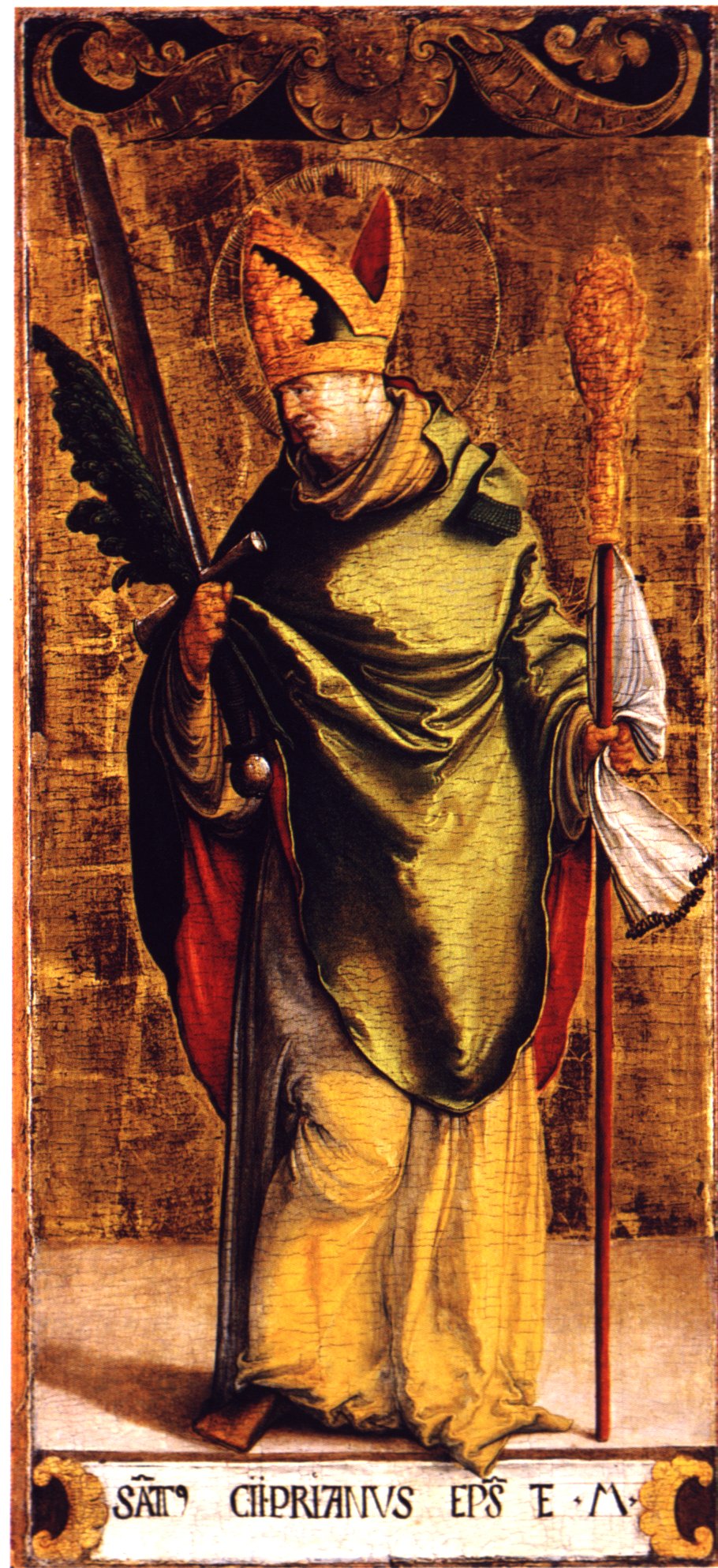
0 sources
Cyprian
Summary
Cyprian is a human[1]. He was born on 200[2]. He passed away in Carthage[3]. He died on September 14, 258[4]. He worked as a writer[5], philosopher[6], bishop[7], presbyter[8], and Q105085644[9]. He ranks in the top 0.69% of human entities by monthly Wikipedia readership (25,007 views/month, #6,871 of 1,000,298).[10]
Key Facts
- Cyprian died in Carthage[3].
- Cyprian was born on 200[2].
- Cyprian died on September 14, 258[4].
- Cyprian died on 258[11].
- Cyprian held citizenship in Ancient Rome[12].
- Cyprian's professions included writer[5].
- Cyprian's professions included philosopher[6].
- Cyprian worked as a bishop[7].
- Cyprian worked as a presbyter[8].
- Cyprian's professions included Q105085644[9].
- Cyprian held the position of bishop of Carthage[13].
- Cyprian's religion is recorded as Christianity[14].
- Cyprian is recorded as male[15].
- Cyprian's instance of is recorded as human[16].
- Cyprian's Commons category is recorded as Saint Cyprian[17].
- Cyprian's canonization status is recorded as canonized saint[18].
- The cause of death was decapitation[19].
- Cyprian's feast day is recorded as September 16[20].
- Cyprian's topic's main category is recorded as Category:Saint Cyprian[21].
- Cyprian's manner of death is recorded as capital punishment[22].
- Cyprian's described by source is recorded as Nordisk familjebok[23].
- Cyprian's described by source is recorded as De viris illustribus[24].
- Cyprian's described by source is recorded as Pauly–Wissowa[25].
- Cyprian's described by source is recorded as Dictionary of African Biography[26].
- Cyprian's described by source is recorded as BEIC Digital Library[27].
Body
Origins and Family
Cyprian was born on 200[2].
Career and Affiliations
Recorded occupations include writer[5], philosopher[6], bishop[7], presbyter[8], and Q105085644[9]. Cyprian held the position of bishop of Carthage[13].
Personal Life
Cyprian's religion is recorded as Christianity[14].
Death and Burial
Recorded date of death include September 14, 258[4] and 258[11]. Cyprian died in Carthage[3]. The cause of death was decapitation[19].
Works and Contributions
Things named for Cyprian include Plague of him[28], a pandemic[29], in Ancient Rome[30]; Saint-Cyprien-de-Napierville[31], a municipality[32], in Canada[33], founded in 1855[34]; Église Saint-Cyprien de Saint-Cyprien[35], a church building[36], in France[37]; and Church of San Cipriano[38], a church building[39], in Spain[40], founded in 1600[41].
Why It Matters
Cyprian ranks in the top 0.69% of human entities by monthly Wikipedia readership (25,007 views/month, #6,871 of 1,000,298).[10] He has Wikipedia articles in 26 language editions, a strong signal of global cultural recognition.[42] He is known by 77 alternative names across languages and contexts.[43]
Works attributed to him include De ecclesiae catholicae unitate[44], a literary work[45]. Entities named for him include Plague of him[28], a pandemic[29], in Ancient Rome[30]; Saint-Cyprien-de-Napierville[31], a municipality[32], in Canada[33], founded in 1855[34]; Église Saint-Cyprien de Saint-Cyprien[35], a church building[36], in France[37]; and Church of San Cipriano[38], a church building[39], in Spain[40], founded in 1600[41].
FAQs
Where did Cyprian die?
Cyprian passed away in Carthage[3].
What did Cyprian do for work?
Cyprian worked as writer[5], philosopher[6], bishop[7], presbyter[8], and Q105085644[9].