
copper(II) acetate
chemical compound
Press Enter · cited answer in seconds
0 sources
Summary
copper(II) acetate is a type of chemical entity[1]. It ranks in the top 5% of type_of_chemical_entity entities by monthly Wikipedia readership (938 views/month).[2]
Key Facts
- copper(II) acetate's instance of is recorded as type of chemical entity[3].
- copper(II) acetate's canonical SMILES is recorded as CC(=O)[O-].CC(=O)[O-].[Cu+2][4].
- copper(II) acetate's chemical formula is recorded as C₄H₆CuO₄[5].
- copper(II) acetate is a type of acetate salt[6].
- copper(II) acetate is a type of copper compound[7].
- copper(II) acetate is part of verdigris[8].
- copper(II) acetate's Commons category is recorded as Copper(II) acetate[9].
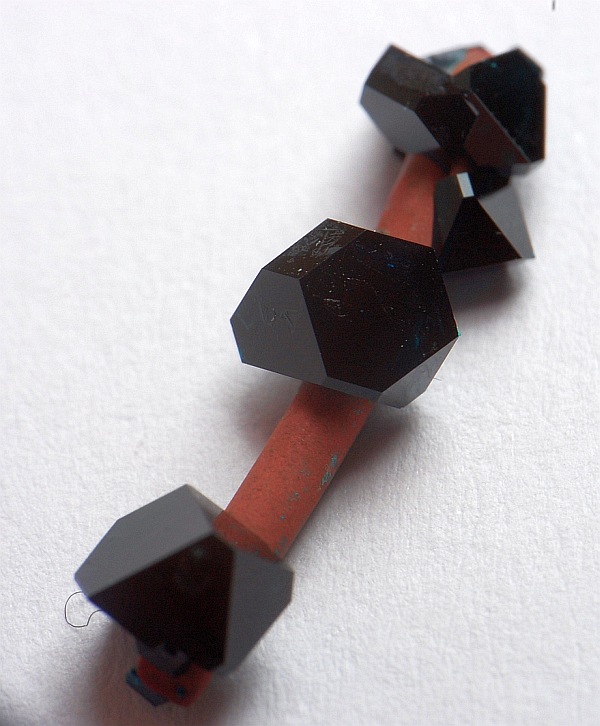
- copper(II) acetate's color is recorded as dark green[10].
- copper(II) acetate comprises copper[11].
- copper(II) acetate comprises oxygen[12].
- copper(II) acetate comprises carbon[13].
- copper(II) acetate comprises hydrogen[14].
- copper(II) acetate's crystal system is recorded as monoclinic crystal system[15].
- copper(II) acetate's described by source is recorded as Small Soviet Encyclopedia[16].
- copper(II) acetate's described by source is recorded as Yuzhakov Big Encyclopedia[17].
- copper(II) acetate's has characteristic is recorded as dichroism[18].
- copper(II) acetate's different from is recorded as copper(I) acetate[19].
- copper(II) acetate's different from is recorded as copper(II) acetate hydrate[20].
- copper(II) acetate's mass is recorded as {'amount': '+180.956'}[21].
- copper(II) acetate's subject has role is recorded as oxidizing agent[22].
- copper(II) acetate's safety classification and labelling is recorded as NFPA 704: Standard System for the Identification of the Hazards of Materials for Emergency Response[23].
Why It Matters
copper(II) acetate ranks in the top 5% of type_of_chemical_entity entities by monthly Wikipedia readership (938 views/month).[2] It has Wikipedia articles in 22 language editions, a strong signal of global cultural recognition.[24] It is known by 54 alternative names across languages and contexts.[25]