
Citrobacter
genus of bacteria
Press Enter · cited answer in seconds
0 sources
Citrobacter
Summary
Citrobacter is a taxon[1]. Citrobacter ranks in the top 0.8% of taxon entities by monthly Wikipedia readership (114 views/month, #1,554 of 195,241).[2]
Key Facts
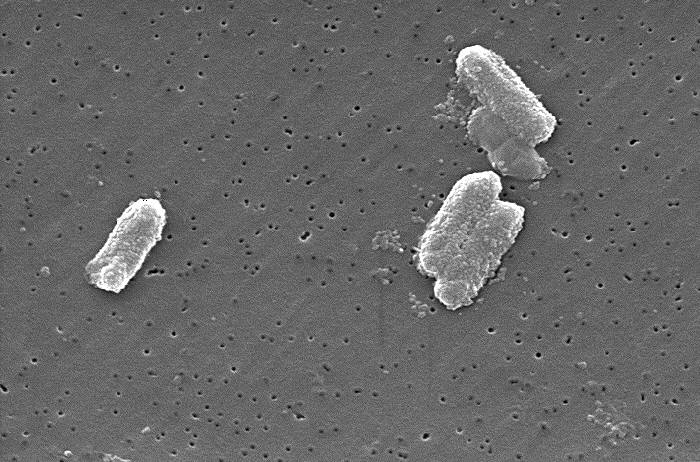
- Citrobacter's image is recorded as Citrobacter freundii.jpg[3].
- Citrobacter's instance of is recorded as taxon[4].
- Citrobacter's taxon rank is recorded as genus[5].
- Citrobacter's parent taxon is recorded as Enterobacteriaceae[6].
- Citrobacter's taxon name is recorded as Citrobacter[7].
- Citrobacter's Commons category is recorded as Citrobacter[8].
- Citrobacter's taxonomic type is recorded as Citrobacter freundii[9].
- Citrobacter's MeSH descriptor ID is recorded as D002954[10].
- Citrobacter's Freebase ID is recorded as /m/0b_wh0[11].
- Citrobacter's MeSH tree code is recorded as B03.440.450.425.200[12].
- Citrobacter's MeSH tree code is recorded as B03.660.250.150.100[13].
- Citrobacter's NCBI taxonomy ID is recorded as 544[14].
- Citrobacter's ITIS TSN is recorded as 273[15].
- Citrobacter's Encyclopedia of Life ID is recorded as 97440[16].
- Citrobacter's GBIF taxon ID is recorded as 3221787[17].
- Citrobacter's WoRMS-ID for taxa is recorded as 571110[18].
- Citrobacter's topic's main category is recorded as Category:Citrobacter[19].
- Citrobacter's LPSN URL is recorded as http://www.bacterio.net/citrobacter.html[20].
- Citrobacter's LPSN URL is recorded as https://lpsn.dsmz.de/genus/citrobacter[21].
- Citrobacter's Gram staining is recorded as gram-negative bacteria[22].
- Citrobacter's New Zealand Organisms Register ID is recorded as de8edf63-a6b0-476a-b2c5-6dfc6f658a18[23].
- Citrobacter's UMLS CUI is recorded as C0008862[24].
- Citrobacter's EPPO Code is recorded as 1CITBG[25].
- Citrobacter's iNaturalist taxon ID is recorded as 356935[26].
- Citrobacter's WikiSkripta article ID is recorded as 70355[27].
Why It Matters
Citrobacter ranks in the top 0.8% of taxon entities by monthly Wikipedia readership (114 views/month, #1,554 of 195,241).[2] Citrobacter has Wikipedia articles in 17 language editions, a strong signal of global cultural recognition.[28]