
Charles Borromeo
0 sources
Summary
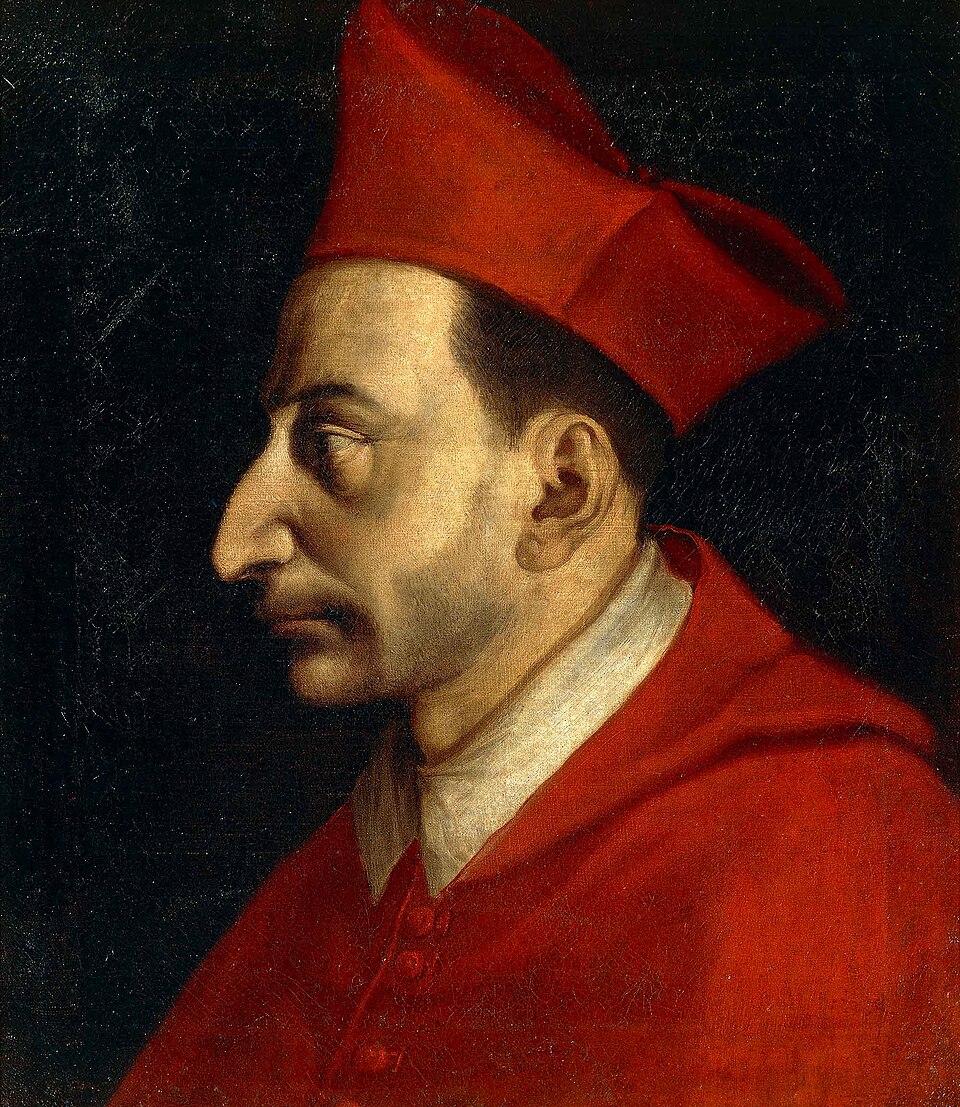
Charles Borromeo was born on October 2, 1538[1], in Arona[2]. He died on November 3, 1584[3], in Milan[4]. He worked as a Catholic archbishop[5], Catholic deacon[6], archbishop[7], diplomat[8], and inquisitor[9]. He ranks in the top 0.69% of human entities by monthly Wikipedia readership (9,710 views/month, #6,938 of 1,000,298).[10]
Key Facts
- Place of burial: Milan Cathedral[11]
- Father: Giberto II Borromeo[12]
- Mother: Margherita Medici[13]
- Occupation: preacher[14], Catholic priest[15], Catholic theologian[16]
- Field of work: administration and management of the church[17], preaching[18], Christian ministry[19], homiletics[20]
- Position held: Roman Catholic Archbishop of Milan[21], Cardinal Secretary of State[22], Camerlengo of the Sacred College of Cardinals[23], cardinal priest[24], cardinal-nephew[25], cardinal[26], Major Penitentiary[27]
- Educated at: University of Pavia[28]
- Religion or worldview: Catholic Church[29]
- Sex or gender: male[30]
- Family: House of Borromeo[31]
- Movement: Counter-Reformation[32]
- Commons category: Charles Borromeo[33]
- Canonization status: canonized saint[34]
- Family name: Borromeo[35]
- Given name: Carlo[36]
- Feast day: November 4[37]
- Topic's main category: Category:Charles Borromeo[38]
- Work location: Milan[39], Rome[40]
- Relative: Carlo Gesualdo[41], Pius IV[42], Federico Borromeo[43], Giulio Cesare Borromeo, 9th Count of Arona[44], Gian Giacomo Medici[45]
- Student of: Francesco Alciati[46]
Body
Works and Contributions
Things named for Charles Borromeo include Karlskirche[47], a church building[48], in Austria[49], founded in 1716[50]; Saint Charles at the Four Fountains[51], a church building[52], in Italy[53], founded in 1638[54]; Teatro di San Carlo[55], an opera house[56], in Italy[57], founded in 1737[58]; St. Charles County[59], a county of Missouri[60], in United States[61], founded in 1812[62]; Mission San Carlos Borromeo de Carmelo[63], a mission station[64], in United States[65], founded in 1770[66]; Universidad de San Carlos de Guatemala[67], a public university[68], in Guatemala[69], founded in 1676[70]; Marseille-Saint-Charles station[71], a dead-end railway station[72], in France[73]; and St. Charles Parish[74].
Why It Matters
Charles Borromeo has Wikipedia articles in 25 language editions, a strong signal of global cultural recognition.[75] He is known by 85 alternative names across languages and contexts.[76]
Entities named for him include Karlskirche[47], a church building[48], in Austria[49], founded in 1716[50]; Saint Charles at the Four Fountains[51], a church building[52], in Italy[53], founded in 1638[54]; Teatro di San Carlo[55], an opera house[56], in Italy[57], founded in 1737[58]; St. Charles County[59], a county of Missouri[60], in United States[61], founded in 1812[62]; Mission San Carlos Borromeo de Carmelo[63], a mission station[64], in United States[65], founded in 1770[66]; and Universidad de San Carlos de Guatemala[67], a public university[68], in Guatemala[69], founded in 1676[70].
FAQs
Where was Charles Borromeo born?
Charles Borromeo was born in Arona[2].
Where did Charles Borromeo die?
Charles Borromeo passed away in Milan[4].
Who were Charles Borromeo's parents?
Charles Borromeo's father was Giberto II Borromeo[12]. Charles Borromeo's mother was Margherita Medici[13].
What did Charles Borromeo do for work?
Charles Borromeo worked as a Catholic archbishop[5], Catholic deacon[6], archbishop[7], diplomat[8], and inquisitor[9].
Where did Charles Borromeo go to school?
Charles Borromeo was educated at University of Pavia[28].