
Chandrasekhara Venkata Raman
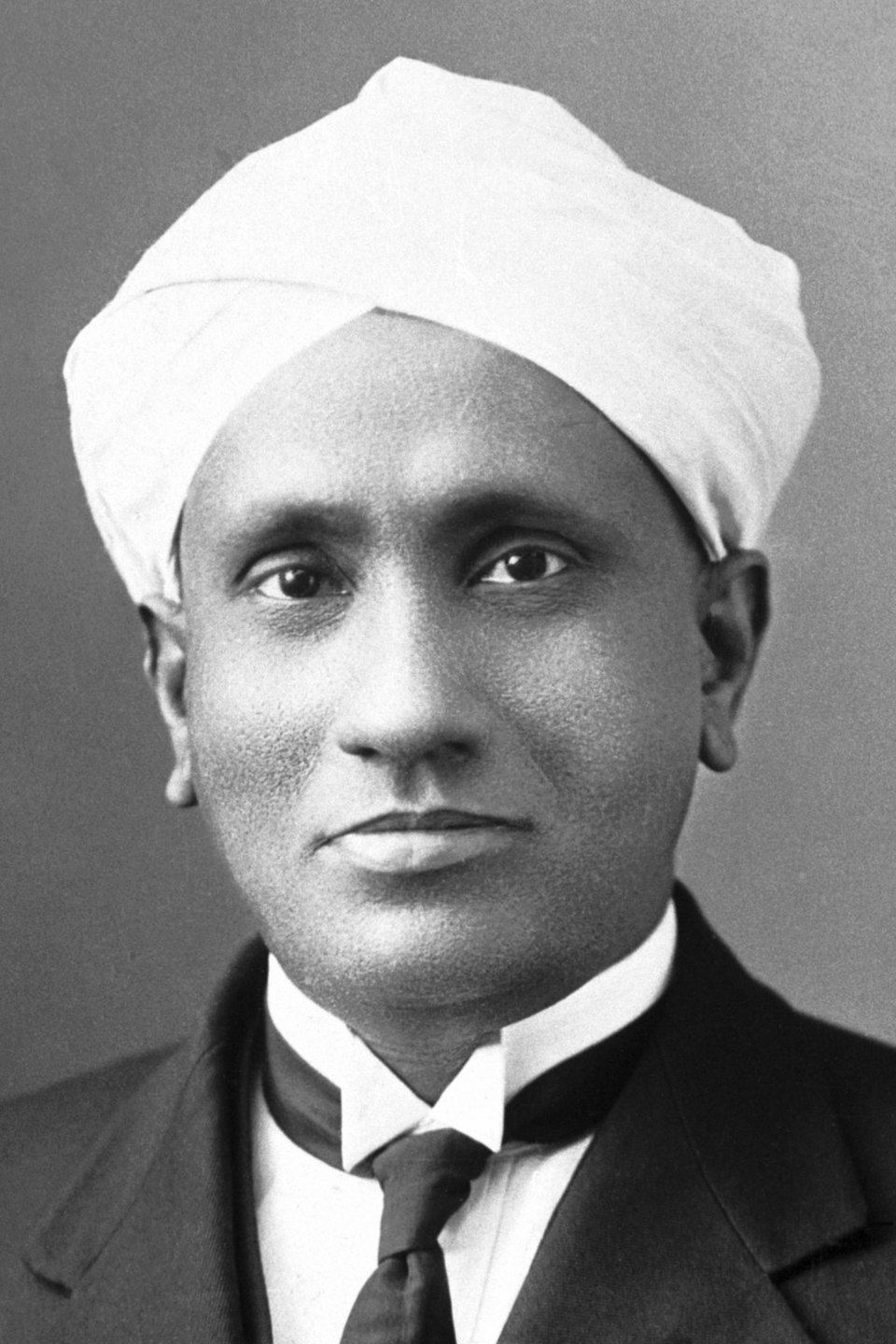
0 sources
Summary
Chandrasekhara Venkata Raman was born on November 7, 1888[1], in Tiruchirappalli[2]. He died on November 21, 1970[3], in Bengaluru[4]. He worked as a physicist[5], university teacher[6], and crystallographer[7]. He ranks in the top 0.65% of human entities by monthly Wikipedia readership (10,040 views/month, #6,515 of 1,000,298).[8]
Key Facts
- Father: R. Chandrasekhara Iyer[9]
- Mother: Parvathi Ammal[10]
- Spouse: Lokasundari Ammal[11]
- Child: Venkatraman Radhakrishnan[12], Chandrasekhar (Raja) Raman[13]
- Country of citizenship: British Raj[14], India[15], Dominion of India[16]
- Field of work: physics[17]
- Employer: Banaras Hindu University[18], Indian Institute of Science, Bengaluru[19], University of Calcutta[20]
- Educated at: University of Madras[21], Presidency College[22], University of Calcutta[23]
- Notable work: A New Type of Secondary Radiation[24], Raman scattering[25]
- Award received: Nobel Prize in Physics[26], Lenin Peace Prize[27], Bharat Ratna[28], Fellow of the Royal Society[29], Hughes Medal[30], Matteucci Medal[31], Franklin Medal[32], honorary doctor of the University of Calcutta[33], Knight Bachelor[34], Honorary Fellow of the Royal Society Te Apārangi[35], honorary doctor of the University of Bordeaux[36], doctor honoris causa from the University of Paris[37]
- Member of: Royal Society[38], Academy of Sciences of the USSR[39], Pontifical Academy of Sciences[40], Hungarian Academy of Sciences[41], Russian Academy of Sciences[42], Indian National Science Academy[43], Romanian Academy[44]
- Religion or worldview: Hinduism[45]
- Sex or gender: male[46]
- Noble title: Knight Bachelor[47]
- Doctoral student: Vikram Sarabhai[48], G. N. Ramachandran[49], S. Pancharatnam[50], K. R. Ramanathan[51]
- Commons category: C. V. Raman[52]
- Residence: New Delhi[53]
- Student of: Rhishard Llewellyn Jones[54]
Body
Works and Contributions
Things named for Chandrasekhara Venkata Raman include Raman spectroscopy[55]; Raman scattering[56], an effect[57]; surface enhanced Raman spectroscopy[58]; Raman[59]; and CV Raman Award[60].
Why It Matters
Chandrasekhara Venkata Raman has Wikipedia articles in 28 language editions, a strong signal of global cultural recognition.[61] He is known by 108 alternative names across languages and contexts.[62]
He has been cited as an influence by Alladi Ramakrishnan[63], a physicist[64], 1923–2008[65], of India[66], specialised in theoretical physics[67].
Entities named for him include Raman spectroscopy[55]; Raman scattering[56], an effect[57]; surface enhanced Raman spectroscopy[58]; Raman[59]; and CV Raman Award[60].
His notable doctoral advisees include Vikram Sarabhai[68], a physicist[69], 1919–1971[70], of India[71], awarded the Shanti Swarup Bhatnagar Prize for Science and Technology[72], specialised in physics[73]; G. N. Ramachandran[74], a physicist[75], 1922–2001[76], of India[77], awarded the Fellow of the Royal Society[78], specialised in biophysics[79]; and K. R. Ramanathan[80], a physicist[81], 1893–1984[82], of India[83], awarded the International Meteorological Organization Prize[84], specialised in physics[85].
FAQs
Where was Chandrasekhara Venkata Raman born?
Chandrasekhara Venkata Raman's place of birth was Tiruchirappalli[2].
Where did Chandrasekhara Venkata Raman die?
Chandrasekhara Venkata Raman died in Bengaluru[4].
Who were Chandrasekhara Venkata Raman's parents?
Chandrasekhara Venkata Raman's father was R. Chandrasekhara Iyer[9]. Chandrasekhara Venkata Raman's mother was Parvathi Ammal[10].
Who was Chandrasekhara Venkata Raman married to?
Chandrasekhara Venkata Raman's spouses include Lokasundari Ammal[11].
What did Chandrasekhara Venkata Raman do for work?
Chandrasekhara Venkata Raman worked as a physicist[5], university teacher[6], and crystallographer[7].
Where did Chandrasekhara Venkata Raman go to school?
Chandrasekhara Venkata Raman was educated at University of Madras[21], Presidency College[22], and University of Calcutta[23].
What awards did Chandrasekhara Venkata Raman receive?
Honors received include Nobel Prize in Physics[26], Lenin Peace Prize[27], Bharat Ratna[28], and Fellow of the Royal Society[29].
Who did Chandrasekhara Venkata Raman influence?
Chandrasekhara Venkata Raman has been cited as an influence by Alladi Ramakrishnan[63].