
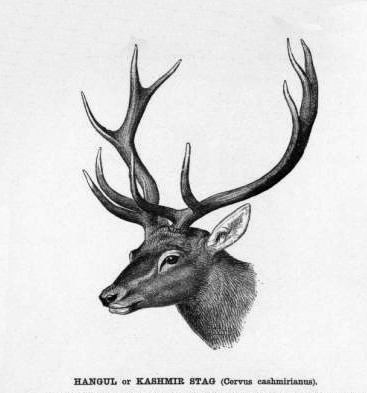
Central Asian red deer
0 sources
Central Asian red deer
Summary
Central Asian red deer is a taxon[1]. It has Wikipedia articles in 10 language editions, a strong signal of global cultural recognition.[2]
Key Facts
- Central Asian red deer's instance of is recorded as taxon[3].
- Central Asian red deer is classified at the rank of species[4].
- Central Asian red deer's IUCN conservation status is recorded as Least Concern[5].
- Central Asian red deer is classified within Cervus[6].
- Central Asian red deer's scientific name is Cervus hanglu[7].
- Central Asian red deer's Commons category is recorded as Cervus hanglu[8].
- Central Asian red deer's short name is recorded as {'lang': 'mul', 'text': 'C. hanglu'}[9].
- Central Asian red deer is commonly known as {'lang': 'zh', 'text': '塔里木马鹿'}[10].
- Central Asian red deer's habitat is recorded as shrubland[11].
- Central Asian red deer's habitat is recorded as forest[12].
- Central Asian red deer's sequenced genome URL is recorded as http://www.ensembl.org/Cervus_hanglu_yarkandensis[13].
- Central Asian red deer's diel cycle is recorded as cathemeral[14].
Body
Classification
Under binomial nomenclature, Central Asian red deer is Cervus hanglu[7]. It is classified at the rank of species[4]. It is classified within Cervus[6]. It is commonly known as {'lang': 'zh', 'text': '塔里木马鹿'}[10].
Identifiers
Central Asian red deer's iNaturalist taxon ID is recorded as 566590[15]. Central Asian red deer's NCBI taxonomy ID is recorded as 2100816[16]. Central Asian red deer's GBIF taxon ID is recorded as 10715744[17].
Why It Matters
Central Asian red deer has Wikipedia articles in 10 language editions, a strong signal of global cultural recognition.[2] It is known by 7 alternative names across languages and contexts.[18]