
Carlo Gaetano Gaisruck
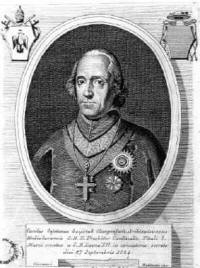
0 sources
Carlo Gaetano Gaisruck
Summary
Carlo Gaetano Gaisruck is a human[1]. His place of birth was Klagenfurt am Wörthersee[2]. He was born on August 7, 1769[3]. He died in Milan[4]. He died on November 19, 1846[5]. He worked as a Catholic priest[6], Catholic deacon[7], and Catholic bishop[8]. He has Wikipedia articles in 11 language editions, a strong signal of global cultural recognition.[9]
Key Facts
- Born in Klagenfurt am Wörthersee[2], Carlo Gaetano Gaisruck…
- Carlo Gaetano Gaisruck passed away in Milan[4].
- Carlo Gaetano Gaisruck was born on August 7, 1769[3].
- Carlo Gaetano Gaisruck died on November 19, 1846[5].
- Carlo Gaetano Gaisruck is buried at Milan Cathedral[10].
- Carlo Gaetano Gaisruck held citizenship in Austrian Empire[11].
- Carlo Gaetano Gaisruck's professions included Catholic priest[6].
- Carlo Gaetano Gaisruck worked as a Catholic deacon[7].
- Carlo Gaetano Gaisruck worked as a Catholic bishop[8].
- Carlo Gaetano Gaisruck held the position of Roman Catholic Archbishop of Milan[12].
- Carlo Gaetano Gaisruck held the position of cardinal[13].
- Carlo Gaetano Gaisruck held the position of titular bishop[14].
- Carlo Gaetano Gaisruck held the position of auxiliary bishop[15].
- Carlo Gaetano Gaisruck's education included a stint at University of Salzburg[16].
- Carlo Gaetano Gaisruck received the Order of the Iron Crown (Kingdom of Italy)[17].
- Carlo Gaetano Gaisruck received the Senator grand cross of the Sacred Military Constantinian Order of Saint George (Parma)[18].
- Carlo Gaetano Gaisruck's religion is recorded as Catholic Church[19].
- Carlo Gaetano Gaisruck is recorded as male[20].
- Carlo Gaetano Gaisruck's instance of is recorded as human[21].
- Carlo Gaetano Gaisruck's Commons category is recorded as Karl Kajetan Graf von Gaisruck[22].
- Carlo Gaetano Gaisruck's given name is recorded as Carlo[23].
- Carlo Gaetano Gaisruck's work location is recorded as Milan[24].
- Carlo Gaetano Gaisruck's participant in is recorded as 1830–31 conclave[25].
- Carlo Gaetano Gaisruck's participant in is recorded as 1829 papal conclave[26].
- Carlo Gaetano Gaisruck's name in native language is recorded as {'lang': 'de', 'text': 'Karl Kajetan von Gaisruck'}[27].
Body
Origins and Family
Carlo Gaetano Gaisruck was born in Klagenfurt am Wörthersee[2]. He was born on August 7, 1769[3].
Education
Carlo Gaetano Gaisruck's education included a stint at University of Salzburg[16].
Career and Affiliations
Recorded occupations include Catholic priest[6], Catholic deacon[7], and Catholic bishop[8]. Positions held include Roman Catholic Archbishop of Milan[12], a Roman Catholic episcopal title[28], in Italy[29]; cardinal[13], a title[30]; titular bishop[14], a Roman Catholic episcopal title[31]; and auxiliary bishop[15], a Roman Catholic episcopal title[32].
Recognition
Awards received include Order of the Iron Crown (Kingdom of Italy)[17], an order[33], in Kingdom of Italy[34], founded in 1805[35] and Senator grand cross of the Sacred Military Constantinian Order of Saint George (Parma)[18].
Personal Life
Carlo Gaetano Gaisruck's religion is recorded as Catholic Church[19].
Death and Burial
Carlo Gaetano Gaisruck died on November 19, 1846[5]. He died in Milan[4]. He is buried at Milan Cathedral[10].
Why It Matters
Carlo Gaetano Gaisruck has Wikipedia articles in 11 language editions, a strong signal of global cultural recognition.[9] He is known by 20 alternative names across languages and contexts.[36]
FAQs
Where was Carlo Gaetano Gaisruck born?
Born in Klagenfurt am Wörthersee[2], Carlo Gaetano Gaisruck…
Where did Carlo Gaetano Gaisruck die?
Carlo Gaetano Gaisruck passed away in Milan[4].
What did Carlo Gaetano Gaisruck do for work?
Carlo Gaetano Gaisruck worked as Catholic priest[6], Catholic deacon[7], and Catholic bishop[8].
Where did Carlo Gaetano Gaisruck go to school?
Carlo Gaetano Gaisruck was educated at University of Salzburg[16].
What awards did Carlo Gaetano Gaisruck receive?
Honors received include Order of the Iron Crown (Kingdom of Italy)[17] and Senator grand cross of the Sacred Military Constantinian Order of Saint George (Parma)[18].