
Carl Nägeli
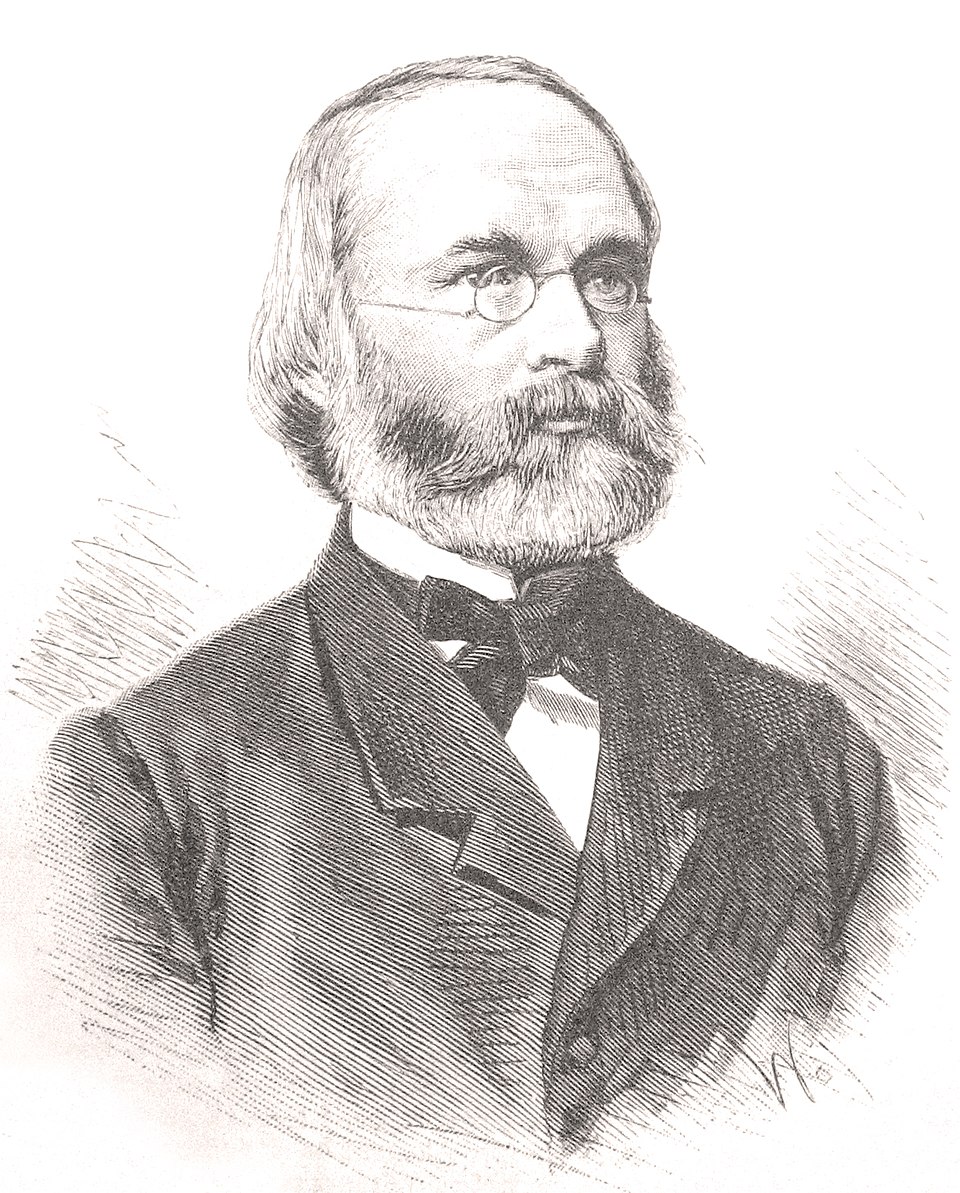
0 sources
Summary
Carl Nägeli was born on March 26, 1817[1], in Kilchberg[2]. He died on May 10, 1891[3], in Munich[4]. He worked as a botanist[5], university teacher[6], biologist[7], mycologist[8], and botanical collector[9]. He ranks in the top 0.72% of human entities by monthly Wikipedia readership (421 views/month, #7,251 of 1,000,298).[10]
Key Facts
- Date of birth: March 27, 1817[11]
- Child: Betty Nägeli[12]
- Country of citizenship: Switzerland[13]
- Occupation: scientific collector[14], physician[15], chemist[16]
- Field of work: botany[17]
- Employer: Ludwig-Maximilians-Universität München[18], University of Freiburg[19], University of Zurich[20], ETH Zurich[21]
- Educated at: University of Geneva[22], University of Zurich[23]
- Doctoral advisor: Oswald Heer[24], Alphonse Pyramus de Candolle[25]
- Student: Carl Eduard Cramer[26]
- Award received: Bavarian Maximilian Order for Science and Art[27], Foreign Member of the Royal Society[28]
- Member of: Royal Society[29], Royal Swedish Academy of Sciences[30], American Academy of Arts and Sciences[31], Saint Petersburg Academy of Sciences[32], Royal Prussian Academy of Sciences[33], Bavarian Academy of Sciences and Humanities[34], Academy of Sciences of Turin[35], Accademia Nazionale dei Lincei[36]
- Religion or worldview: reformed[37]
- Sex or gender: male[38]
- Doctoral student: Erich von Tschermak[39], Eugenius Warming[40], Carl Eduard Cramer[41]
- Commons category: Karl Wilhelm von Nägeli[42]
- Archives at: ETH Zurich University Archives[43]
- Family name: Nägeli[44]
- Given name: Karl[45], Carl[46]
- Topic's main category: Category:Karl Wilhelm von Nägeli[47]
- Commons gallery: Karl Wilhelm von Nägeli[48]
- Work location: Freiburg im Breisgau[49], Munich[50]
- Student of: Oswald Heer[51]
Why It Matters
Carl Nägeli has Wikipedia articles in 16 language editions, a strong signal of global cultural recognition.[52] He is known by 55 alternative names across languages and contexts.[53]
He has been cited as an influence by Georg Baur[54], a paleontologist[55], 1859–1898[56], of Kingdom of Bavaria[57], specialised in zoology[58].
He is credited with the discovery of oligodynamic effect[59].
His notable doctoral advisees include Erich von Tschermak[60], a geneticist[61], 1871–1962[62], of Austria[63], awarded the Ring of Honour of the City of Vienna[64], specialised in botany[65]; Eugenius Warming[66], a botanist[67], 1840–1924[68], of Kingdom of Denmark[69], awarded the honorary degree[70], specialised in biology[71]; and Carl Eduard Cramer[72], a botanist[73], 1831–1901[74], of Switzerland[75], specialised in cryptogam[76].
FAQs
Where was Carl Nägeli born?
Carl Nägeli's place of birth was Kilchberg[2].
Where did Carl Nägeli die?
Carl Nägeli passed away in Munich[4].
What did Carl Nägeli do for work?
Carl Nägeli worked as a botanist[5], university teacher[6], biologist[7], mycologist[8], and botanical collector[9].
Where did Carl Nägeli go to school?
Carl Nägeli was educated at University of Geneva[22] and University of Zurich[23].
What awards did Carl Nägeli receive?
Honors received include Bavarian Maximilian Order for Science and Art[27] and Foreign Member of the Royal Society[28].
Who did Carl Nägeli influence?
Carl Nägeli has been cited as an influence by Georg Baur[54].
What did Carl Nägeli discover?
Carl Nägeli is credited as discoverer of oligodynamic effect[59].