
Bruno Schulz
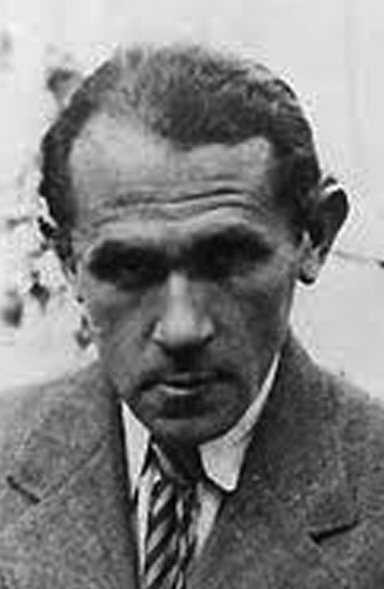
0 sources
Bruno Schulz
Summary
Bruno Schulz is a human[1]. He was born in Drohobych[2]. He was born on July 12, 1892[3]. He passed away in Drohobych Ghetto[4]. He died on November 19, 1942[5]. He worked as a writer[6], painter[7], literary critic[8], draftsperson[9], and graphic artist[10]. He ranks in the top 0.71% of human entities by monthly Wikipedia readership (4,811 views/month, #7,098 of 1,000,298).[11]
Key Facts
- Bruno Schulz's place of birth was Drohobych[2].
- Bruno Schulz passed away in Drohobych Ghetto[4].
- Bruno Schulz died in Drohobych[12].
- Bruno Schulz was born on July 12, 1892[3].
- Bruno Schulz died on November 19, 1942[5].
- Bruno Schulz died on December 19, 1942[13].
- Bruno Schulz held citizenship in Austria–Hungary[14].
- Bruno Schulz held citizenship in West Ukrainian People's Republic[15].
- Bruno Schulz held citizenship in Ukrainian People's Republic[16].
- Bruno Schulz held citizenship in Second Polish Republic[17].
- Bruno Schulz is identified as part of the Jewish people ethnic group[18].
- Bruno Schulz's professions included writer[6].
- Bruno Schulz worked as a painter[7].
- Bruno Schulz worked as a literary critic[8].
- Bruno Schulz's professions included draftsperson[9].
- Bruno Schulz's professions included graphic artist[10].
- Bruno Schulz's field of work was literature[19].
- Bruno Schulz's field of work was erotic art[20].
- Bruno Schulz's field of work was femdom art[21].
- Bruno Schulz's education included a stint at Lviv University[22].
- A notable student of Bruno Schulz was Alfred Schreyer[23].
- A notable work attributed to Bruno Schulz is Sanatorium Under the Sign of the Hourglass[24].
- A notable work attributed to Bruno Schulz is The Street of Crocodiles[25].
- Bruno Schulz received the Golden Laurel of the Polish Academy of Literature[26].
- Bruno Schulz is recorded as male[27].
Body
Origins and Family
Bruno Schulz was born in Drohobych[2]. He was born on July 12, 1892[3]. He is identified as part of the Jewish people ethnic group[18].
Education
Bruno Schulz's education included a stint at Lviv University[22].
Career and Affiliations
Recorded occupations include writer[6], painter[7], literary critic[8], draftsperson[9], and graphic artist[10]. Fields of work include literature[19], a type of arts[28]; erotic art[20], an art genre[29]; and femdom art[21]. A notable student of Bruno Schulz was Alfred Schreyer[23].
Works and Contributions
Notable works include Sanatorium Under the Sign of the Hourglass[24], a literary work[30] and The Street of Crocodiles[25], a literary work[31].
Recognition
Bruno Schulz received the Golden Laurel of the Polish Academy of Literature[26].
Death and Burial
Recorded date of death include November 19, 1942[5] and December 19, 1942[13]. Recorded place of death include Drohobych Ghetto[4], a ghetto in Nazi-occupied Europe[32], in Ukraine[33] and Drohobych[12], a city of regional significance of Ukraine[34], in Ukraine[35], founded in 1387[36].
Why It Matters
Bruno Schulz ranks in the top 0.71% of human entities by monthly Wikipedia readership (4,811 views/month, #7,098 of 1,000,298).[11] He has Wikipedia articles in 25 language editions, a strong signal of global cultural recognition.[37] He is known by 18 alternative names across languages and contexts.[38]
He has been cited as an influence by China Miéville[39], a writer[40], b. 1972[41], of United Kingdom[42], awarded the Arthur C. Clarke Award[43] and Alex Epstein[44], a writer[45], b. 1971[46], of Israel[47], awarded the Prime Minister's Prize for Hebrew Literary Works[48].
Works attributed to him include The Street of Crocodiles[49], a literary work[50] and Sanatorium Under the Sign of the Hourglass[51], a literary work[52].
FAQs
Where was Bruno Schulz born?
Bruno Schulz's place of birth was Drohobych[2].
Where did Bruno Schulz die?
Bruno Schulz died in Drohobych Ghetto[4].
What did Bruno Schulz do for work?
Bruno Schulz worked as writer[6], painter[7], literary critic[8], draftsperson[9], and graphic artist[10].
Where did Bruno Schulz go to school?
Bruno Schulz was educated at Lviv University[22].
What awards did Bruno Schulz receive?
Honors received include Golden Laurel of the Polish Academy of Literature[26].
Who did Bruno Schulz influence?
Bruno Schulz has been cited as an influence by China Miéville[39] and Alex Epstein[44].