
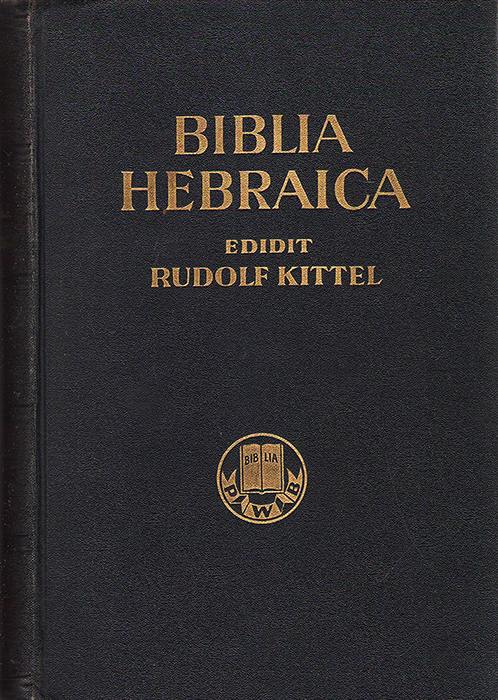
Biblia Hebraica
0 sources
Biblia Hebraica
Summary
Biblia Hebraica is a Bible edition[1]. It draws 83 Wikipedia views per month (bible_edition category, ranking #5 of 12).[2]
Key Facts
- Biblia Hebraica is the creator of Rudolf Kittel[3].
- Biblia Hebraica is the creator of Georg Beer[4].
- Biblia Hebraica is the creator of Paul E. Kahle[5].
- Biblia Hebraica is the creator of Albrecht Alt[6].
- Biblia Hebraica's instance of is recorded as Bible edition[7].
- Biblia Hebraica's instance of is recorded as Tanakh[8].
- Biblia Hebraica's instance of is recorded as Masoretic Text[9].
- Biblia Hebraica's instance of is recorded as Biblia Hebraica[10].
- Biblia Hebraica's Commons category is recorded as Biblia Hebraica (Kittel)[11].
- Biblia Hebraica's language of work or name is recorded as Hebrew[12].
- Biblia Hebraica's language of work or name is recorded as Aramaic[13].
- Biblia Hebraica was published on 1906[14].
- Biblia Hebraica was released on 1913[15].
- Biblia Hebraica was released on 1937[16].
- Biblia Hebraica's edition or translation of is recorded as Old Testament[17].
- Biblia Hebraica's has edition or translation is recorded as Biblia Hebraica Quinta[18].
- Biblia Hebraica's copyright status is recorded as public domain[19].
Body
Authorship and Creation
Created works include Rudolf Kittel[3], a theologian[20], 1853–1929[21], of Germany[22], specialised in theology[23]; Georg Beer[4], a theologian[24], 1865–1946[25], of Germany[26], specialised in theology[27]; Paul E. Kahle[5], a theologian[28], 1875–1964[29], of Germany[30], awarded the Commander's Cross of the Order of Merit of the Federal Republic of Germany[31], specialised in linguistics[32]; and Albrecht Alt[6], a theologian[33], 1883–1956[34], of Germany[35], awarded the Hervorragender Wissenschaftler des Volkes[36].
Publication
Publication dates include 1906[14], 1913[15], and 1937[16]. Languages include Hebrew[12] and Aramaic[13].
Why It Matters
Biblia Hebraica draws 83 Wikipedia views per month (bible_edition category, ranking #5 of 12).[2] It has Wikipedia articles in 12 language editions, a strong signal of global cultural recognition.[37] It is known by 4 alternative names across languages and contexts.[38]